
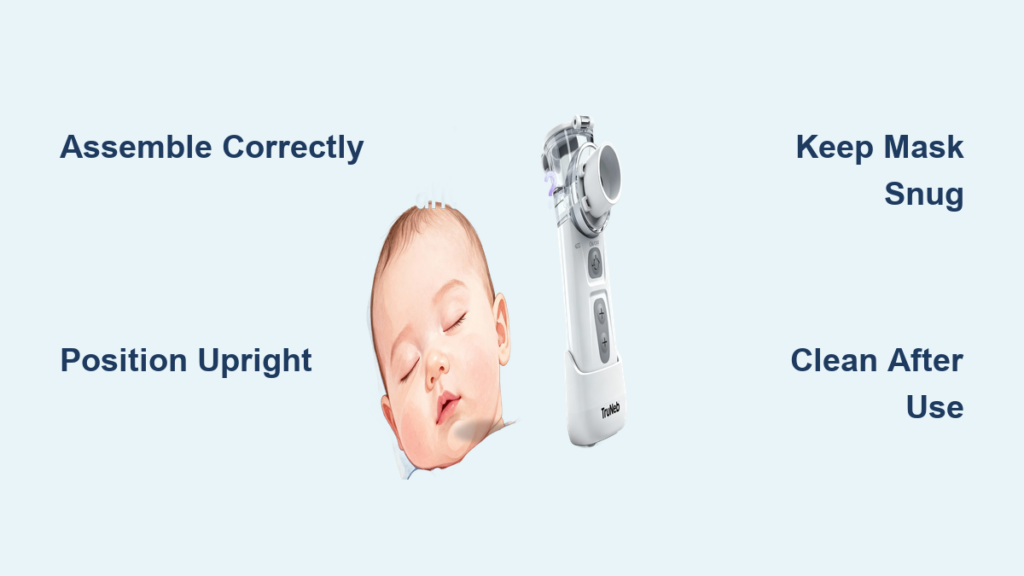
If your baby struggles with breathing during cold season, a nebulizer can be a lifesaver. But when your little one is coughing at 2 a.m. and you’re fumbling with tubes and masks, it’s easy to forget how to set it up correctly. Knowing how to use the nebulizer for baby properly ensures your child gets the full dose of medication, especially during respiratory flare-ups like wheezing or bronchiolitis. This guide walks you through each step—from setup to cleanup—so you can act quickly and confidently. You’ll learn how to assemble the device, keep your baby calm, ensure effective delivery, and avoid common mistakes.
Whether your baby hates the mask or falls asleep mid-treatment, we’ve got practical tips that work in real-life situations. Let’s get started.
Gather Your Nebulizer Supplies
Before starting treatment, collect all necessary components to avoid interruptions once the medicine begins to aerosolize.
Check Each Component
Make sure you have:
• Nebulizer machine (compressor)
• Prescribed medication vial(s)
• Medicine cup (nebulizer chamber)
• Infant-sized face mask
• Flexible tubing connector
• Power cord or working batteries
Inspect each part for cracks or wear. Damaged tubing or a cracked medicine cup can stop mist production. If anything is missing or broken, replace it before use.
Prepare the Medication
Wash your hands thoroughly. Open the prescribed medication and pour the full dose into the medicine cup. Do not mix medications unless your pediatrician has instructed you to. Avoid touching the inside of the cup to prevent contamination.
Screw the top on securely but gently. Over-tightening can damage the seal and reduce airflow, leading to poor misting.
Assemble the Baby Nebulizer Correctly
Proper assembly is critical for consistent mist delivery. A loose connection is the most common reason treatments fail.
Attach the Face Mask and Tubing
Connect the face mask to the top of the medicine cup. Then insert one end of the tubing firmly into the base of the cup. Push until snug—this connection often loosens during use, which stops the mist.
Attach the other end of the tubing to the outlet on the nebulizer machine. Ensure both ends are fully seated. Gently tug on the tubing to test stability.
Visual cue: When working correctly, you’ll see a steady stream of fine mist coming from the mask as soon as the machine starts.
Start the Nebulizer Treatment

Now that everything is assembled, begin the treatment safely and effectively.
Position Your Baby Upright
Hold your baby in a semi-upright position—sitting on your lap or propped up at a 30–45 degree angle. Lying flat reduces treatment efficiency because the medicine won’t aerosolize properly in the cup.
You can use the nebulizer while your baby sleeps, as long as their head is elevated. Never lay the machine on its side during use.
Apply the Face Mask Gently
Place the mask snugly over your baby’s nose and mouth. Create a light seal without pressing hard. Many infants cry when the mask touches their face—this is normal.
Pro tip: Warm the mask in your hands first or let your baby touch it before use to reduce fear.
Turn on the machine. You should immediately see a visible mist exiting the mask. If there’s no mist, check the tubing connections and medicine cup seal.
Handle Crying and Movement During Treatment

Babies often resist nebulizer treatments. But crying doesn’t mean the medicine isn’t working—it can actually help.
Why Crying Is Okay
When your baby cries, they take deep, forceful breaths. These big gasps pull more medicated mist deep into the lungs. Even if your infant is screaming, continue the full treatment for 8–10 minutes.
Expert note: It’s better to complete the full dose while your baby is upset than to stop early because of fussiness.
Two-Person Hold for Struggling Babies
If your baby pulls the mask off repeatedly:
• Sit down and hold them securely in your lap.
• Use one arm to gently restrain their arms (like a hug).
• Use your other hand to hold the mask in place.
For extra help, have a second adult assist—one holds the baby, one manages the mask. This reduces stress and ensures proper dosing.
Monitor for Proper Mist Delivery
Keep an eye on the nebulizer throughout the session to make sure it’s functioning.
Watch the Medicine Cup
As the treatment progresses, the liquid level drops. The mist may slow or pause briefly at the end. To help finish the dose:
• Gently tap the side of the medicine cup every few minutes.
This shakes residual medication back into the airflow path.
When to stop: The treatment is complete when the sputtering sound changes and no more mist is produced—usually after 8 to 10 minutes.
Fix Common Mist Issues
• No mist? → Check tubing connections and power source.
• Intermittent mist? → Ensure the machine is upright and the cup isn’t tilted.
• Machine making a funny noise? → Disconnect and reconnect all parts; inspect for blockages.
Clean and Maintain After Use

Proper cleaning prevents bacterial growth and keeps the nebulizer working efficiently.
Rinse Immediately After Treatment
After turning off the machine:
• Disconnect all parts (mask, cup, tubing).
• Rinse the mask, medicine cup, and mouthpiece (if used) with warm water.
• Do not rinse the tubing or machine base.
Use mild dish soap and warm water to wash these pieces. Let them air dry on a clean towel—do not towel dry, as lint can remain.
Sanitize Daily
Once per day (or after each illness), sanitize the mask and cup:
• Soak in a mixture of one part white vinegar to three parts water for 30 minutes.
• Or follow manufacturer instructions for boiling or using a dishwasher (if labeled safe).
Replace the mask and medicine cup every 6 months, or sooner if cracked or cloudy.
Nebulizer Tips for Better Results
Small adjustments can make a big difference in your baby’s comfort and treatment success.
Distract During Treatment
Try these calming techniques:
• Play soft music or a favorite video.
• Sing or talk soothingly.
• Offer a pacifier after the mist starts (if approved by your doctor).
Distraction can reduce resistance and help your baby tolerate the mask longer.
Avoid These Common Mistakes
• ❌ Using a mouthpiece on a baby → Only use the infant face mask.
• ❌ Laying the machine on its side → Prevents proper misting.
• ❌ Skipping cleaning → Leads to infections or clogs.
• ❌ Over-tightening parts → Damages seals and connections.
When to Call the Doctor
Even with correct use, some symptoms require medical attention.
Seek Help If Your Baby:
• Turns blue around the lips or face
• Has severe difficulty breathing (ribs pulling in, fast breathing)
• Doesn’t improve after multiple treatments
• Vomits after inhaling medicine
• Develops a fever during treatment
Contact your pediatrician immediately if any of these occur.
Frequently Asked Questions About Using a Nebulizer for Baby
How long does a nebulizer treatment take for a baby?
Most treatments last 8 to 10 minutes. Continue until the mist stops and the medicine cup is empty. Gently tapping the cup during treatment helps deliver the full dose.
Can I use the nebulizer while my baby is sleeping?
Yes, as long as your baby’s head is slightly elevated. Do not lay the nebulizer machine on its side. Ensure the mask stays in place and mist is visible.
What should I do if my baby cries during the treatment?
Keep going. Crying often means your baby is taking deep, forceful breaths—this helps pull the medicine deep into the lungs. Complete the full 8–10 minute session.
How do I clean the nebulizer after each use?
Rinse the mask and medicine cup with warm water after every treatment. Wash with mild soap, then air dry. Sanitize daily with a vinegar solution or as directed by the manufacturer.
Can I use adult nebulizer parts for my baby?
No. Always use an infant-sized face mask. Mouthpieces are not suitable for babies. Using incorrect parts reduces medication delivery and can be unsafe.
Why isn’t my nebulizer making mist?
Check that all connections are tight, especially the tubing to the medicine cup and machine. Ensure the unit is upright and powered. If problems persist, inspect for cracks or clogs.
Key Takeaways for Using a Nebulizer on Your Baby
Mastering how to use the nebulizer for baby gives you the confidence to respond quickly during respiratory episodes. Focus on proper assembly, upright positioning, and completing the full treatment—even if your baby cries. The medicine still works during those big gasps.
Clean the mask and medicine cup after every use and sanitize daily to prevent infections. Keep your kit organized and ready for nighttime emergencies.
If you’re ever unsure, refer back to this guide or contact your pediatrician. With practice, you’ll handle treatments smoothly and help your baby breathe easier—no matter when symptoms strike.





