
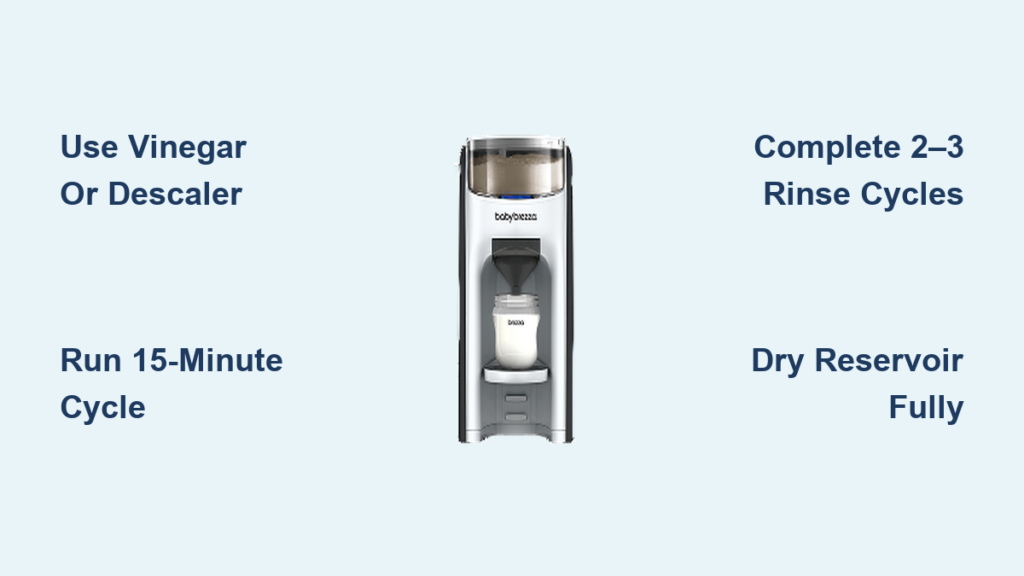
If your Baby Brezza formula dispenser is running slower than usual or showing water flow errors, mineral buildup is likely the culprit. Hard water leaves behind limescale that clogs internal tubing over time, affecting performance and accuracy. How to use Baby Brezza descaler properly is key to restoring full function and ensuring your baby gets clean, safe bottles every time. The process takes just 15 minutes and can be done with either the official Baby Brezza Descaler Kit or white vinegar.
You don’t need technical skills—just a few household items and attention to detail. Skipping rinse cycles or using unapproved cleaners can damage your unit or leave harmful residues. This guide walks you through each step using only manufacturer-approved methods, so you keep your warranty intact and your machine in top shape. Follow along to descale safely, avoid common mistakes, and extend the life of your device.
When to Descale Your Baby Brezza

Signs It’s Time to Clean
Watch for these clear indicators that descaling is overdue:
– Formula takes longer to dispense than normal
– Water drips slowly or inconsistently
– The display shows “Add Water” or other water-related alerts
– You see white, chalky residue inside the water tank
If any of these happen, don’t delay—mineral buildup worsens over time and can lead to permanent damage.
Recommended Descaling Schedule
Stick to this timeline based on your water type:
– Every 3 months: For hard water areas
– Every 6 months: For soft or filtered water
– Every 2–3 months: If preparing 4+ bottles daily
Set a recurring reminder on your phone or calendar to stay consistent.
What You’ll Need to Descale

Approved Descaling Solutions
Only use one of these two safe options:
– Baby Brezza Descaler Kit (formulated specifically for the device)
– White vinegar (1 cup / 240 mL)
Both dissolve limescale effectively without harming internal seals or sensors.
Additional Supplies
Gather these before starting:
– Measuring cup (for precise 1-cup measurement)
– Clean drinking water (for rinsing)
– Soft sponge and mild dish soap
– Dry towel (to wipe the reservoir)
Never use lemon juice, bleach, or dishwashing detergent—they can corrode parts and void your warranty.
Power Down Before Starting
Turn Off and Unplug
Safety comes first:
– Press the power button to shut off the unit
– Unplug it from the wall outlet
Never attempt cleaning while the device is powered.
Confirm the Unit Is Off
Check the screen—it should be completely dark. If it’s still lit, hold the power button for 3–5 seconds until it turns off.
Remove and Empty the Water Reservoir
Lift Out the Reservoir
Grasp the tank by the handle and pull straight up. Avoid tilting to prevent spills.
Drain Remaining Water
Pour out any leftover water in the sink. Start with an empty reservoir before adding descaling solution.
Prepare the Descaling Solution
Measure Exactly 1 Cup
Use a measuring cup to pour 240 mL (1 cup) of:
– White vinegar, or
– Baby Brezza descaling liquid
Accuracy ensures full coverage without overflow.
Pour Into the Reservoir
Fill the empty tank with the solution. Do not mix with soap, water, or other liquids.
Reinstall the Reservoir Properly
Slide Tank Back Into Place
Align the reservoir with the base and press down until it clicks. A secure fit is essential for cycle activation.
Check for Proper Seating
Ensure the tank sits flat and doesn’t wobble. A loose reservoir may prevent the machine from recognizing it.
Start the Descaling Cycle
Hold the Bottle Button for 5 Seconds
With the unit plugged in:
– Press and hold the “Bottle” button
– Keep holding until the display reads “Descaling”
This triggers the automatic cleaning mode.
Let the Cycle Run Fully
The machine circulates the solution for 10–15 minutes. Do not unplug or open the reservoir—let it finish on its own.
Discard Used Descaling Liquid
Remove the Reservoir Again
After the cycle ends, unplug the unit and lift out the tank.
Pour Out the Solution
Dispose of the used vinegar or descaler in the sink. Do not reuse.
Wash and Dry the Reservoir
Clean With Warm Soapy Water
Use a soft sponge and mild soap to scrub the inside and outside of the tank.
Rinse Thoroughly
Flush with clean water to remove all soap film.
Dry Completely
Wipe dry with a clean towel. Leftover moisture can dilute rinse cycles or encourage mold.
Refill With Fresh Water
Fill to the Max Line
Add fresh drinking water up to the “MAX” mark.
Reinsert Into the Base
Place the tank back and press down until it clicks securely.
Run Rinse Cycles to Flush Residue
Activate Rinse Mode
Plug in the unit and:
– Press and hold the “Bottle” button for 5 seconds
– Wait for “Descaling” to appear
– Select “Rinse” if your model supports it
This flushes residual cleaner from the lines.
Run Water-Only Formula Cycles
If no rinse option:
– Press the “Bottle” button to run a normal cycle
– Use only water—no formula in the canister
– Repeat 2–3 times
Each cycle clears more of the descaling solution.
Verify Completion and Resume Use
Confirm Normal Display
After the final rinse:
– The screen should return to standby
– No error messages should appear
If warnings persist, repeat the rinse process.
Test with a Bottle
Run a quick water-only cycle to check flow and smell. There should be no vinegar odor.
Resume Regular Formula Use
Only now should you prepare formula. Using the machine too soon risks exposing your baby to cleaning agents.
Avoid Common Descaling Mistakes

Using Wrong Cleaners
Never substitute with:
– Bleach
– Citric acid
– Dishwasher detergent
– Hydrogen peroxide
These can damage internal components and leave unsafe residues.
Skipping Rinse Cycles
One rinse isn’t enough. Always complete 2–3 full rinse cycles to ensure all descaler is gone.
Not Drying the Reservoir
A damp tank can cause mold or inaccurate water levels. Always dry thoroughly before reuse.
Model-Specific Tips
Formula Pro Advanced Users
This model has a built-in “Rinse” option in the descaling menu. Use it for fastest, most reliable cleaning.
Older Models Without Rinse Option
Manually run water-only formula cycles. Make sure the formula canister is empty before starting.
Button Response Issues?
If the “Bottle” button doesn’t respond:
– Ensure the reservoir is fully seated
– Confirm the unit is powered on
– Press firmly for a full 5 seconds
Troubleshoot Failed Descaling
Cycle Won’t Start?
Check these:
– Is the unit plugged in?
– Is the reservoir properly installed?
– Did you hold the button long enough?
Restart after verifying each point.
Error Messages After Cleaning?
Possible causes:
– Incomplete rinsing
– Residual blockage
– Improper reservoir placement
Repeat the full descaling and rinse process. If issues continue, consult your user manual.
Maintain Long-Term Performance
Track Descaling Dates
Keep a log:
– Last descaled: _
– Next due: _
Staying on schedule prevents major clogs.
Use Filtered Water When Possible
Filtered or distilled water reduces mineral buildup and extends time between cleanings.
Combine With Other Maintenance
Pair descaling with:
– Wiping the exterior
– Checking the formula chute for clumps
– Cleaning the spout with a damp cloth
This keeps your entire system hygienic.
Frequently Asked Questions About Using Baby Brezza Descaler
Can I use white vinegar instead of the Baby Brezza descaler?
Yes, white vinegar (1 cup / 240 mL) is a safe and effective alternative. It dissolves mineral buildup without damaging internal parts. Just be sure to complete 2–3 full rinse cycles afterward to remove any odor or residue.
How often should I descale my Baby Brezza?
Descale every 3 months in hard water areas, or every 6 months in soft water regions. If you make multiple bottles daily, consider cleaning every 2–3 months to prevent clogs.
What happens if I don’t rinse enough after descaling?
Residual vinegar or descaler can mix with formula, altering taste and potentially irritating your baby’s stomach. Always run 2–3 full water-only cycles to ensure the system is completely clean.
Why won’t my Baby Brezza start the descaling cycle?
Common causes include: the reservoir not being fully seated, the unit not being powered on, or not holding the “Bottle” button long enough. Verify all connections and try again.
Can I use lemon juice or citric acid to descale?
No. Lemon juice and citric acid are not approved and may damage seals or sensors. Only use white vinegar or the Baby Brezza Descaler Kit to avoid voiding your warranty.
Is it safe to use the machine right after descaling?
Only after completing all rinse cycles. Test with a water-only cycle first to confirm no odor or error messages. Once clear, it’s safe to resume formula preparation.
Key Takeaways for Using Baby Brezza Descaler Safely
Regular descaling every 3–6 months keeps your Baby Brezza working efficiently and safely. Use only white vinegar or the official Baby Brezza descaler, follow the 10–15 minute cycle, and never skip the 2–3 rinse cycles. Proper cleaning prevents errors, extends device life, and ensures your baby gets clean, accurate bottles every time.
Mark your calendar for the next descaling date and consider using filtered water to reduce future buildup. A well-maintained machine can last for years—stay consistent, avoid unapproved cleaners, and always verify the unit is fully rinsed before use.





