If your baby is breech or lying sideways after 34 weeks, you’re not alone—about 3–4% of babies stay out of position late in pregnancy. The good news? There are natural, research-backed ways to help your baby turn head down using movement, posture, and gravity. Starting between 34 and 37 weeks, specific techniques can release tension in your pelvic ligaments, improve alignment, and create space for your baby to rotate into the ideal birth position.
These methods aren’t instant fixes, but they work. One study found that 61% of women who practiced forward-leaning inversions three times daily successfully turned their breech babies. When combined with daily posture changes and pelvic mobility exercises, your odds improve even more. Always check with your provider first—especially if you have placenta previa or preeclampsia—but for most low-risk pregnancies, these techniques are safe and empowering.
Here’s how to use your body to guide your baby into a head-down position.
Start Between 34 and 37 Weeks for Best Results
Begin Early to Maximize Space
The ideal window to encourage your baby to turn is 34 to 37 weeks. Before this, many babies flip on their own. After 37, space in the uterus shrinks, making rotation harder. But don’t lose hope if you’re past 37—some babies still turn at 38 or 39 weeks, especially with consistent effort.
One mom turned a completely transverse baby at 37 weeks using Spinning Babies® techniques and had her baby head-down by 38. The key? Starting early and staying consistent.
Combine Techniques for Higher Success
Using just one method rarely works. Success comes from stacking multiple techniques that target pelvic alignment, ligament tension, and fetal movement. Think of it like tuning a guitar—each adjustment improves the overall balance.
Try combining:
• Forward-leaning inversions
• Pelvic mobility exercises (like hip circles)
• Daily hands and knees time
This multi-angle approach significantly increases your chances of turning a breech baby.
Use Gravity to Shift Baby’s Position
Forward-Leaning Inversion (3x Daily)
This is one of the most effective techniques for turning breech babies. It uses gravity to shift the baby’s position and encourages the chin to tuck—a key step for proper engagement.
How to do it:
1. Kneel in front of a sturdy couch or chair.
2. Lower onto your forearms, forming a triangle.
3. Tuck your chin and keep your back flat.
4. Hold for 3 full breaths.
5. Slowly return to kneeling.
6. Repeat 3 times per day.
Pro tip: Have a partner assist you in and out. Stability is crucial.
Research shows: 61% success rate when done consistently at 36–37 weeks.
Breech Tilt with Hips Elevated
Also called the “pelvic tilt,” this position helps reposition the uterus and gives your baby room to flip.
How to do it:
1. Lie on your back near the edge of a couch.
2. Elevate your hips 9–12 inches with pillows or a bench—aim for a 90-degree angle between torso and legs.
3. Rest your head and shoulders on a pillow.
4. Hold for 10–20 minutes, 3 times daily.
Optional boost: Place an ice pack where the baby’s head is (usually the top of your belly). The cold may prompt movement.
Safety note: Exit by rolling to your side first. Never pop up—this can cause dizziness.
Release Pelvic Tension to Create Room
Side-Lying Pelvic Release
Tight ligaments can restrict your baby’s movement. This stretch releases tension in the pelvic floor and round ligaments.
How to do it:
1. Lie on your side at the edge of the bed.
2. Let your belly hang slightly over the edge.
3. Bend your top leg to 90 degrees and swing it forward and down.
4. Hold for 3 minutes per side.
5. Breathe deeply to enhance release.
What to feel: A “melting” sensation in your hips—this means the pelvic floor is relaxing.
Why it works: It mimics the natural pelvic widening in labor, giving your baby more room to rotate.
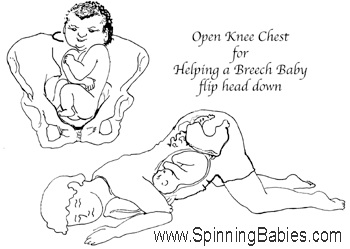
Open Knee-Chest Position
This advanced inversion maximizes pelvic space and encourages chin tucking.
How to do it:
1. Kneel on the floor, chest lowered onto a pillow.
2. Keep knees wider than hips (“open” version).
3. Have a partner hold a strap across your thighs—not pressing on your belly.
4. Lower slowly into position.
5. Hold for 10–15 minutes, 2–3 times daily.
Key difference: The “open” knee-chest (knees apart) creates more room than the narrow version—Spinning Babies® recommends this for better results.
Improve Pelvic Mobility and Alignment
Hip Circles on a Birth Ball
Loose hips mean more room for your baby to move. This exercise improves sacral and pelvic joint mobility.
How to do it:
1. Sit on a birth ball, feet shoulder-width apart.
2. Make slow circles with your hips—10 forward, 10 backward.
3. Add figure-eights for extra mobility.
4. Do 1–2 minutes, 2–3 times daily.
Bonus: Use the ball as your go-to seat while watching TV or nursing.
Cat-Cow Stretch for Spinal Flexibility
This yoga move enhances spinal and pelvic flexibility, helping your baby settle into position.
How to do it:
1. Start on hands and knees.
2. Inhale: Arch back (cow), lift head and tailbone.
3. Exhale: Round spine (cat), tuck pelvis and chin.
4. Repeat 10–15 times, 2–3 times daily.
Pro tip: Add a gentle bounce in cow pose to encourage fetal movement.
Strengthen and Release Key Muscles
Bridge Lifts for Glute Activation
Strong glutes support pelvic alignment and help open the inlet of the pelvis.
How to do it:
1. Lie on your back, knees bent, feet flat.
2. Walk heels in until they touch your glutes.
3. Press through heels to lift hips.
4. Hold for 3–5 seconds, lower slowly.
5. Repeat 10 reps, 2–3 times daily.
Warning: Avoid if you have diastasis recti or pelvic pain—modify as needed.
Psoas Release Lunge
A tight psoas muscle can pull the pelvis forward, reducing space for your baby to turn.
How to do it:
1. Kneel on one knee, step the other foot forward.
2. Tuck pelvis under (posterior tilt).
3. Raise opposite arm overhead, lean gently to the side.
4. Breathe deeply for 30 seconds per side.
What to feel: A stretch in the front of the hip—not in the lower back.
Why it matters: Releasing the psoas helps restore neutral pelvic tilt, giving your baby more room to rotate.
Spend Time on Hands and Knees Daily
Kneel and Gently Shake
Being on hands and knees shifts your baby’s center of gravity and can prompt movement.
How to do it:
1. Get on hands and knees.
2. Have your partner place a sheet under your belly.
3. Gently shake the sheet for 1–2 minutes.
4. Do this 2–3 times daily.
Alternative: Do it solo while nursing or watching TV—just being in this position helps.
Time-saving tip: Combine with hip circles or cat-cow for a mini mobility routine.
Add Complementary Therapies for Extra Support
 — the closest match from the given list is: https://www.barefoothealth.co.uk/wp-content/uploads/sites/4/2022/01/moxibustion-for-breech.jpeg)
Chiropractic Care (Webster Technique)
Chiropractors trained in the Webster Technique correct pelvic misalignments and reduce intrauterine constraint.
What to expect:
• Gentle sacral and pelvic adjustments
• Soft tissue work on uterine ligaments
• Improved fetal movement
Success rate: Studies show 82–90% of breech babies turn when combined with home exercises.
Find a provider: Search ICAN or Spinning Babies® directories for certified practitioners.
Acupuncture and Moxibustion
Acupuncture, especially with moxibustion (burning mugwort near the pinky toe), has been used for centuries to turn breech babies.
How it works:
• Stimulates BL67 point (on the little toe)
• Increases fetal activity
• Encourages rotation
Protocol: Typically 1–2 sessions per week for 1–2 weeks, starting at 34–36 weeks.
Evidence: Multiple studies show increased turning rates compared to no treatment.
Adjust Daily Posture to Encourage Descent
Sit Leaning Forward
Avoid reclined chairs. Instead, sit with your pelvis tipped forward.
Easy hacks:
• Turn your kitchen chair around and sit on it backward
• Use a birth ball instead of a sofa
• Keep knees below hips when sitting
Why it works: Forward-leaning posture opens the pelvic inlet and encourages baby to descend head-first.
Avoid Cross-Legged or Slouched Sitting
Sitting cross-legged or slouching can tighten hip flexors and tilt the pelvis backward—making it harder for baby to engage.
Fix it:
• Sit with feet flat, knees apart
• Use a small pillow under your sit bones to tilt the pelvis forward
• Stand and stretch every 30 minutes
Know When to Stop and Seek Help
Recognize Contraindications and Red Flags
Do NOT do these exercises if you have:
• Placenta previa
• Preeclampsia
• History of preterm labor
• High blood pressure
• Dizziness or nausea during movement
Always:
• Consult your provider first
• Have help with inversions
• Stop if you feel pain, dizziness, or contractions
Red flags:
• Vaginal bleeding
• Regular contractions
• Decreased fetal movement
If any occur, stop immediately and call your care team.
Key Takeaways for Turning a Breech Baby
Success comes from consistency and stacking:
• Morning: Forward-leaning inversion + cat-cow
• Afternoon: Hip circles + side-lying release
• Evening: Breech tilt with ice pack
One user turned a transverse baby at 37 weeks using this combo—baby was head-down by 38.
Not every baby turns—and that’s okay. These techniques increase your odds, but C-sections are safe too. Focus on what you can control: your body, your posture, and your peace of mind.
Many breech babies flip with the right support. You’ve got this.
Frequently Asked Questions About Turning a Breech Baby
Can I turn a breech baby naturally at 36 weeks?
Yes. Starting at 34–37 weeks, techniques like forward-leaning inversions, breech tilt, and hands and knees time can help. One study found 61% success with daily inversions. Always consult your provider first.
How long does it take to turn a breech baby?
Some babies turn within days, others take 2–3 weeks. Consistency matters—do exercises daily. One mom turned a transverse baby in one week at 37 weeks using Spinning Babies® methods.
Is the breech tilt safe in late pregnancy?
Yes, if you don’t have contraindications like placenta previa or preeclampsia. Elevate hips 9–12 inches, hold 10–20 minutes, 3 times daily. Roll to your side when getting up to avoid dizziness.
Does moxibustion really work for turning breech babies?
Yes, multiple studies show moxibustion increases fetal movement and turning rates. It’s typically done 1–2 times per week starting at 34–36 weeks, combined with acupressure on BL67.
What if my baby doesn’t turn head down?
It’s okay. About 3–4% of babies stay breech. External cephalic version (ECV) is an option, or a planned C-section is safe. These techniques improve your odds but aren’t guaranteed.
How can I tell if my baby has turned head down?
You’ll feel kicks higher up and a hard, round ball low in your pelvis. A soft, squishy bottom high up suggests breech. Your midwife can confirm with a physical exam or ultrasound.