
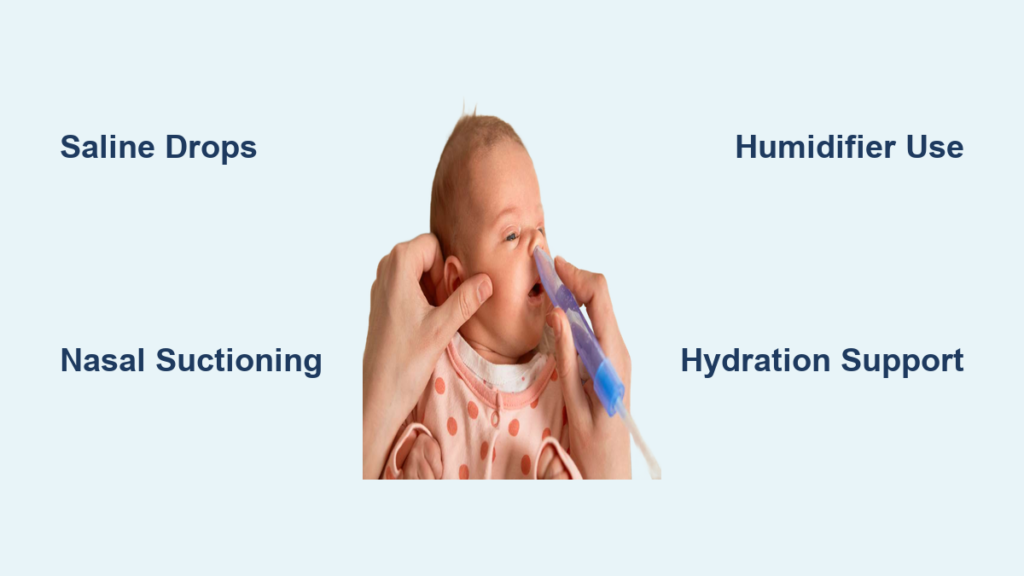
When your baby is congested, every breath can sound labored and every feeding becomes a struggle. Nasal blockage from a common cold can make it hard for infants to sleep, eat, and stay comfortable—especially since they can’t blow their nose. The good news is that most baby congestion clears up on its own in 7 to 10 days. While you can’t speed up the cold, you can take safe, effective steps to help your baby breathe easier and feel better.
This guide walks you through proven, doctor-recommended ways to clear baby congestion without medication. From saline drops and nasal suctioning to humidity and hydration, you’ll learn exactly what works—and what to avoid. Based on trusted medical sources like the Mayo Clinic and FDA, these methods are gentle, practical, and safe for newborns and older babies alike.
Use Saline Drops and Nasal Suctioning to Loosen Mucus
Saline drops and suctioning are the cornerstone of safe, effective congestion relief for babies. These non-drug methods help clear nasal passages without side effects.
Apply Saline Nasal Drops Before Suctioning
Saline drops soften and loosen thick mucus, making it easier to remove. They’re safe for newborns and available over the counter.
Steps to use:
1. Lay your baby on their back with their head slightly tilted back.
2. Gently place 1–2 drops into one nostril.
3. Wait 10–15 seconds for the solution to work.
4. Repeat in the other nostril.
Always use plain saline—never medicated sprays—unless directed by a doctor. Overuse of medicated products can irritate your baby’s delicate nasal lining.
Suction with a Bulb Syringe After Saline
After applying saline, use a bulb syringe to gently remove mucus.
How to suction:
1. Squeeze the bulb before inserting.
2. Gently place the tip ¼ to ½ inch into one nostril, aiming toward the back and side of the nose.
3. Slowly release the bulb to draw out mucus.
4. Remove and squeeze the mucus onto a tissue.
5. Repeat on the other side.
Clean the syringe with warm, soapy water after each use. Suction before feedings and bedtime for best results, but limit to 3–4 times daily to prevent irritation.
Try a Manual Nasal Aspirator for Better Results
Devices like NoseFrida use gentle mouth-powered suction (with a filter) to remove mucus more effectively than a bulb syringe. Many parents find them especially helpful for babies under 6 months.
Use the same saline-first method, then follow the device’s instructions. These aspirators require practice but can make a big difference in clearing stubborn congestion.
Improve the Air Quality in Your Baby’s Room

The environment where your baby sleeps and plays can either ease or worsen congestion. Simple changes can make breathing easier and support faster recovery.
Run a Cool-Mist Humidifier at Night
Dry air thickens mucus and irritates nasal passages. A cool-mist humidifier adds moisture to the air, helping your baby breathe more comfortably—especially during sleep.
Place it near the crib, but not too close. Change the water daily and clean the unit regularly to prevent mold and bacteria. Never use a warm-mist humidifier, which poses a burn risk if knocked over.
Elevate the Crib Mattress Slightly
Lying flat can make congestion worse by slowing mucus drainage. Elevate the head of the crib by placing a rolled towel under the mattress at the head end.
Never use pillows, blankets, or sleep positioners—these increase the risk of SIDS. Only elevate the mattress itself, and only slightly.
Keep the Room Free of Irritants
Smoke, strong perfumes, and cleaning sprays can worsen nasal swelling. Keep your baby’s space well-ventilated and use fragrance-free laundry detergents and soaps. Avoid aerosols and air fresheners.
Keep Your Baby Hydrated to Thin Mucus
Hydration helps thin nasal secretions and prevents dehydration, which is crucial when congestion affects feeding.
Continue Regular Breast Milk or Formula Feedings
Breast milk provides hydration and antibodies that support your baby’s immune system. Offer feeds more frequently if your baby is taking smaller amounts.
If your baby struggles to breathe while feeding, clear their nose first with saline and suction. Try feeding in an upright position to make breathing easier.
Avoid Water, Juice, or Herbal Teas for Babies Under 6 Months
For infants under 6 months, breast milk or formula is all they need. Adding water or other fluids can interfere with nutrition and even cause water intoxication.
Once your baby starts solids (around 6 months), you can offer small sips of water between meals.
Use Fever Reducers Only When Necessary
Congestion often comes with a low-grade fever. While fever helps fight infection, it can make your baby fussy or uncomfortable.
Choose the Right Fever Medication
For babies over 3 months, acetaminophen (Tylenol) is generally safe. For those over 6 months, ibuprofen (Motrin, Advil) may also be used.
Never give:
– Acetaminophen to a baby under 3 months without talking to a doctor
– Ibuprofen to a baby under 6 months
– Aspirin to any child recovering from flu-like symptoms or chickenpox (linked to Reye’s syndrome)
Follow Dosing Instructions Carefully
Always use the measuring device that comes with the medicine. Double-check the dose based on your baby’s weight and age. When in doubt, call your healthcare provider.
Use fever reducers only when your baby is uncomfortable, and for the shortest time needed.
Avoid Dangerous Remedies for Infant Congestion
Some common home remedies can be harmful to babies. Knowing what not to do is just as important as knowing what to do.
Never Use Over-the-Counter Cough or Cold Medicines
The FDA and pediatric experts strongly warn against using non-prescription cold medicines in children under 6. These products don’t treat the cause of congestion and can cause serious side effects—including rapid heart rate, breathing problems, or even death.
Stick to saline, suctioning, and hydration instead.
Don’t Use Steam or Hot-Water Vaporizers
While sitting in a steamy bathroom may offer temporary relief, hot water and steam can burn your baby. Never leave your baby unattended in a bathroom with running hot water.
For continuous moisture, use a cool-mist humidifier—it’s safer and more effective.
Avoid Essential Oils, Vapors, and Chest Rubs
Products containing menthol, camphor, or eucalyptus can irritate a baby’s airways and cause breathing difficulties. Never apply them to your baby’s skin or add them to a humidifier.
Even “natural” doesn’t mean safe for infants.
Watch for Signs That Require Medical Attention

Most baby congestion is mild and improves with home care. But some symptoms need prompt medical evaluation.
Know the Warning Signs
Contact your doctor if your baby has:
– Difficulty breathing (flaring nostrils, grunting, ribs pulling in with each breath)
– A fever of 100.4°F (38°C) or higher in a baby under 3 months
– Refusing to eat or showing signs of dehydration (fewer wet diapers, dry mouth, no tears when crying)
– Coughing that lasts more than 10 days
– Thick yellow or green mucus lasting over 10–14 days (possible sinus infection)
– Symptoms that worsen after initial improvement
Understand When It’s More Than a Cold
Congestion can also be caused by:
– RSV (respiratory syncytial virus)
– Bronchiolitis
– Influenza
– Allergies (rare in infants)
– Anatomical issues like choanal atresia
A healthcare provider can diagnose the cause and recommend appropriate treatment.
Support Healing with Comfort and Routine Care
While you can’t cure a cold, you can help your baby rest, recover, and stay comfortable.
Encourage Plenty of Rest
Let your baby sleep as much as they need. Congestion often worsens at night, so keep the room quiet, dark, and moist. A white noise machine can help soothe your baby to sleep.
Offer Extra Cuddles and Skin-to-Skin Contact
Holding your baby reduces stress and helps regulate breathing and heart rate. Skin-to-skin contact is especially calming during illness.
Track Symptoms for Doctor Visits
Write down when symptoms started, how they’ve changed, and any fever patterns. This information is helpful if you need to call or see your baby’s doctor.
Frequently Asked Questions About Clearing Baby Congestion
Can I use a humidifier all night for my congested baby?
Yes, a cool-mist humidifier is safe to run all night. It helps keep the air moist, making it easier for your baby to breathe. Just clean it daily to prevent mold and bacteria buildup.
How often can I suction my baby’s nose?
Limit suctioning to 3–4 times per day. Overuse can irritate the nasal lining and cause swelling or bleeding. Always use saline drops first to soften mucus.
Is it normal for my baby to sound congested all the time?
Some babies are naturally noisy breathers due to narrow nasal passages. But if congestion affects feeding, sleeping, or breathing, take action with saline and suction. Persistent congestion should be checked by a doctor.
Can teething cause congestion?
Teething may cause mild drooling and nasal discharge, but it doesn’t cause true congestion, fever, or cough. If your baby has these symptoms, it’s likely a cold or infection.
What’s the best position for a congested baby to sleep?
Lay your baby on their back (the safest sleep position) with the crib mattress slightly elevated at the head end. Do not use pillows or positioners. Elevation helps mucus drain and reduces nighttime stuffiness.
When should I worry about my baby’s congestion?
Seek medical help if your baby has trouble breathing, a high fever (especially under 3 months), refuses feeds, or shows signs of dehydration. Trust your instincts—if something feels wrong, call your doctor.
Key Takeaways for Safely Clearing Baby Congestion
Clearing baby congestion doesn’t require medication—just gentle, consistent care. Use saline drops followed by suctioning with a bulb syringe or nasal aspirator to open blocked nostrils. Keep the air moist with a cool-mist humidifier and elevate the crib mattress slightly for better drainage. Ensure your baby stays hydrated with regular breast milk or formula feedings.
Avoid over-the-counter cold medicines, essential oils, and steam vaporizers—they’re not safe for infants. Most colds resolve in 7 to 10 days, but monitor for warning signs like breathing difficulty or high fever. When in doubt, contact your healthcare provider. With the right care, you can help your baby breathe easier and get back to feeding, sleeping, and thriving.





