
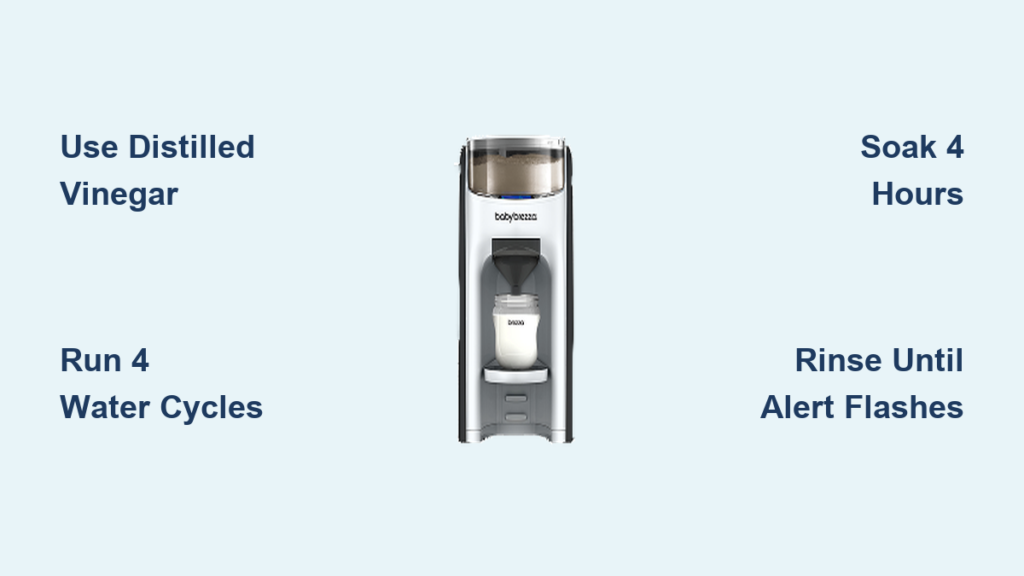
If your Baby Brezza Formula Pro Advanced is dispensing water slower than usual or not heating properly, mineral buildup is likely to blame. Even filtered or bottled water leaves behind limescale on the internal heating plate over time—especially if you’re using tap water. This residue reduces efficiency and can affect the safety of your baby’s formula. The best solution? Clean your Baby Brezza with vinegar, a natural, food-safe descaler that breaks down stubborn deposits without damaging the machine. In this guide, you’ll learn the exact steps to descale your Baby Brezza safely and effectively, ensuring fast, accurate bottle prep every time.
You’ll discover when to clean your machine, what supplies you need, and how to properly rinse out all vinegar residue. We’ll also cover common mistakes to avoid and how to extend your Baby Brezza’s lifespan with simple maintenance. Whether you’re seeing discoloration or just staying ahead of buildup, this step-by-step process will restore your device to like-new performance—safely and affordably.
Why Vinegar Works for Baby Brezza Descaling
Breaks Down Mineral Deposits Safely
Vinegar is a mild acid that dissolves calcium, magnesium, and other minerals left behind when water heats. These deposits appear as white, green, rust, or brown stains on the heating plate and slow down water heating. Distilled vinegar penetrates and loosens limescale without harming internal components. Because it’s non-toxic and food-safe, it’s ideal for baby equipment—as long as it’s thoroughly rinsed.
Prevents Permanent Heating Plate Damage
Over time, mineral buildup can corrode the heating element and reduce water flow. Regular descaling with vinegar prevents long-term damage and keeps your machine operating efficiently. Cleaning every month helps maintain consistent temperatures and extends your Baby Brezza’s lifespan to 3+ years with proper care.
When to Clean Your Baby Brezza with Vinegar
Monthly Descaling Is Essential
Descale at least once a month to keep your Baby Brezza running smoothly. This is the minimum for all users—even if you use filtered or bottled water. Trace minerals still accumulate with daily use, so routine cleaning is non-negotiable for peak performance.
Every 2–3 Weeks for Hard Water
If your home has hard water, descaling every 2–3 weeks is critical. Hard water contains higher levels of calcium and magnesium, which accelerate limescale formation. Check the heating plate monthly—if it’s discolored, it’s time to clean.
Signs You Need to Descale Now
• White, green, rust, or brown stains visible on the heating plate
• Water dispenses slowly or at inconsistent temperatures
• Low water alert flashes too soon during normal use
These are clear indicators that mineral deposits are interfering with your machine’s function.
What You Need to Clean Baby Brezza with Vinegar

Essential Supplies
• 600 mL distilled vinegar
• 600 mL distilled water (plus extra for rinsing)
• 300 mL container to catch dispensed liquid
• Clean cloth or sponge for wiping the tank
Using distilled vinegar and water ensures no new minerals are introduced during cleaning.
Why Distilled Water Matters
Tap, spring, and bottled water all contain minerals that contribute to future buildup. Using distilled water for both the cleaning solution and daily operation prevents recurring limescale and reduces how often you’ll need to descale. It’s the single best way to protect your machine long-term.
Step-by-Step: How to Clean Baby Brezza with Vinegar
Mix the 1:1 Vinegar Solution
Combine 600 mL distilled vinegar and 600 mL distilled water directly in the water tank. Do not use full-strength vinegar or other cleaners—this 1:1 ratio is safe and effective. The total 1,200 mL ensures enough solution for full circulation.
Pro Tip: Fill the tank in the sink to avoid spills. Wipe the outside with a damp cloth before reattaching.
Run Four 300 mL Water Only Cycles
- Place a 300 mL container under the funnel
- Select the 300 mL setting
- Press Water Only
- Let the machine dispense the full amount
Repeat this process three more times to circulate the solution through the entire system. This flushes vinegar into the heating chamber and dispensing tube, beginning to dissolve mineral deposits.
Note: The machine will stop when the tank is low. Do not refill—this is part of the process.
Unplug and Soak for 4 Hours
After dispensing 1,200 mL:
1. Unplug the machine
2. Remove and empty the water tank
3. Let the unit sit unplugged for 4 hours
This soaking period is crucial. The vinegar residue inside continues breaking down stubborn limescale. Do not skip or shorten this step—4 hours ensures complete dissolution.
Rinse the System Until Vinegar Is Gone

Wash and Refill the Water Tank
Wash the tank with warm, soapy water. Rinse thoroughly to remove any vinegar smell. Refill with fresh distilled water and reattach to the machine.
Flush with Distilled Water
Run multiple 300 mL Water Only cycles using distilled water. Continue until the low water alert flashes on the control panel.
Why this matters: The flashing low water alert confirms the system is completely flushed. This is your signal that no vinegar remains—never prepare formula until this happens.
Final Safety Check
• Ensure no vinegar odor remains in dispensed water
• Wipe the funnel and tray with a clean, damp cloth
• Refill with distilled or filtered water for next use
How Often Should You Descale?
Standard: Once a Month
For most households, monthly descaling keeps the machine in top condition. Set a recurring reminder to stay on track.
Hard Water: Every 2–3 Weeks
If your water is hard (common with well water or high mineral content), increase cleaning frequency. Inspect the heating plate monthly—if it’s stained, descale immediately.
Factors That Increase Buildup
• Using tap or spring water
• High daily usage (multiple bottles per day)
• Living in a hard water zone
When in doubt, descale sooner rather than later.
Benefits of Regular Vinegar Cleaning
Consistent Bottle Temperature
A clean heating plate delivers water at the correct temperature every time. No more lukewarm or overheated bottles—just reliable, safe formula prep.
Longer Machine Lifespan
Regular descaling prevents permanent damage to internal components. Machines maintained this way often last 3+ years without performance issues.
Safer Formula Preparation
Mineral deposits can harbor bacteria and affect water purity. Cleaning with vinegar ensures a hygienic system, giving you peace of mind with every bottle.
Common Mistakes to Avoid

Using Tap Water in the Solution
Never mix vinegar with tap water. You’ll introduce more minerals, defeating the purpose. Always use distilled water.
Skipping the 4-Hour Soak
The soak is when most limescale breaks down. Running cycles without soaking only flushes the surface—the real cleaning happens during downtime.
Not Rinsing Enough
If the low water alert hasn’t flashed, vinegar remains in the system. Never prepare formula until after the alert appears. Residual vinegar can affect taste and safety.
Using Other Cleaners
Avoid lemon juice, baking soda, or commercial descalers unless approved by Baby Brezza. Vinegar is the only recommended household solution.
Post-Cleaning Maintenance Tips
Use Distilled Water Daily
After descaling, switch to distilled water for regular use. It’s the best way to prevent future buildup and reduce cleaning frequency.
Inspect the Heating Plate Monthly
Remove the water tank and look at the metal plate at the bottom. If you see any discoloration, plan your next descaling.
Store Vinegar Properly
Keep distilled vinegar in a cool, dark place. It has a long shelf life but can lose potency if exposed to heat or light.
Troubleshooting After Descaling
Machine Won’t Heat Water
• Ensure it’s plugged in and powered on
• Check that the water tank is properly seated
• Confirm the low water alert flashed during rinsing
If issues persist, unplug for 10 minutes and restart.
Vinegar Smell Remains
Run 1–2 additional 300 mL Water Only cycles with distilled water. The odor should disappear completely.
Low Water Alert Won’t Flash
• Tank may not be empty enough—ensure you’re using the 300 mL setting
• Residue may be blocking sensors—wipe the tank and reseat it
• Try unplugging and restarting the machine
Final Checklist: Did You Clean It Right?
✅ Mixed 600 mL vinegar + 600 mL distilled water
✅ Ran four 300 mL Water Only cycles
✅ Unplugged and soaked for 4 hours
✅ Washed and refilled tank with distilled water
✅ Rinsed system until low water alert flashed
✅ No vinegar smell in dispensed water
If all boxes are checked, your Baby Brezza is clean, safe, and ready for use.
Key Takeaways for Cleaning Your Baby Brezza with Vinegar
Regular descaling with vinegar is the simplest way to keep your Baby Brezza Formula Pro Advanced working efficiently and safely. By following this monthly routine—especially if you use tap water—you’ll protect your investment, ensure accurate bottle prep, and give your baby the cleanest possible feed. Stick to distilled water, never skip the soak, and always rinse until the alert flashes. With just a few hours of maintenance each month, your machine will deliver reliable performance for years.
Frequently Asked Questions About Cleaning Baby Brezza with Vinegar
Can I use apple cider vinegar instead of distilled vinegar?
No. Only distilled white vinegar should be used. Apple cider vinegar contains additional compounds and pigments that may leave residue or affect the machine. Stick to clear, distilled vinegar for safe, effective cleaning.
How do I know when the Baby Brezza is fully descaled?
The low water alert flashing during the rinse cycle is the definitive sign that all vinegar has been flushed out. Additionally, there should be no vinegar smell in the dispensed water.
Can I use lemon juice or baking soda to clean my Baby Brezza?
No. Lemon juice is acidic but can leave sticky residues. Baking soda can clog internal parts. Vinegar is the only recommended household cleaner. Use only approved methods to avoid damaging your machine.
Why does the heating plate get discolored?
The discoloration—white, green, rust, or brown—is mineral buildup from heated water. Even filtered water leaves behind trace minerals. Regular descaling prevents this and maintains performance.
How long does the entire cleaning process take?
The full process takes about 4+ hours, mostly due to the required 4-hour soak. Active steps (mixing, dispensing, rinsing) take less than 30 minutes. Plan ahead to avoid disrupting feeding schedules.
Can I use the Baby Brezza immediately after cleaning?
Only after you’ve rinsed thoroughly until the low water alert flashes and confirmed no vinegar odor remains. Never prepare formula until the system is completely clean.





