
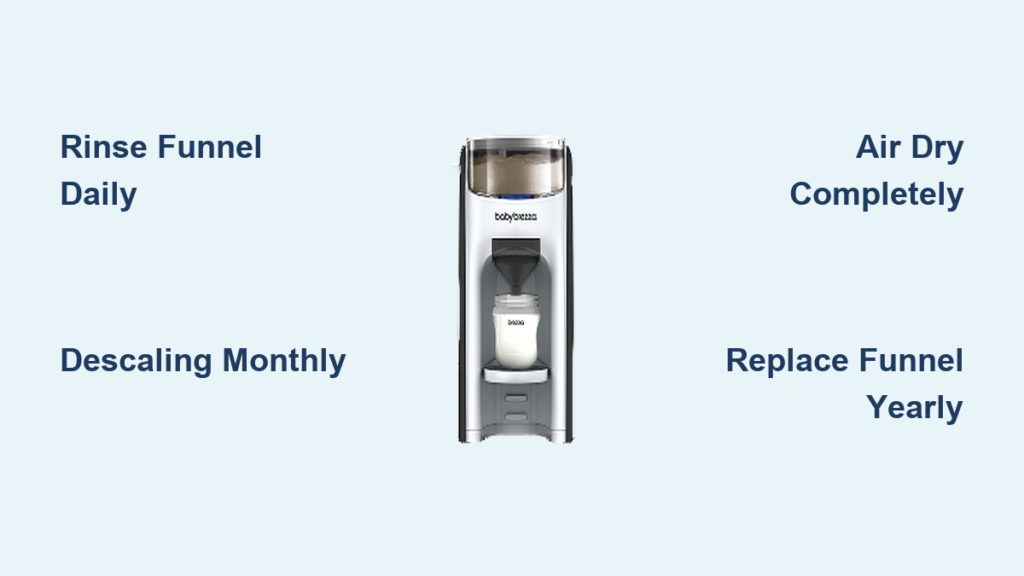
If you rely on your Baby Brezza Formula Pro or Advanced to prepare bottles quickly and safely, keeping it clean is non-negotiable. A poorly maintained machine can harbor bacteria, mold, and mineral buildup—jeopardizing your baby’s health and the device’s performance. The mixing funnel, water tank, and dispensing tube are hotspots for formula residue and biofilm, making regular cleaning essential.
This guide gives you a clear, model-specific cleaning routine for the Baby Brezza Formula Pro, One Step Baby Food Maker, and Bottle Sterilizer. You’ll learn how to clean every part properly, descale monthly, avoid common mistakes, and extend your device’s life. Whether you’re troubleshooting slow dispensing or preventing mold, this step-by-step plan ensures every bottle is safe and perfectly mixed.
Daily Cleaning After Each Use

Remove and Rinse the Mixing Funnel Immediately
The mixing funnel is where water and formula combine, making it the most contamination-prone part. To prevent drying and bacterial growth:
– Remove the funnel right after the last bottle of the day
– Rinse under warm running water to flush out fresh formula
– If residue has dried, soak in warm, soapy water for 10–15 minutes before scrubbing
Wash All Removable Components
Gather and hand-wash these parts daily:
– Mixing funnel
– Water tank
– Dispensing tube
– Hopper and lid
– Drip tray
Use mild dish soap and warm water with a soft bottle brush. Focus on:
– The funnel’s water jet opening, where clogs start
– The inside of the dispensing tube, which can develop biofilm
– The hopper corners, where powder clumps form
Never use abrasive sponges—they scratch plastic and trap bacteria.
Rinse and Air Dry Completely
- Rinse every part thoroughly to eliminate soap residue
- Place on a clean towel or drying rack
- Air dry for 1–2 hours—never reassemble damp parts. Moisture leads to mold and formula clumping
Wipe Down the Main Unit
- Unplug the device before cleaning
- Dampen a soft cloth with soapy water and wipe:
- The funnel chamber
- The exterior surfaces
- The drip tray area
- Use a cotton swab for tight crevices
- Dry with a clean cloth. Never submerge the base unit or spray water into it
Weekly Deep Cleaning Routine
Full Disassembly and Soaking
Once a week, go beyond daily cleaning:
1. Remove all parts, including those not used daily
2. Soak in warm, soapy water for 15–30 minutes to loosen dried residue
3. Scrub with a bottle brush or pipe cleaner, especially the dispensing tube and funnel interior
4. Use a toothpick to clear clogs from small holes
Clean the Interior Chamber
- Dampen a cloth and wipe the funnel seat and surrounding area
- Use cotton swabs to clean around sensors or narrow openings
- Wipe with a clean, damp cloth to remove soap, then dry thoroughly
Inspect for Wear and Damage
Check each part for:
– Discoloration or cloudiness
– Cracks, scratches, or warping
– Persistent odors
Replace any part showing wear—especially the funnel or tube, which can harbor bacteria in micro-scratches
Monthly Descaling to Remove Mineral Buildup

Signs You Need to Descale
Hard water causes mineral deposits that clog lines and reduce efficiency. Watch for:
– White, chalky residue in the water tank
– Slower water flow
– Unusual noises during dispensing
– Reduced heating performance
If you have hard water, descale monthly. For soft water, every 2–3 months is sufficient.
Prepare a Safe Descaling Solution
Use one of these baby-safe options:
– Vinegar solution: 1 part white vinegar to 3 parts water
– Citric acid: 1–2 tbsp food-grade citric acid in warm water
– Commercial descaler: Choose a non-toxic, baby-safe formula
Avoid bleach or harsh chemicals—they leave unsafe residues.
Run the Descaling Cycle
- Unplug and empty the device
- Fill the water tank with descaling solution
- Reconnect power and run 2–3 dispensing cycles (without formula)
- Let the solution sit in the lines for 15–30 minutes
- Run 3–5 rinse cycles with clean water until no vinegar smell remains
Final Rinse and Dry
- Taste-test the water from the last cycle—if it’s not neutral, rinse again
- Wash and dry all removable parts as in daily cleaning
- Wipe the exterior and allow the machine to air out for 30 minutes
How to Clean the Mixing Funnel Properly
Why the Funnel Is the Most Critical Part
This component mixes formula and water, creating the perfect environment for bacteria and mold if not cleaned immediately. Dried residue leads to clogs and inaccurate mixing.
Step-by-Step Funnel Cleaning
- Remove immediately after use
- Rinse under warm water
- Soak in soapy water if residue is dried
- Scrub inside and out with a bottle brush
- Clean small holes with a pipe cleaner
- Check the underside—residue often hides here
- Rinse thoroughly
- Air dry completely
When to Replace the Funnel
Replace every 6–12 months, or sooner if:
– It’s scratched or cloudy
– You see mold that won’t come out
– It has a persistent odor
– Formula doesn’t mix properly
Water Tank Cleaning and Maintenance
Empty and Wash Daily
- Empty leftover water at the end of the day
- Wash with warm, soapy water and a bottle brush
- Focus on corners and the bottom, where minerals collect
Prevent Mineral Buildup
- Use filtered or distilled water to reduce scaling
- Check for cloudiness—a hazy tank means it’s time to descale
- Never use abrasive pads—they scratch and trap bacteria
Air Dry Before Refilling
- Always dry the tank fully before adding fresh water
- Storing water for more than 24 hours increases biofilm risk
Hopper and Lid: Keep Formula Dry and Clump-Free
Empty and Dry After Every Use
- Tap out leftover formula after each use
- Brush out powder with a dry, soft brush
- Wash with soapy water weekly
Clean the Seal and Gasket
- If your hopper has a rubber seal, clean it carefully
- Check for cracks or swelling—replace if damaged
- A compromised seal lets in moisture, causing formula clumping
Never Add Powder to a Wet Hopper
- Moisture ruins formula and promotes mold
- Ensure the hopper is 100% dry before refilling
Dispensing Tube: Prevent Clogs and Biofilm
Clean After Every Use
- Rinse the tube immediately after dispensing
- Use a pipe cleaner or small brush to scrub the inside
- Soak in soapy water weekly
Check for Blockages
- If formula flow slows, the tube may be clogged
- Soak in vinegar solution to dissolve buildup
- Replace if the tube is discolored, cracked, or narrow
Drip Tray: Stop Mold Before It Starts
Remove and Wash Weekly
- The drip tray catches spills and can grow mold
- Empty liquid daily, but wash weekly with soapy water
- Scrub with a brush if residue is dried
Prevent Odors
- Rinse after spills
- If it smells, soak in vinegar solution for 15 minutes, then rinse
Cleaning the Baby Brezza One Step Baby Food Maker
Unplug and Cool Before Cleaning
- Always unplug and let cool before handling
- Never submerge the base unit—only wipe with a damp cloth
Wash Removable Parts After Each Use
Clean these components:
– Blending bowl
– Blade assembly (handle carefully—blades are sharp)
– Lid and seal
– Steaming basket
Use warm, soapy water and a brush. Some models allow top-rack dishwasher use—check your manual.
Dry Thoroughly
- Air dry all parts before storing
- Moisture in the blade housing can cause rust or mold
How to Clean the Bottle Sterilizer and Dryer
Wipe Interior Monthly
- Unplug and cool the unit
- Remove the tray and wash in soapy water
- Wipe the interior with a vinegar-dampened cloth to remove mineral deposits
Descale the Heating Plate
- Mix 1 part vinegar to 3 parts water
- Pour into the reservoir
- Run a sterilizing cycle without bottles
- Follow with 2–3 rinse cycles using clean water
Do this monthly if you use tap water.
Avoid These 5 Common Cleaning Mistakes
Never Submerge the Main Unit
Water damage and electrical hazards can result. Only wipe with a damp cloth.
Skip the Dishwasher Unless Approved
High heat and strong detergents can warp or crack plastic. Hand wash only, unless your manual says otherwise.
Don’t Use Bleach or Harsh Chemicals
They leave toxic residues. Stick to mild dish soap, vinegar, or baby-safe cleaners.
Never Reassemble Wet Parts
Damp components encourage mold. Air dry completely—1–2 hours minimum.
Don’t Ignore the Drip Tray or Dispensing Tube
These are common biofilm hotspots. Clean them weekly, not just occasionally.
Troubleshoot Common Cleaning Issues
Persistent Odors?
- Likely causes: biofilm, mold, or dried formula
- Soak parts in vinegar for 30 minutes
- Replace the funnel or tube if smell remains
White Residue?
- That’s mineral buildup
- Descale immediately
- Switch to filtered or distilled water
Slow or Blocked Dispensing?
- Soak the tube in vinegar
- Run a descaling cycle
- Check the funnel for clogs
Mold Found?
- Stop using the device
- Disassemble and clean all parts with vinegar
- Replace affected components
- Increase cleaning frequency
Water Quality Tips for Long-Term Performance
Use Filtered or Distilled Water
- Reduces mineral buildup
- Improves taste
- Extends time between descaling
Don’t Store Water Long-Term
- Empty the tank if not using for 24+ hours
- Fresh water reduces biofilm risk
Long-Term Maintenance Schedule
Daily
- Rinse funnel
- Wipe exterior
- Empty water tank
Weekly
- Full part wash
- Clean interior chamber
- Inspect for wear
Monthly
- Descaling
- Deep clean with vinegar soak
- Check seals and tubes
Quarterly
- Replace funnel or tube if needed
- Deep clean hopper and lid
Annually
- Replace all consumable parts
- Review manual for updates
Frequently Asked Questions About Cleaning a Baby Brezza
Can I put Baby Brezza parts in the dishwasher?
Only if your manual says so. Most parts should be hand washed with mild soap and water. Dishwasher detergents and heat can warp plastic and damage seals.
How often should I descale my Baby Brezza?
Monthly if you have hard water. Every 2–3 months for soft water. Look for white residue, slow flow, or reduced heating as signs.
Is vinegar safe for cleaning the Baby Brezza?
Yes. Use a 1:3 vinegar-to-water solution for descaling. Always rinse thoroughly with clean water afterward to remove any smell or residue.
How do I remove dried formula from the funnel?
Soak in warm, soapy water for 15–30 minutes, then scrub with a bottle brush. For stubborn residue, use a baking soda paste, then rinse well.
When should I replace the mixing funnel?
Replace every 6–12 months, or if it’s scratched, discolored, or moldy. Scratches trap bacteria and are hard to clean.
What should I do if I find mold?
Stop using the device. Disassemble and clean all parts with vinegar, replace affected components, and increase cleaning frequency.
Key Takeaways for Keeping Your Baby Brezza Clean and Safe
Regular cleaning keeps your Baby Brezza functioning properly and, more importantly, protects your baby from harmful bacteria and mold. Stick to a daily rinse, weekly deep clean, and monthly descaling routine. Always dry parts completely and replace worn components like the funnel and tube.
By using filtered water, avoiding harsh chemicals, and following this guide, you’ll prevent clogs, ensure accurate formula mixing, and extend your device’s life. Keep a cleaning log to stay on track—your peace of mind is worth it.





