
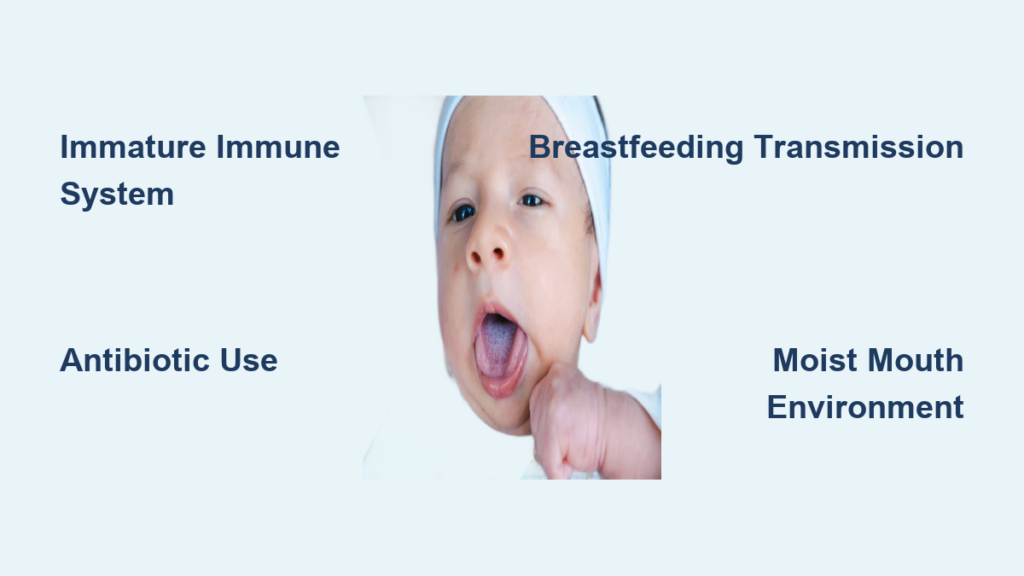
Thrush in babies is a common fungal infection caused by an overgrowth of Candida albicans, a yeast that naturally lives in the body but can multiply uncontrollably in infants. It typically appears as white, cottage cheese-like patches inside the mouth—on the tongue, cheeks, or roof of the mouth—and may cause discomfort during feeding. While not dangerous, thrush can make nursing or bottle-feeding painful, leading to fussiness or refusal to eat.
Babies are especially vulnerable due to their immature immune systems, frequent exposure to moist environments during feeding, and sensitivity to disruptions in healthy bacteria—especially after antibiotic use. Understanding why babies get thrush helps parents recognize early signs, seek timely care, and prevent reinfection through proper hygiene and coordinated treatment for both baby and breastfeeding mother.
Underdeveloped Immune System in Newborns
A baby’s immune system is still developing in the first months of life, making it less capable of regulating yeast growth. This immaturity allows Candida albicans to thrive in warm, moist areas like the mouth and diaper region.
Why Immune Immaturity Matters
Healthy adults naturally keep yeast in check, but infants lack this balance. As a result, even normal levels of Candida can quickly become an infection. Thrush is most common in babies under six months, and the risk drops as their immune defenses strengthen with age.
Antibiotic Use Disrupts Healthy Bacteria
Antibiotics—taken by the mother during pregnancy or breastfeeding, or directly by the baby—can trigger thrush by killing off beneficial bacteria that normally control yeast.
How Antibiotics Lead to Overgrowth
Good bacteria in the gut and mouth help limit Candida growth. When antibiotics reduce these populations, yeast can multiply unchecked. Even a single course may be enough to cause oral thrush, especially in infants whose microbiomes are still forming.
Yeast Transmission During Breastfeeding

Thrush can pass back and forth between mother and baby during nursing. A baby with oral thrush can infect the mother’s nipples, and an infected mother can pass the yeast to her baby’s mouth.
Signs of Nipple Yeast Infection
Mothers may experience:
– Sharp, shooting pain during or after feeding
– Red, cracked, or shiny nipples
– Itching or burning sensation
– Flaking or peeling skin
Treating only one person leads to reinfection. Both mother and baby must be treated simultaneously to break the cycle.
Prolonged Sucking Irritates the Mouth
Extended sucking from breastfeeding, bottle feeding, or pacifier use can create tiny injuries in a baby’s mouth. These micro-abrasions give yeast an entry point to grow.
How Feeding Habits Increase Risk
Babies who fall asleep with a bottle or use a pacifier for long periods are more prone to thrush. The constant moisture and friction create ideal conditions for Candida to take hold.
Reduce Sucking Time to Prevent Irritation
• Limit feeding sessions to 20 minutes
• Avoid letting your baby sleep with a bottle or pacifier
• Consider switching from orthodontic to smaller, traditional pacifiers to reduce friction
Warm, Moist Environments Feed Yeast Growth
Yeast thrives in damp, warm areas—and a baby’s mouth during feeding is the perfect environment. Milk residue, saliva, and skin contact (like nipples or pacifiers) maintain the moisture yeast needs.
Diaper Rash Caused by the Same Yeast
The same Candida albicans can travel through the digestive tract and cause a persistent, red, pimply rash in the diaper area. This means treating only the mouth may not stop the infection.
Treat Both Areas at Once
• Use antifungal cream (like Lotrimin AF) on the rash twice daily
• Change diapers frequently
• Keep the area clean and dry
How to Recognize Thrush in Babies

Spotting thrush early helps prevent feeding problems and discomfort. The key is knowing what to look for—and what to rule out.
White Patches That Don’t Wipe Away Easily
True thrush appears as white, velvety patches that stick to the mouth lining. Unlike milk residue, they’re hard to remove and may leave red, raw spots or slight bleeding when wiped.
Do not scrape the mouth aggressively—this can cause injury. Observe gently and consult your provider if unsure.
Not All White Tongues Mean Thrush
A white-coated tongue is common in breastfed and bottle-fed babies and usually just milk buildup. If the coating wipes off easily and is only on the tongue, it’s likely not thrush.
But if white patches appear on the cheeks, gums, or roof of the mouth, thrush is more likely.
Feeding Discomfort or Refusal
Some babies feel no pain, but others experience burning or soreness. This can lead to:
• Fussiness during feeds
• Pulling away from the breast or bottle
• Shorter or skipped feedings
Pain often worsens when the nipple or bottle touches inflamed areas.
Diagnosing Thrush: What to Expect
Most cases are diagnosed by sight. A healthcare provider can usually confirm thrush just by examining the baby’s mouth.
When to See a Doctor Immediately
Contact your provider right away if your baby:
• Has no wet diaper in 8+ hours (sign of dehydration)
• Is under one month and seems lethargic or ill
• Refuses all feeds
• Has a fever
• Looks very sick or uncomfortable
Infants under 4 months should always be evaluated for thrush.
When to Call Within 24 Hours
Reach out if:
• A fever develops
• There’s visible bleeding in the mouth
• Feeding drops significantly
• You suspect a yeast infection on your nipples
Early treatment prevents complications.
Treating Oral Thrush in Infants
Most cases respond well to treatment, but the approach depends on severity and age.
Watchful Waiting for Mild Cases
If your baby is feeding well and shows no discomfort, some providers recommend monitoring instead of medicating. Mild thrush often resolves in 2 to 8 weeks without treatment.
However, if symptoms last beyond a week or worsen, treatment is usually needed.
Antifungal Medication for Babies
Doctors typically prescribe nystatin oral suspension, a liquid antifungal painted inside the mouth with a dropper or swab.
Dosing Guidelines:
• Under 1 month: 1 mL per dose
• Over 1 month: 2 mL per dose
Apply to the tongue, cheeks, and roof of the mouth several times a day for 7–14 days. Continue the full course even after symptoms disappear.
Pharmacy-Bought Mouth Gel for Older Babies
For infants over 4 months, miconazole oral gel (like Daktarin) is available without a prescription. Apply it directly to affected areas with a clean finger or applicator.
Do not use in younger babies unless directed by a doctor.
Home Care That Supports Recovery
Clean Feeding Equipment Daily
• Wash bottle nipples, pacifiers, and pump parts in hot, soapy water after each use
• Some sources recommend boiling for 5 minutes; others say regular washing is sufficient
• Replace pacifiers every 4–6 weeks
Use Probiotic Yogurt (For Babies on Solids)
• Apply plain, unsweetened yogurt with live cultures (like Lactobacillus) inside the cheeks
• Do not use flavored or sweetened yogurt—sugar feeds yeast
Sterilize Items if Thrush Recurs
While daily boiling isn’t always necessary, sterilizing weekly or during active infection may help prevent reinfection.
Preventing Thrush From Coming Back

Recurrent thrush may signal an ongoing source of reinfection. Taking preventive steps reduces the risk.
Practice Good Breastfeeding Hygiene
• Wash hands before and after nursing
• Dry nipples thoroughly after feeding
• Change nursing pads frequently
• Avoid plastic-lined pads that trap moisture
Don’t Freeze Breast Milk During Active Infection
Freezing does not kill Candida. If your baby has thrush, avoid storing breast milk for later use—thawed milk could reintroduce the yeast.
Use fresh milk during treatment.
Avoid Unnecessary Antibiotics
Only use antibiotics when clearly needed. Discuss alternatives with your pediatrician for mild infections.
Probiotics may help restore gut balance after antibiotics—ask your doctor before starting any supplement.
Recovery Timeline and Outlook
Most babies recover quickly with proper care.
Fast Healing With Treatment
With antifungal medication, improvement usually starts in 2–3 days, and full recovery takes 4 to 5 days. Always complete the full course to prevent relapse.
Slower Recovery Without Treatment
Untreated thrush may take 2 to 8 weeks to resolve. During this time, feeding discomfort may persist, so many parents choose treatment even for mild cases.
Recurrent Thrush Needs Evaluation
If thrush returns more than twice in a few months, talk to your pediatrician. Possible causes include:
• Untreated equipment or maternal yeast
• Immune system issues
• Chronic antibiotic exposure
Is Thrush Contagious? Child Care Safety
Thrush is not contagious in the traditional sense. It cannot spread to other children or adults through casual contact.
Safe to Attend Daycare
Your baby can safely go to child care while being treated. Thrush only affects those with favorable conditions for yeast growth, like weakened immunity or ongoing moisture exposure.
Break the Mother-Baby Cycle
While not spread to others, thrush can cycle between breastfeeding mothers and babies. Treating both at the same time stops reinfection.
Other caregivers are not at risk unless they have open mouth sores or compromised immunity.
Frequently Asked Questions About Baby Thrush
Can a baby get thrush without antibiotics?
Yes. While antibiotics increase the risk, babies can develop thrush due to an immature immune system, prolonged sucking, or yeast exposure during birth or breastfeeding—even without antibiotic use.
How long does thrush last in babies?
With treatment, most babies improve within 2–3 days and fully recover in 4–5 days. Without treatment, it may take 2 to 8 weeks to go away on its own.
Can pacifiers cause thrush?
Yes. Prolonged pacifier use can irritate the mouth and create a moist environment where yeast thrives. Limit use and clean pacifiers daily to reduce risk.
Does thrush hurt babies?
Some babies feel no pain, but others experience soreness or burning that makes feeding uncomfortable. Signs include fussiness, refusal to eat, or pulling away during feeds.
Can I continue breastfeeding if my baby has thrush?
Yes—and you should. But both you and your baby must be treated at the same time to prevent passing the infection back and forth.
Can thrush spread to other parts of the body?
Yes. The same yeast can cause a diaper rash or, in rare cases, spread deeper if the immune system is compromised. Most healthy babies only have oral or skin involvement.
Key Takeaways for Managing Baby Thrush
Thrush is a common, treatable yeast infection caused by Candida albicans overgrowth in a baby’s mouth. It’s most common in infants due to underdeveloped immunity, antibiotic use, and moist feeding environments. While often mild, it can cause feeding pain and refusal.
Early recognition—especially of persistent white patches that don’t wipe off—is key. Treatment with antifungal medication usually brings fast relief, but both mother and baby should be treated together if breastfeeding. Preventive steps like cleaning feeding items, avoiding unnecessary antibiotics, and not freezing breast milk during infection help stop recurrence.
If thrush keeps returning or your baby shows signs of dehydration or illness, consult your healthcare provider. With proper care, most babies recover fully within days.





