
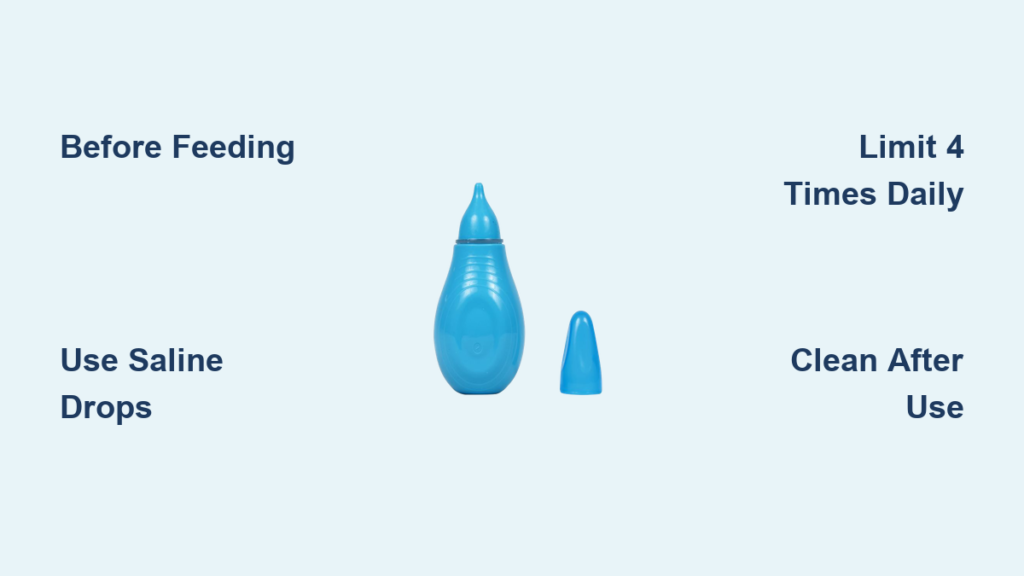
Babies can’t blow their noses, and when mucus builds up, it makes breathing, feeding, and sleeping difficult—especially for infants under four months who breathe exclusively through their nose. A nasal aspirator is one of the most effective tools to safely clear a baby’s congested nose. Whether you’re using a bulb syringe or a parent-powered device like NoseFrida, knowing the right technique ensures comfort and safety. This guide walks you through step-by-step instructions, best practices, and critical safety tips so you can confidently use a nasal aspirator on your baby—without causing irritation or discomfort.
Clearing your baby’s nose doesn’t have to be stressful. With the right tools, timing, and gentle approach, you can help your little one breathe easier in minutes. You’ll learn how to prepare for suctioning, choose between a bulb syringe and nasal aspirator, use saline drops effectively, and avoid common mistakes that lead to irritation.
When to Suction Baby’s Nose
Before Feeding and Sleep
Suction your baby’s nose before feeding and before bedtime for optimal comfort. Clear nasal passages allow babies to breathe while nursing or bottle-feeding, reducing frustration and improving intake. Suctioning after feeding can trigger gagging or vomiting due to pressure changes and movement, so always time it before meals.
If your baby is struggling to latch or pulls away from the breast or bottle, nasal congestion might be the cause. A quick suction session can make feeding smoother and more satisfying for both of you.
Limit Frequency to Prevent Irritation
Do not suction more than 4 times per day. Overuse can inflame the delicate nasal lining, leading to swelling and more congestion. Use only when necessary—such as when you hear snuffling, see labored breathing, or notice difficulty latching during feeds.
If mucus returns quickly, reapply saline drops and suction again—but stay within the daily limit. Frequent suctioning may do more harm than good.
Choose the Right Nasal Aspirator

Bulb Syringe vs. Nasal Aspirator
Two main tools help clear infant mucus: the bulb syringe and the nasal aspirator (like NoseFrida or Hydrasense). The bulb syringe is simple and widely available but offers less suction power. Nasal aspirators use gentle mouth suction with a built-in filter, making them more effective at removing thick mucus—without risk of contamination.
Many parents start with a bulb syringe but switch to a nasal aspirator when dealing with stubborn congestion. The choice depends on your comfort level and how much mucus your baby produces.
Key Differences in Use
| Feature | Bulb Syringe | Nasal Aspirator |
|---|---|---|
| Suction method | Manual bulb release | Parent’s breath through tube |
| Filter required | No | Yes – replace after each use |
| Cleaning complexity | Low | Moderate (disassemble parts) |
| Effectiveness | Moderate | High |
Choose based on your comfort level and the baby’s congestion severity. Many parents start with a bulb syringe and switch to a nasal aspirator for stubborn blockages.
Prepare for Suctioning
Gather Supplies First
Have everything ready before starting:
– Nasal aspirator or bulb syringe
– Saline drops (store-bought or homemade)
– Soft tissues
– Clean dropper (if making saline)
– Swaddle blanket (optional)
This helps keep the process quick and calm, minimizing stress for both you and your baby.
Swaddle to Prevent Movement
Wrap your baby snugly in a soft blanket to limit wiggling. A rolled-up towel or receiving blanket works well. Secure but gentle restraint ensures safer insertion and better suction results.
Even if your baby fusses, staying calm and moving efficiently will help you complete the task with minimal discomfort.
Use Saline Drops to Loosen Mucus
Make or Buy Saline Solution
Use sterile saline drops from the pharmacy, or make your own:
– Mix ¼ teaspoon salt in 1 cup warm tap water
– Stir until dissolved
– Use immediately—do not store
Homemade saline should be fresh each time to avoid bacterial growth.
Never use plain tap water directly in the nose. Always use sterile saline, whether store-bought or freshly made.
Administer Drops Correctly
- Lay baby flat on their back.
- Gently place 3–4 drops into one nostril, then repeat in the other.
- Keep baby’s head tilted back for 30–60 seconds to let the solution soften mucus.
- You may see your baby sneeze—this helps expel loosened mucus naturally.
Wait a full minute before suctioning for best results.
How to Use a Bulb Syringe
Step-by-Step Suctioning
- Squeeze the bulb fully—compress it flat.
- While keeping it squeezed, gently insert the tip just inside one nostril—no deep insertion.
- Slowly release the bulb to create suction and draw mucus out.
- Remove and squeeze mucus onto a tissue.
- Repeat for the other nostril.
Work quickly and gently. You may need to repeat if mucus is thick.
Avoid Common Mistakes
• Don’t squeeze the bulb while inside the nose—this blows air in and pushes mucus deeper
• Never aim toward the throat—this risks aspiration
• Always squeeze the bulb away from the baby before inserting
These small details make a big difference in effectiveness and safety.
How to Use a Nasal Aspirator (NoseFrida)
Assemble the Device
- Attach the tube to the mouthpiece (red end goes in your mouth).
- Insert a new disposable filter—this prevents mucus from entering your mouth.
- Connect the nasal tip.
Always use a fresh filter—never reuse.
Create Gentle Suction
- Place saline drops in baby’s nostril.
- Put the mouthpiece in your mouth.
- Gently press the nasal tip around one nostril to form a seal—do not insert deeply.
- Exhale slowly and steadily through your mouth to generate suction.
- You’ll see and hear mucus move into the tube.
- Repeat on the other side.
No need to clean between nostrils—just switch sides with the same setup.
Why NoseFrida Works Better
The parent-controlled breath allows adjustable suction, making it ideal for thick or stubborn mucus. The filter blocks germs and mucus, so there’s no health risk to you.
Clean All Equipment After Use
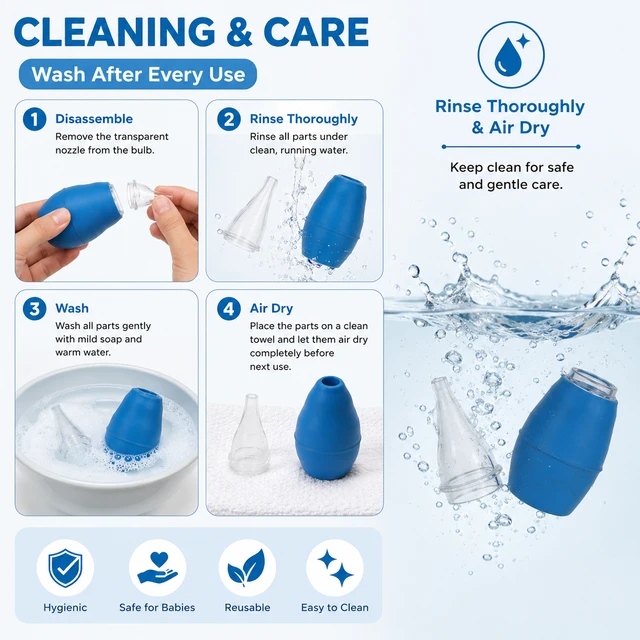
Wash Bulb Syringe Thoroughly
- Fill with warm, soapy water and squeeze repeatedly.
- Rinse multiple times with clean water.
- Shake out excess water and air dry completely before storing.
Moisture breeds bacteria—never store wet.
Disassemble and Sanitize Nasal Aspirator
- Take apart all components.
- Discard the used filter.
- Wash nasal tip, tube, and mouthpiece with hot, soapy water.
- Rinse well and air dry on a clean towel.
Replace filters after every use. Most kits come with starter packs—keep extras on hand.
Safety Rules You Must Follow
Prevent Nasal Injury
• Never insert any tool deeply—only far enough to form a seal
• Avoid forceful suction—gentle pressure is enough
• Limit suctioning to 4 times daily to prevent irritation and swelling
Over-suctioning damages sensitive tissue and worsens congestion.
Use Only Safe Products
• Use sterile saline only—never plain tap water directly in the nose
• Do not use medicated drops unless prescribed by a pediatrician
• Stick to normal saline—no additives
What to Expect During Suctioning
Baby May Cry—Stay Calm
Crying is normal. Babies dislike the sensation and noise. Stay calm, work efficiently, and comfort them immediately after with cuddles or feeding.
Signs of Successful Suction
• Easier breathing
• Quieter sleep
• Improved feeding
• Reduced snoring or snuffling
If mucus returns quickly, reapply saline and suction again—but not more than four times today.
Best Times to Suction: Recap
Before Feeding
Clears the airway so baby can breathe while eating. This reduces fussiness and improves milk intake.
Before Bedtime
Helps baby sleep more soundly. Congestion disrupts sleep cycles and causes frequent waking.
Never Suction After Feeding
Doing so can trigger vomiting. Wait at least 20–30 minutes after feeding if suction is urgently needed.
Troubleshooting Common Issues
No Mucus Comes Out?
• Mucus may be too thick—reapply saline and wait longer
• Tip may not be sealed—adjust position gently
• Suction may be too weak—try a nasal aspirator instead of a bulb
Baby’s Nose Is Red or Bleeding?
• You’re inserting too deeply or suctioning too hard
• Stop immediately and skip suction for 24 hours
• Apply a tiny amount of petroleum jelly around the nostrils to soothe
If bleeding persists, consult your pediatrician.
Device Isn’t Working?
• Check for clogs in the tube or tip
• Replace filter (for nasal aspirators)
• Ensure all parts are assembled correctly
Long-Term Use and Care
Continue Until Age 2
Most children can’t blow their nose effectively until age 2. Keep using suction tools as needed during colds or allergies.
Teach Older Toddlers
As they grow, model nose-blowing into tissues. Use toys or games (like blowing cotton balls) to make it fun.
When to Call the Doctor
Seek Medical Advice If
• Congestion lasts more than 5–7 days
• Baby has trouble breathing (flaring nostrils, grunting, fast breathing)
• Fever develops (especially under 3 months)
• Mucus is yellow/green and persistent
• Baby refuses to feed or shows signs of dehydration
Nasal congestion is usually mild, but it can signal infection or respiratory illness in infants.
Frequently Asked Questions About Using a Nasal Aspirator on Baby
Can I use a nasal aspirator on a newborn?
Yes, you can safely use a nasal aspirator on a newborn. Babies under four months rely solely on nasal breathing, so gentle suction with saline is often necessary. Always use a soft touch and limit suctioning to no more than four times daily.
How do I clean a NoseFrida after use?
Disassemble all parts, discard the used filter, and wash the nasal tip, tube, and mouthpiece with hot, soapy water. Rinse thoroughly and air dry on a clean towel. Reassemble with a new filter before next use.
Is it safe to use homemade saline drops?
Yes, if made correctly. Mix ¼ teaspoon of salt in 1 cup of warm tap water and use immediately. Do not store or reuse. Always use clean utensils and containers to prevent contamination.
Why does my baby cry when I use the nasal aspirator?
The sensation and noise can be startling. Babies also can’t understand what’s happening. Stay calm, work quickly, and comfort your baby right after. Over time, they may become more tolerant.
Can I suction my baby’s nose while they’re sleeping?
It’s best to suction before sleep, not during. Waking a baby for suction may cause distress. If congestion wakes them, do a quick session, then comfort them back to sleep.
How often can I use saline drops on my baby?
Limit saline drops to 1–2 times per day unless directed by a pediatrician. Overuse can dry out nasal passages and cause irritation, even though saline is gentle.
Key Takeaways for Using a Nasal Aspirator on Baby
• Suction before feeding and bedtime for best results
• Use saline drops first to loosen thick mucus
• Limit suctioning to no more than 4 times daily to avoid irritation
• Always clean tools after each use and replace filters on nasal aspirators
With practice, using a nasal aspirator becomes quick and routine. Focus on gentle technique, proper timing, and cleanliness. If symptoms persist or breathing becomes difficult, contact your pediatrician. You’ve got this—every time you clear your baby’s nose, you’re helping them breathe, eat, and sleep better.





