
Is your baby waking up shivering in the middle of the night? You’re not alone. Many parents struggle to balance warmth and safety when putting their baby to sleep. The key isn’t piling on blankets or turning up the heat, but using smart, safe strategies that keep your baby cozy without increasing the risk of Sudden Infant Death Syndrome (SIDS). Overheating is a known risk factor, so it’s safer to dress your baby slightly cooler than too warm.
In this guide, you’ll learn exactly how to keep a baby warm at night using pediatrician-approved methods. From ideal room temperatures and proper layering to checking your baby’s real body temperature, every tip is designed for safety and comfort. Whether it’s winter or summer, newborn or 6 months, these proven steps will help your baby sleep soundly—no guesswork needed.
Set the Ideal Room Temperature for Safe Sleep

Keep the Room Between 68–72°F
The safest and most comfortable room temperature for a baby at night is 68–72°F (20–22°C). This range helps maintain a stable body temperature and reduces the risk of overheating, which is linked to SIDS. Use a digital room thermometer to monitor the temperature accurately—don’t rely on how the room feels to you.
If the temperature drops below 65°F, consider adding a 2.5 tog sleep sack or an extra layer of clothing. Never let the room fall below 62°F, especially for newborns, as extreme cold can disrupt sleep and cause discomfort.
Use Safe Heating Devices Only
When extra warmth is needed, choose oil-filled radiators or thermostatically controlled space heaters. These provide steady, even heat and automatically shut off when the target temperature is reached, preventing dangerous overheating.
Avoid electric blankets, heating pads, or portable fan heaters—they can overheat quickly and pose serious burn and fire risks. Never place any heating device directly in or near the crib.
Circulate Warm Air Without Creating Drafts
Run a ceiling fan on low in a clockwise direction during winter to push warm air down from the ceiling. This improves heat distribution without blowing cold air on your baby. A gentle fan also enhances air circulation, which has been shown to reduce SIDS risk—even in colder months.
Keep the crib away from windows, doors, or HVAC vents where cold drafts could reach your baby.
Dress Your Baby in Safe, Layered Sleepwear
Follow the One-Layer-Extra Rule
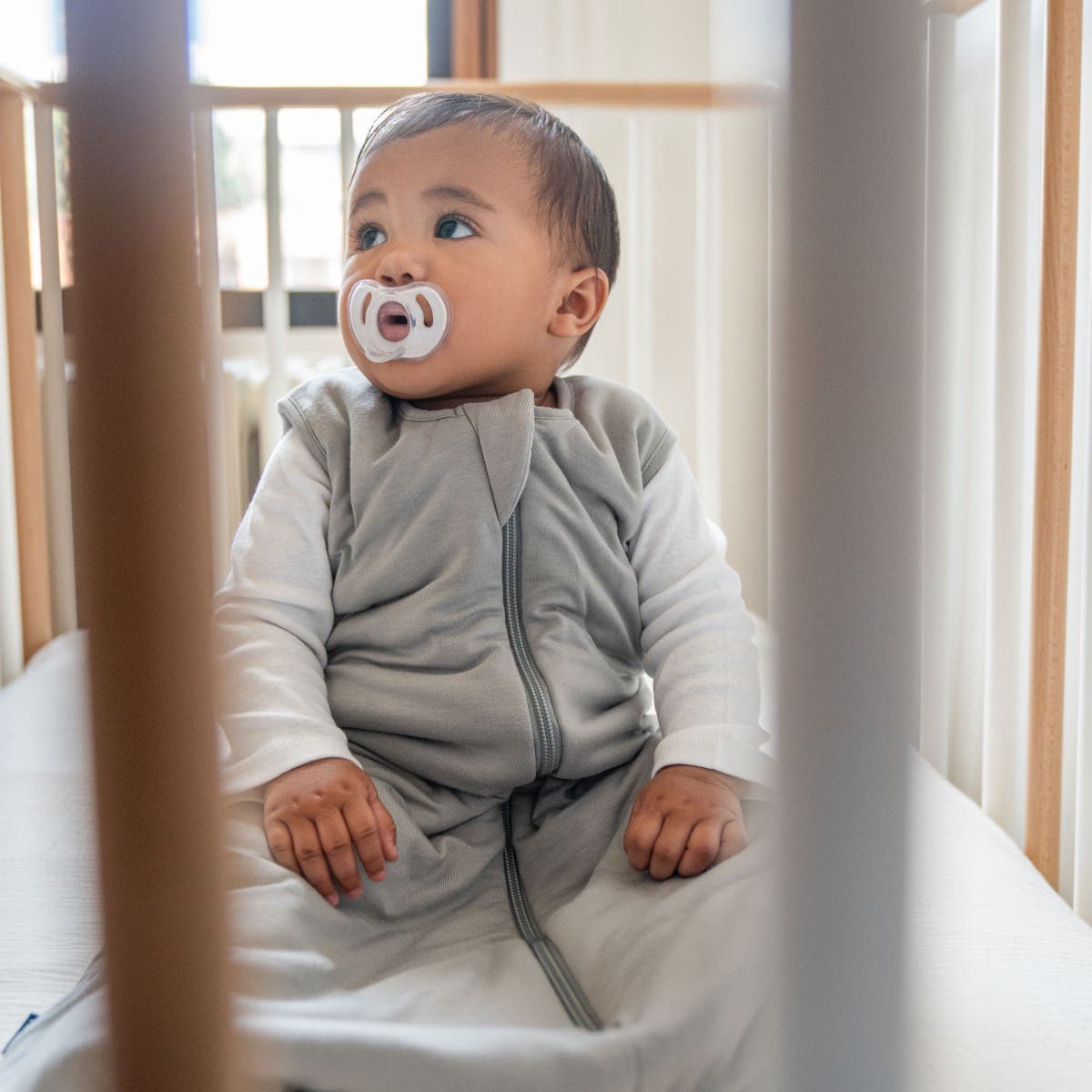
Dress your baby in one more layer than you’re wearing. If you’re comfortable in a t-shirt and pants, your baby likely needs a long-sleeve onesie plus a sleep sack.
This rule prevents both underdressing and over-layering. Always use breathable fabrics and avoid bulky clothing that traps heat or restricts movement.
Start With a Breathable Base Layer
Begin with a long-sleeve cotton onesie or merino wool pajamas. Merino wool naturally regulates temperature—keeping baby warm when it’s cold and cool when it’s warm—making it ideal for year-round use.
Avoid synthetic materials that don’t breathe well or may irritate sensitive skin. Ensure the base layer fits snugly but allows full arm and leg movement.
Add Insulating Layers Based on Temperature
For colder nights, add a fleece sleeper or a long-sleeve onesie under a sleep sack. These middle layers provide warmth without loose fabric.
Use a sleep sack (wearable blanket) as the outer layer. Choose the tog rating based on room temperature:
• 1.5 tog: Best for 68–72°F (e.g., Burt’s Bees quilted sleep sack)
• 2.5 tog: Ideal for rooms below 65°F
Fuzzy bear suits with built-in feet and hand covers are acceptable if breathable and not too thick. Always ensure the suit allows free movement and doesn’t cover the face.
Check Your Baby’s Temperature the Right Way
Feel the Neck and Chest, Not Hands
Cold hands and feet are normal in babies due to immature circulation. Don’t panic if they feel chilly—this doesn’t mean your baby is cold.
To check true body temperature, place your hand on the back of the neck or chest. If it feels warm and dry, your baby is dressed appropriately. If it’s sweaty or damp, your baby is too hot—remove a layer immediately.
Watch for Signs of Overheating
Overheating is more dangerous than being slightly cool. Key signs include:
• Sweating
• Flushed or red cheeks
• Rapid breathing
• Clammy skin
If you notice any of these, reduce layers and ensure the room isn’t too warm. Remember: it’s safer for a baby to be a little cool than too hot.
Follow Safe Sleep Practices to Maintain Warmth

Use a Sleep Sack Instead of Loose Blankets
Loose blankets, pillows, and stuffed animals increase suffocation risk and should never be in the crib. Instead, use a sleep sack to keep your baby warm and safe.
Sleep sacks prevent covers from slipping over the face while allowing free leg movement. They’re designed to fit snugly around the arms and neck but not restrict motion.
Pre-Warm the Crib Safely
You can warm the crib before bedtime using safe methods:
• Place a warm (not hot) water bottle or heating pad in the crib
• Let it sit for 10–15 minutes
• Remove it completely before placing your baby down
Never leave any heating device in the crib. Surfaces can become dangerously hot and cause burns.
Swaddle Newborns for Warmth and Security
Swaddling helps newborns feel secure and retain body heat. Use a lightweight, breathable swaddle blanket or a commercial swaddle that keeps arms snug but allows hips to move freely.
Stop swaddling once your baby shows signs of rolling (usually 2–4 months). After that, switch to a sleep sack with arms free.
Adjust Clothing for Winter and Summer Nights

Winter: Layer Lightly, Not Heavily
In cold weather:
• Use a long-sleeve onesie as a base
• Add a fleece sleeper or merino wool pajamas
• Top with a 2.5 tog sleep sack
Avoid thick hats or socks unless the room is very cold—these can cause overheating. If used, remove them once the baby is settled.
All layers should be lightweight and breathable. Never use adult blankets or quilts in the crib.
Summer: Simplify and Lighten Up
In warmer months:
• Use a short-sleeve onesie or just a diaper if the room is above 75°F
• Choose a 0.5–1.0 tog sleep sack
• Keep the room between 68–72°F with a fan for air circulation
Avoid overcooling with air conditioning. Use breathable cotton sheets and avoid synthetic fabrics that trap heat.
Prevent Night Waking Caused by Temperature
Rule Out Cold as a Cause of Waking
If your baby wakes frequently, check if they’re too cold. Use the neck and chest test before assuming hunger or teething.
If the baby feels cool, add a layer or adjust the room temperature. A consistent sleep environment helps prevent temperature-related wake-ups.
Create a Calming Bedtime Routine
A predictable routine signals it’s time to sleep:
• Warm bath
• Quiet time with dim lights
• Feeding
• Gentle lullabies or white noise
Keep night feedings low-key—avoid bright lights and talking to help your baby return to sleep quickly.
Encourage Self-Soothing Skills
If your baby relies on feeding or rocking to fall asleep, they may wake expecting the same. Gradually introduce self-soothing by:
• Placing baby drowsy but awake
• Offering a pacifier (if accepted)
• Allowing short periods of crying during sleep training (if age-appropriate)
This builds independence and reduces nighttime dependency.
Know When to Seek Medical Advice
Talk to Your Pediatrician if Sleep Problems Continue
If your baby still wakes often after 3–4 months, despite adjusting temperature and routine, consult your pediatrician. Persistent night waking can affect growth and parental well-being.
Rule out medical causes like reflux, allergies, or ear infections. Also, ensure your baby is feeding well during the day to reduce night hunger.
Reassess If Your Baby Feels Cold Often
If your baby consistently feels cold despite proper layers and room temperature, double-check:
• Accuracy of your room thermometer
• Effectiveness of your heating source
• Tog ratings of sleepwear
Try merino wool sleepwear for better temperature regulation. If concerns remain, seek professional advice.
Avoid Dangerous Myths About Keeping Babies Warm
Never Use Electric Blankets or Heating Pads
These devices can overheat rapidly and cause burns. They also increase fire risk and are not safe for use in a baby’s sleep environment.
Don’t Use Adult Blankets in the Crib
Adult bedding is too heavy and loose for a baby. It can cover the face and lead to suffocation. Always use baby-safe sleepwear like sleep sacks instead.
Avoid Co-Sleeping Just for Warmth
While it may seem comforting, co-sleeping increases the risk of accidental suffocation, entrapment, and SIDS. Keep your baby in their own crib or bassinet with proper layers for warmth.
Frequently Asked Questions About Keeping a Baby Warm at Night
What is the best room temperature for a baby to sleep?
The ideal room temperature is 68–72°F (20–22°C). Use a digital thermometer to monitor it continuously. This range supports safe, comfortable sleep and reduces the risk of SIDS.
How can I tell if my baby is too hot or too cold?
Feel the back of the neck or chest. If it’s warm and dry, your baby is comfortable. If sweaty, they’re too hot. Cold hands and feet are normal—don’t rely on them to judge warmth.
Can I use a blanket to keep my baby warm at night?
No. Loose blankets increase suffocation risk. Instead, use a sleep sack with appropriate tog rating. If extra warmth is needed, add layers of clothing—not blankets.
Should I swaddle my baby at night?
Yes, for newborns. Swaddling helps retain heat and promotes calm sleep. Use a breathable swaddle and stop once your baby shows signs of rolling (usually 2–4 months).
Is it safe to use a heater in the baby’s room?
Only if it’s an oil-filled radiator or thermostatically controlled heater that automatically shuts off. Never use electric blankets, heating pads, or portable fan heaters.
Do babies need hats or socks to sleep?
Not usually. Hats and socks can cause overheating. Only use them in very cold rooms (below 65°F), and remove them once the baby is settled.
Key Takeaways for Keeping a Baby Warm and Safe at Night
Keeping a baby warm at night is about balance—safe temperatures, smart layering, and SIDS-prevention practices. Focus on the chest and neck, not hands, to assess warmth. Use a room thermometer, dress in breathable layers, and always choose sleep sacks over loose blankets.
Remember: overheating is more dangerous than being slightly cool. Stick to the 68–72°F range, follow the one-layer rule, and avoid unsafe heating methods. With these steps, your baby will stay cozy, safe, and asleep through the night.





