
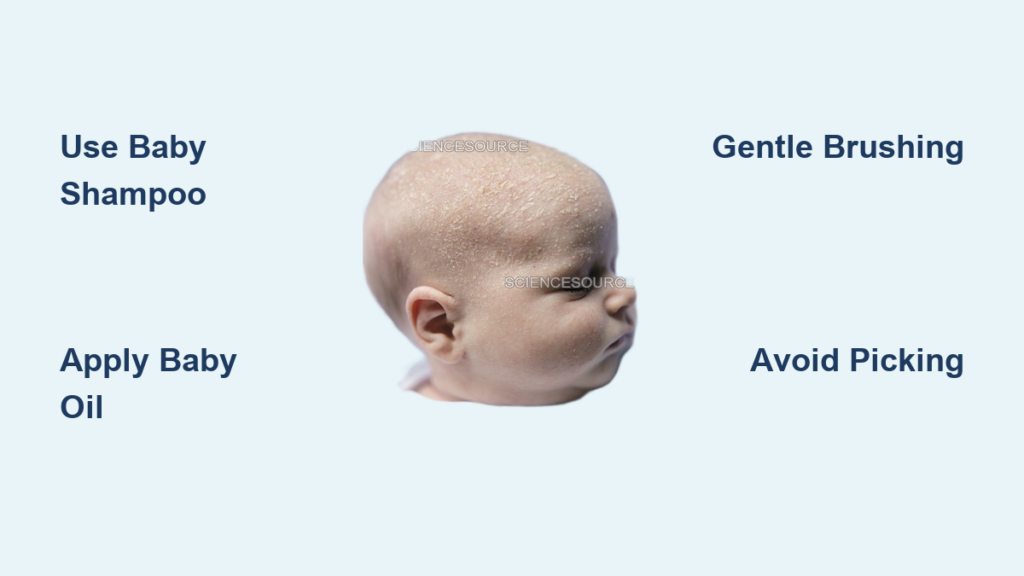
If you’ve spotted flaky, yellowish patches on your baby’s scalp, you’re likely dealing with baby dandruff, commonly known as cradle cap. This condition affects most infants during their first year and typically appears within the first three months of life. While the greasy or dry scales may look alarming, cradle cap is harmless, painless, and doesn’t cause itching or discomfort. It’s not contagious, not a sign of poor hygiene, and doesn’t affect your baby’s sleep or feeding.
The good news is that cradle cap usually clears up on its own within weeks to months—often by the first birthday. With gentle home care like regular shampooing, baby-safe oil treatments, and soft brushing, you can speed up the process safely. In this guide, you’ll learn how to identify cradle cap, use dermatologist-approved methods to manage it, avoid common mistakes, and know when to seek medical advice—all based on trusted pediatric and dermatological insights.
Spot the Signs of Cradle Cap Early

Recognizing cradle cap early helps you respond calmly and effectively. Knowing what to look for prevents unnecessary worry and keeps your care routine on track.
Identify the Visual Clues
Cradle cap shows up as yellow or white scaly patches on your baby’s scalp. These flakes may be dry and flaky or greasy and waxy, often sticking firmly to the skin. Unlike adult dandruff, they don’t shed easily. The patches can look slightly crusted but typically don’t cause redness or irritation. Most babies show no signs of discomfort—they won’t scratch, cry, or seem bothered.
Feel the Texture and Check the Location
Gently run your fingers over the scalp. If the patches feel waxy, greasy, or slightly raised, it’s likely cradle cap. The condition usually stays on the scalp, especially near the crown or hairline. If you notice similar scales on the face, ears, or diaper area, it may be a broader form of seborrheic dermatitis. While still manageable, this may require extra attention and monitoring.
Rule Out Other Skin Conditions
Cradle cap doesn’t cause redness, swelling, oozing, or foul odor. If you see these signs, or if your baby seems itchy or irritable, it could signal an infection, eczema, or psoriasis. Cradle cap is not contagious, so your baby can safely attend daycare and playdates. If in doubt, a pediatrician can diagnose it just by looking—no tests needed.
Choose the Right Shampoo and Wash Routine
Gentle, consistent shampooing is one of the most effective ways to manage baby dandruff. It helps loosen flakes and prevent buildup without irritating delicate skin.
Pick a Mild, Fragrance-Free Baby Shampoo
Use only tear-free, fragrance-free baby shampoos without dyes, parabens, or harsh chemicals. Adult dandruff shampoos are too strong and can dry out or irritate your baby’s scalp. Recommended options include:
• CeraVe Baby Wash & Shampoo – Contains ceramides and hyaluronic acid to support the skin barrier
• Aveeno Baby Daily Moisture Wash – Features soothing oat extract, ideal for sensitive skin
• Mustela Foam Shampoo – Designed specifically for cradle cap-prone scalps
These formulas cleanse gently while protecting your baby’s natural moisture.
Shampoo Every Other Day
For most babies, washing every other day is enough to prevent scale buildup. Over-washing can strip natural oils and worsen dryness, especially if your baby has eczema. Use your fingertips to massage the scalp gently—never scrub hard. Focus on the areas with flakes, but keep the process calm and soothing.
Rinse Completely to Avoid Residue
After lathering, rinse thoroughly with warm water. Leftover shampoo can contribute to flakiness, especially in thicker hair or along the hairline. Make sure no product remains on the scalp before drying.
Soften Scales with Baby-Safe Oil
Applying oil before shampooing helps break down stubborn flakes, making them easier to remove. This simple step is especially helpful for thick or greasy patches.
Use Only Safe Oils for Infants
Choose baby-safe oils that won’t irritate sensitive skin. Recommended options include:
• Burt’s Bees Nourishing Baby Oil – Made with apricot and grape seed oils
• Earth Mama Calendula Baby Oil – Calming calendula for gentle care
• Johnson’s Baby Oil with Shea & Cocoa Butter – Classic formula that locks in moisture
Avoid essential oils or adult skincare products, which may be too harsh.
Apply and Wait 15–30 Minutes
Put a small amount of oil on the affected areas and massage it in gently. Let it sit for 15 to 30 minutes to soften the scales. Don’t leave it on overnight—excess oil can attract dirt or clog pores.
Follow with a Thorough Shampoo
After the waiting period, wash your baby’s hair with a mild shampoo. You may need to shampoo twice: once to break down the oil and again to cleanse fully. The softened flakes should rinse away more easily.
Loosen Flakes with Gentle Brushing
After shampooing, gentle brushing helps lift and remove loose scales without damaging the scalp. It’s a key step—but technique matters.
Use the Right Tools
Choose one of these safe options:
• Soft baby hairbrush
• Clean washcloth
• Fine-toothed comb
Make sure tools are clean and used only for this purpose.
Brush After Bathing While Hair Is Wet
Wait until after shampooing and rinsing. Wet hair makes the scalp more flexible and reduces friction. Gently brush or wipe in circular motions, focusing on flaky areas. If flakes don’t come off easily, leave them—don’t force them.
Never Pick or Scratch the Scalp
Do not use your nails or hard tools to peel off scales. This can break the skin and lead to infection. Let consistent care do the work over time.
Try Medicated Cradle Cap Shampoos if Needed
If regular shampooing doesn’t improve the condition after 2–3 weeks, switch to a cradle cap-specific shampoo. These contain safe, active ingredients that help break down thick scales.
Look for These Effective Ingredients
• Salicylic acid – Gently exfoliates dead skin cells
• Zinc pyrithione – Reduces yeast and flaking
• Selenium sulfide – Controls oil and scaling
Use these shampoos only as needed and follow label instructions carefully.
How to Use Medicated Shampoos Safely
• Apply to wet scalp
• Massage gently
• Leave on for 1–2 minutes (as directed)
• Rinse thoroughly
Start with once or twice a week, not daily, to avoid over-drying. If you’re unsure which product to choose, ask your pediatrician.
Watch for Signs of Irritation
Stop using the shampoo if you notice redness, rash, or increased dryness. Some babies may be sensitive to active ingredients, even in low concentrations.
Avoid These Common Cradle Cap Mistakes
Even with the best intentions, some parents accidentally make cradle cap worse. Knowing what not to do is just as important as knowing the right steps.
Don’t Over-Wash the Scalp
Washing too often—especially with strong cleansers—can dry out your baby’s scalp and trigger more flaking. Stick to every other day unless your doctor recommends otherwise.
Never Use Adult Dandruff Shampoos
These contain stronger chemicals, alcohol, and fragrances that aren’t safe for babies. Avoid adult products entirely—they can damage your baby’s delicate skin barrier.
Don’t Pick at the Flakes
It’s tempting to peel off visible scales, but this increases the risk of skin injury and infection. Let gentle washing and oiling do the work over time.
Skip Harsh Towel Drying
After bathing, pat the scalp dry with a soft towel. Rubbing vigorously can irritate the skin and temporarily loosen hair follicles.
When to See a Pediatrician
Most cradle cap cases resolve with home care. But certain signs mean it’s time to consult a doctor.
Watch for These Red Flags
Seek medical advice if you notice:
• Scalp is red, swollen, or oozing
• There’s a foul odor from the scalp
• Flakes are accompanied by patchy hair loss
• The rash spreads to the face, ears, or body
• Your baby seems irritable, itchy, or in pain
These could indicate a secondary infection, psoriasis, or more widespread seborrheic dermatitis.
Persistent Cradle Cap Needs Evaluation
If the condition hasn’t improved after 2–3 months of consistent care, talk to your doctor. They may prescribe a mild medicated cream or antifungal treatment, especially if yeast (Malassezia) is involved.
Diagnosis Is Quick and Simple
Doctors can diagnose cradle cap just by looking at the scalp—no tests or biopsies needed. If another condition is suspected, they’ll recommend appropriate treatment.
Prevent Future Flare-Ups with Smart Habits
While cradle cap can’t be fully prevented, consistent care can reduce flare-ups and keep your baby’s scalp healthy.
Stick to a Simple Routine
Follow this cycle regularly: oil → shampoo → brush every few days. Consistency prevents scale buildup and keeps the scalp balanced.
Use Hypoallergenic Products Only
Always choose fragrance-free, dye-free, and hypoallergenic products. Even if your baby doesn’t have sensitive skin, gentle formulas are safer for long-term use.
Keep the Scalp Balanced
Don’t let oil sit too long, but don’t let the scalp get too dry either. A light massage with baby oil once a week—even when no flakes are visible—can help maintain skin health.
Adjust for Eczema or Sensitive Skin
If your baby has eczema or sensitive skin, consult a dermatologist before starting any routine. They may recommend a different washing frequency or specific moisturizers to avoid irritation.
Best Products for Cradle Cap (Dermatologist-Approved)
Choosing the right products makes a big difference. Here are safe, effective, and widely available options.
Top Baby Shampoos
| Product | Key Features |
|---|---|
| CeraVe Baby Wash & Shampoo | Ceramides + hyaluronic acid; moisturizing and gentle |
| Aveeno Baby Daily Moisture Wash | Soothing oat extract; ideal for sensitive skin |
| Mustela Foam Shampoo | Foam formula for easy application; designed for cradle cap |
Top Baby Oils
| Product | Key Features |
|---|---|
| Burt’s Bees Nourishing Baby Oil | Natural apricot and grape seed oils; gentle hydration |
| Earth Mama Calendula Baby Oil | Calming calendula; great for massage |
| Johnson’s Baby Oil with Shea & Cocoa Butter | Classic moisture-locking formula |
Always patch-test new products on a small area of skin before full use.
Follow This Step-by-Step Treatment Plan
A clear routine increases your chances of success. Use this proven protocol at home.
Daily Care for Mild Cases
- Shampoo every other day with a mild baby shampoo
- Gently massage scalp with fingertips
- Rinse thoroughly
- Brush softly with a baby brush or washcloth
Repeat consistently for 2–4 weeks.
Weekly Care for Stubborn Patches
- Apply baby oil 15–30 minutes before bath
- Massage gently to loosen scales
- Shampoo twice—first to break down oil, second to cleanse
- Brush lightly while hair is wet
- Repeat 2–3 times per week
Track Your Progress
Take a quick photo weekly to monitor improvement. Most cases clear within 4–6 weeks. If no change occurs, consider switching to a medicated shampoo or seeing a doctor.
Frequently Asked Questions About Baby Dandruff
Is cradle cap harmful to my baby?
No. Cradle cap is harmless, painless, and doesn’t cause itching or discomfort. Most babies don’t even notice it. It doesn’t affect eating, sleeping, or overall health.
Can I use adult dandruff shampoo on my baby?
No. Adult dandruff shampoos contain strong chemicals, alcohol, and fragrances that can irritate your baby’s delicate skin. Always use baby-safe, fragrance-free formulas.
How often should I wash my baby’s hair?
For most infants, shampooing every other day is effective. If your baby has eczema or sensitive skin, consult a dermatologist for a tailored routine.
Can cradle cap be prevented?
Currently, there’s no known way to prevent cradle cap because the exact cause isn’t fully understood. However, consistent gentle care can reduce flare-ups.
Why does my baby have cradle cap?
The exact cause is unknown, but it may be due to overactive oil glands (possibly from maternal hormones) and a yeast called Malassezia that lives on the skin.
Should I pick the flakes off my baby’s scalp?
No. Picking or scratching can break the skin and lead to infection. Use gentle oiling, shampooing, and brushing instead.
Key Takeaways for Managing Baby Dandruff
Cradle cap is common, harmless, and usually resolves by your baby’s first birthday. With a simple routine of gentle shampooing, baby-safe oil treatments, and soft brushing, most cases clear up within weeks. Avoid picking, over-washing, or using adult products. Stick to fragrance-free, hypoallergenic formulas and monitor for red flags like redness, spreading rashes, or signs of discomfort. If the condition persists beyond 2–3 months or worsens, consult your pediatrician. With patience and consistency, your baby’s scalp will be smooth and healthy in no time.





