
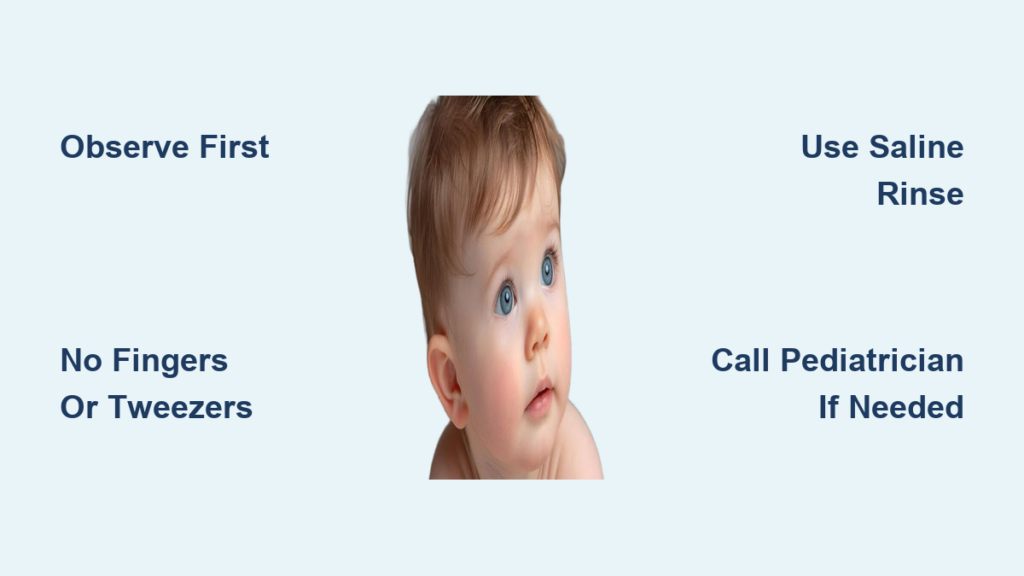
You’ve just spotted a hair in your newborn’s eye and your first instinct might be to pluck it out. But if your 4-week-old isn’t crying, rubbing their eye, or showing redness, there’s likely no emergency. In most cases, a stray hair or eyelash in a baby’s eye is harmless and clears on its own thanks to natural blinking and tear production. The real danger lies in how you respond—rushing to remove it manually can cause more harm than good.
This guide gives you a step-by-step, pediatrician-approved approach to safely handle a hair in your baby’s eye. You’ll learn when to act, when to wait, and how to gently flush the eye without risking injury. With the right knowledge, you can protect your baby’s delicate eyes while staying calm and confident.
Assess the Situation Before Acting
The first and most important step is observation. Just because you see a hair doesn’t mean your baby is in distress. Babies often have eyelashes or tiny fibers on their eye surface that don’t cause irritation.
Look for Signs of Eye Discomfort
Check for:
– Increased tearing in one eye
– Redness in the white of the eye or inner eyelid
– Swollen eyelid
– Frequent eye rubbing
– Fussiness that starts when the eye is open
If your baby is sleeping peacefully and shows none of these signs, the hair is likely not bothering them. In fact, their blinking reflex may already be moving it toward the corner of the eye.
Confirm It’s Actually a Hair
Sometimes what looks like a foreign hair is:
– A misdirected eyelash
– A speck of lint from clothing or bedding
– A light reflection
Use soft, indirect lighting to examine the eye. Gently lift the eyelid only if your baby is calm. Never touch the eyeball itself or use magnifying tools that require close contact.
Never Use Fingers or Tweezers to Remove the Hair
No matter how accessible the hair appears, do not attempt to pull it out with your fingers, tweezers, or any tool.
Risks of Manual Removal
- Corneal abrasion: A baby’s eye surface is extremely sensitive. Even a light touch can scratch it, causing pain and possible infection.
- Bacterial contamination: Hands and tools carry germs that can lead to pink eye (conjunctivitis).
- Sudden movements: Babies can jerk or flinch, increasing the risk of accidental injury.
Even if the hair seems stuck at the edge, let natural processes or gentle rinsing handle it. The risk of damage far outweighs the benefit of quick removal.
Wait and Observe for 15–30 Minutes
In most cases, doing nothing is the safest first step—especially if your baby is asleep or calm.
How to Monitor Safely
- Keep the room softly lit so you can check without startling your baby
- Avoid shining bright lights directly at their face
- Limit how often you look—checking every few seconds can stress both of you
Babies blink frequently, and their tears naturally flush out small particles. An eyelash or hair often moves to the inner corner of the eye or falls out within minutes.
What a Normal Response Looks Like
If your baby:
– Continues to sleep peacefully
– Blinks normally when awake
– Doesn’t rub their eye
– Shows no redness or tearing
…then the hair is likely already gone or will be soon. No further action is needed.
Use Sterile Saline to Gently Rinse the Eye
If your baby wakes up fussy, rubs their eye, or shows clear irritation, it’s time to intervene—but gently.
Step-by-Step: Safe Eye Rinsing for Babies
What you’ll need:
– Sterile saline solution (labeled for baby eye wash or contact lenses)
– Clean cotton balls or gauze pads
– Lukewarm water (only if saline isn’t available)
Steps:
1. Wash your hands thoroughly with soap and water.
2. Cradle your baby securely in your arms, head slightly tilted back.
3. Soak a cotton ball with saline—do not drip liquid directly into the eye.
4. Wipe gently from the inner corner (near the nose) outward.
5. Use a fresh cotton ball each time to avoid pushing the hair back in.
6. Repeat 2–3 times if needed.
This method uses capillary action and gentle flow to remove debris without touching the eyeball.
Pro Tip: Use a Dropper for Controlled Flow
If you prefer drops:
– Use a clean dropper
– Place one drop at a time into the outer corner of the open eye
– Let natural blinking spread the fluid—don’t force the eye open
This avoids direct pressure and lets tears do the flushing.
When to Call the Pediatrician
Most cases resolve at home, but know when to seek professional advice.
Contact Your Doctor If:
- The hair is still visible after 1–2 hours and your baby is uncomfortable
- You notice yellow or green eye discharge
- The eye becomes red, swollen, or puffy
- Your baby won’t stop rubbing the eye or seems to be in pain
- You suspect a scratch (excessive blinking, light sensitivity)
A quick phone call can confirm whether an in-person visit is needed. As one parent learned, a pediatrician confirmed that an eyelash in a calm, symptom-free baby required no treatment.
Avoid These Dangerous Home Remedies

Some common “fixes” are risky and should never be used.
❌ Blowing Air into the Eye
- Can transfer germs from your mouth
- Uncontrolled airflow may push the hair deeper
❌ Wiping with Towels or Clothing
- Rough fabric can scratch the eye
- Fibers from the cloth may add more debris
❌ Using Tweezers or Fingertips
- High chance of accidental injury
- Babies move unpredictably
❌ Flushing with Tap Water (unless clean and lukewarm)
- Not sterile—may introduce bacteria
- Only use in emergencies, and never if the water isn’t clean
Stick to sterile saline and soft, disposable materials for safety.
Reduce Future Eye Irritants

While you can’t prevent every stray hair, you can minimize risks.
Keep the Sleep Environment Clean
- Wash crib sheets and swaddles weekly in fragrance-free detergent
- Use a lint roller on clothes and blankets before use
- Vacuum the bassinet regularly to remove pet hair or fibers
Choose Baby-Safe Fabrics
- Use smooth cotton onesies and burp cloths
- Avoid fuzzy blankets, wool, or high-lint materials near the face
- Dress baby in snug-fitting clothes to reduce loose fibers
Groom Carefully Around Baby
- Trim your hair and your partner’s if shedding near the baby
- Avoid leaning over the crib with long, loose hair
A clean, low-lint environment goes a long way in preventing eye irritants.
Trust Your Baby’s Natural Eye Defenses
Newborns are equipped with built-in protection mechanisms that often do the job for you.
How Babies Naturally Clear Eye Debris
- Blink reflex: Automatically responds to particles on the eye
- Tear production: Washes away dust, hair, and microbes
- Eyelid motion: Moves debris to the inner corner where it can be wiped away
In many cases, the hair will disappear between feedings—no action required.
Real Parent Experience
One mother noticed an eyelash in her 4-week-old’s eye while the baby slept. The infant showed no discomfort. After 20 minutes of monitoring, she used a saline-dampened cotton ball to wipe the eye corner. The eyelash was gone. No doctor visit was needed.
Step-by-Step Action Plan: What to Do Now
Use this checklist when you spot a hair in your baby’s eye:
- Stay calm – Your baby will stay calm if you do
- Observe for symptoms – Look for tearing, redness, or rubbing
- Do not touch the eye – No fingers, tweezers, or tools
- Wait 15–30 minutes – Let blinking and tears work naturally
- If irritated, rinse gently – Use sterile saline and clean cotton
- Watch for worsening signs – Redness, swelling, discharge
- Call pediatrician if unsure – When in doubt, get professional advice
Key Takeaways for Handling Hair in Baby Eye
Most hairs or eyelashes in a newborn’s eye are harmless and resolve without intervention. The safest approach is to observe first, act gently if needed, and avoid any method that involves touching the eye. Trust your baby’s natural defenses—blinking and tears are powerful tools. Always use sterile saline for rinsing and keep your hands clean. If symptoms develop or you’re uncertain, contact your pediatrician. With calm, informed care, you can keep your baby’s eyes safe and healthy.
Frequently Asked Questions About Hair in Baby Eye
Can a hair in a baby’s eye cause damage?
In most cases, no. A single hair or eyelash on the eye surface won’t cause harm if the baby isn’t rubbing it or showing discomfort. However, trying to remove it with fingers or tools can scratch the eye or introduce infection, which is far more dangerous.
How long does it take for a baby to blink a hair out?
Most babies blink a hair or eyelash out within 15–30 minutes. Frequent blinking and tear production naturally flush out small particles. If the baby is calm and symptom-free, waiting is usually the best course.
Is it safe to use saline drops in a newborn’s eye?
Yes. Sterile saline solution labeled for eye use is safe for newborns. It’s commonly used to clear mucus, dust, or small fibers. Always use a fresh cotton ball or dropper to avoid contamination.
What should I do if my baby rubs their eye after getting a hair in it?
Stop them from rubbing if possible. Wash your hands, then gently rinse the eye with sterile saline using a cotton ball. Monitor for redness, swelling, or discharge. If irritation continues, call your pediatrician.
Can eyelashes grow into a baby’s eye?
It’s rare, but some babies are born with misdirected eyelashes (trichiasis). If you notice repeated irritation or frequent eye rubbing, mention it at the next well-baby checkup. Most cases resolve as the eye socket develops.
Should I take my baby to the ER for a hair in the eye?
No, not unless there are signs of injury or infection—such as severe redness, swelling, pus-like discharge, or light sensitivity. In nearly all cases, a hair in the eye is not an emergency and can be managed at home with observation and gentle care.





