
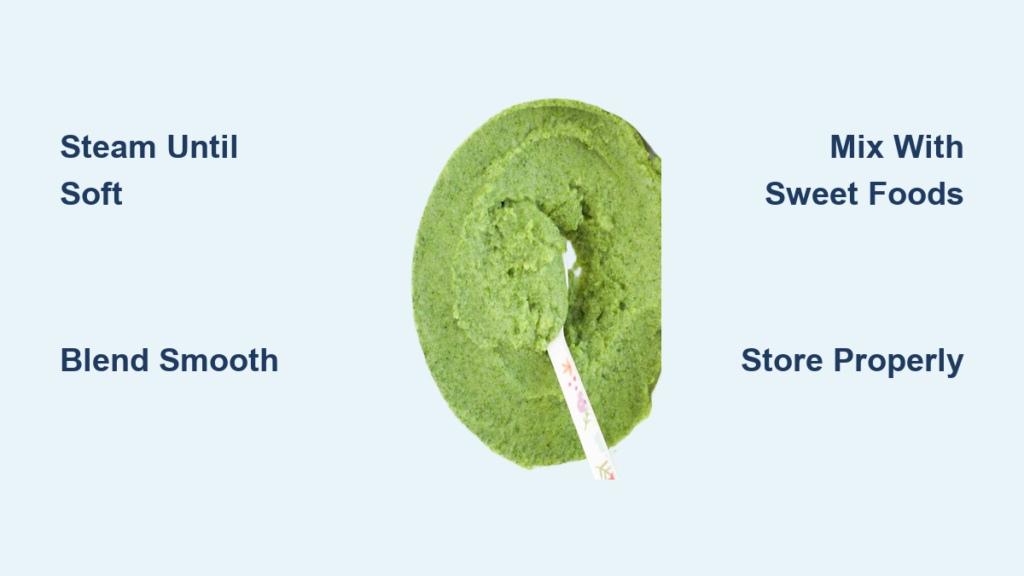
Introducing solid foods to your baby is a big milestone, and broccoli is a nutrient-dense vegetable that supports healthy growth. Packed with vitamins C and K, fiber, and antioxidants, it’s a smart choice—but only if prepared correctly. Learning how to puree broccoli for baby ensures your little one gets the benefits without the digestive discomfort. When cooked soft and blended smooth, broccoli becomes a gentle, easy-to-digest first food that boosts immunity and digestion.
This guide gives you step-by-step instructions for making safe, smooth broccoli puree using fresh or frozen florets. You’ll learn the best cooking methods to preserve nutrients, how to achieve the perfect creamy texture, and smart tips for mixing flavors, storing portions, and avoiding common feeding mistakes. Whether you’re a first-time parent or looking to refine your baby food prep, this resource has everything you need.
When to Introduce Broccoli to Baby
Signs Your Baby Is Ready for Solid Foods
Most babies are ready for solids around 6 months old. Look for key signs like the ability to sit with minimal support, showing interest in meals, and losing the tongue-thrust reflex that pushes food out of the mouth. Broccoli should not be the first vegetable—start with milder options like sweet potato or carrot before introducing stronger-tasting veggies.
Begin with just 1–2 teaspoons of puree once a day. Watch closely for any allergic reactions such as rash, vomiting, diarrhea, or excessive gas. If there are no issues, gradually increase the amount over the next week.
Why Broccoli Is a Nutritional Powerhouse for Babies
Broccoli delivers essential nutrients crucial for early development:
• Vitamin C – Strengthens the immune system and helps absorb iron
• Fiber – Promotes regular bowel movements and gut health
• Vitamin K – Supports bone growth and blood clotting
• Folate – Aids in brain and tissue development
However, broccoli contains natural sugars like raffinose that can cause bloating. Proper cooking and thorough pureeing help break these down, making it easier on your baby’s immature digestive system.
Choose the Best Broccoli for Baby Food
Fresh vs. Frozen: Which Should You Use?
Both fresh and frozen broccoli work well for pureeing. Fresh broccoli often has a brighter color and crisper texture, but frozen is just as nutritious and saves prep time.
For fresh, pick firm stalks with tightly closed, dark green florets. Avoid any with yellow spots or limp stems.
For frozen, choose plain varieties with no added salt, butter, or seasoning.
Always wash fresh broccoli under cool running water before use. Frozen broccoli can be used straight from the bag—no thawing needed.
Prepare Broccoli for Cooking
Wash and Cut for Even Cooking
- Rinse fresh broccoli thoroughly under cool water.
- Pat dry and trim off the woody ends of the stems.
- Cut into small, uniform florets—about 1 inch in size—for consistent softening.
- Chop thick stems into smaller pieces since they take longer to cook than the flower tops.
Pro Tip: Don’t toss the stems! They’re less bitter and rich in fiber. Peel the outer layer and dice them to include in the puree.
Cook Broccoli Until Tender
Steaming: The Healthiest Cooking Method
Steaming preserves more vitamins than boiling, especially water-soluble ones like vitamin C.
Steps:
1. Place broccoli in a steamer basket over 1–2 inches of simmering water.
2. Cover and cook for 8–10 minutes, until florets are very soft and easily pierced with a fork.
3. Remove and let cool slightly before blending.
Why steam? It prevents nutrient loss and avoids waterlogging, keeping flavor and color intact.
Boiling: A Fast Alternative
If you don’t have a steamer, boiling is acceptable—just minimize water and cooking time.
Steps:
1. Bring a small pot of water to a boil.
2. Add broccoli and cook for 5–7 minutes until tender.
3. Drain immediately and save a tablespoon of the cooking liquid for blending.
Warning: Overcooking leads to mushy texture, dull color, and nutrient loss. Stick to the recommended time.
Blend to a Smooth, Safe Texture

Use the Right Blender for a Lump-Free Puree
For babies 6–8 months old, texture matters. Use:
• High-speed blender – Best for silky-smooth results
• Food processor – Ideal for larger batches
• Immersion blender – Easy to use and clean
Avoid mashing by hand for first foods—it often leaves chunks that pose a choking risk.
Adjust Consistency with Safe Liquids
Start with 1–2 tablespoons of liquid to help blend:
• Breast milk
• Formula
• Reserved steaming water
Blend in short bursts, increasing speed gradually. Add more liquid as needed until the puree reaches a runny, creamy texture—similar to heavy cream.
Texture Guide:
• 6–7 months: Very smooth and thin
• 8+ months: Slightly thicker, with minimal texture
Make Broccoli Taste Better for Babies
Mix with Sweet or Mild Foods
Plain broccoli can taste bitter to new eaters. Improve acceptance by blending it with naturally sweet foods:
• Sweet potato
• Carrot
• Apple
• Pear
• Banana
• Oatmeal
Popular Combo: Steam ½ cup broccoli and ½ cup sweet potato, then blend with 2–3 tablespoons of breast milk or water for a creamy, mildly sweet puree.
Never Add Salt, Sugar, or Honey
Babies under one should not consume:
• Salt – Their kidneys can’t process excess sodium
• Sugar – Increases risk of tooth decay and unhealthy preferences
• Honey – Risk of infant botulism
Avoid garlic, onion, and strong spices in early stages.
Serve Broccoli Puree Safely
Always Check the Temperature
Test a small amount on your wrist before feeding. The puree should be lukewarm, not hot. If reheating from the fridge or freezer, stir well after warming to eliminate hot spots.
Start with a Tiny Portion
Offer 1–2 teaspoons at first. Let your baby explore the taste. It may take 8–10 exposures before they accept a new food. Never force-feed.
Serve immediately or store leftovers properly. Do not reheat a used portion.
Store Baby Broccoli Puree Properly

Refrigerate for Up to 3 Days
Transfer cooled puree to an airtight glass or BPA-free container. Label with the date and refrigerate.
Tip: Use small 2–4 oz jars for single servings to reduce waste.
Freeze for Long-Term Use
For batch cooking:
1. Spoon puree into silicone ice cube trays.
2. Cover with a lid or plastic wrap.
3. Freeze for 4–6 hours, then transfer cubes to a freezer-safe bag.
Each cube holds about 1 ounce—perfect for portion control.
Storage Times:
• Fridge: Up to 3 days
• Freezer: Up to 3 months
Thawing Methods:
• Overnight in the refrigerator
• In a bowl of warm water
• Gently warmed in a saucepan (stir well)
Never thaw at room temperature or microwave without stirring.
Fix Common Broccoli Puree Problems
Puree Is Too Chunky
Cause: Undercooked broccoli or insufficient blending.
Fix: Re-blend with extra liquid. For stubborn lumps, strain through a fine mesh sieve.
Baby Rejects the Flavor
Cause: Bitterness or strong smell.
Fix: Mix with sweeter vegetables like carrot or apple. Try offering at a different mealtime.
Baby Gets Gassy After Eating
Cause: Natural compounds in broccoli are hard to digest.
Fix: Cook thoroughly, peel stems, and introduce slowly. Pause for a few weeks if needed, then try again.
Save Time with Smart Prep Strategies
Batch Cook on Busy Weekends
Make a week’s worth of puree in one session. Steam, blend, and freeze in labeled portions so healthy food is always ready.
Time-Saving Hack: Use frozen broccoli directly—no washing or cutting required.
Adapt Broccoli as Baby Grows
Add Texture for Older Babies (9+ Months)
Once your baby handles smooth purees well, try:
• Fork-mashed broccoli with soft grains
• Steamed bite-sized florets for self-feeding
• Broccoli in rice or quinoa bowls
Combine with Protein-Rich Foods
After 8–10 months, mix broccoli puree with:
• Mashed beans
• Cooked lentils
• Ground chicken or turkey
This increases iron and protein intake for growing babies.
Clean Up Safely After Prep
Wash Equipment Right Away
Blenders and food processors are easier to clean when food residue is fresh. Disassemble parts and wash with warm, soapy water or place in the dishwasher.
Sanitize regularly: Boil spoons or trays, or use a steam sterilizer—especially for babies under 8 months.
Key Takeaways for Making Broccoli Puree
• Always cook broccoli until very soft—steaming is best for nutrient retention
• Blend with breast milk, formula, or cooking water for a smooth, safe texture
• Mix with sweet vegetables to improve flavor acceptance
• Store in small portions in the fridge or freezer for convenience
• Introduce slowly and watch for gas or sensitivities
Start simple, be patient, and adjust based on your baby’s preferences. With the right technique, broccoli can become a nutritious staple in your baby’s diet.
Frequently Asked Questions About Pureeing Broccoli for Baby
Can I use frozen broccoli to make baby food?
Yes, frozen broccoli is safe and nutritious for baby puree. Use plain, unsalted varieties and cook until very soft. You can steam or boil it directly from frozen—no need to thaw first.
How do I make broccoli less gassy for my baby?
Cook broccoli thoroughly and puree it well to break down hard-to-digest fibers. Peel the stems and consider mixing it with milder foods. Introduce it slowly and monitor your baby’s reaction.
Is broccoli a choking hazard for babies?
Whole or large pieces of broccoli can be a choking hazard. Always cook it until soft and puree it smoothly for babies under 8 months. For older babies, serve bite-sized, steamed florets they can gum easily.
Can I mix broccoli with fruit for baby food?
Yes, blending broccoli with sweet fruits like apple, pear, or banana can make it more appealing. Just avoid honey until after age one due to botulism risk.
How long does homemade broccoli puree last?
Fresh puree lasts up to 3 days in the refrigerator and 3 months in the freezer. Always label containers with the date and discard any leftovers that have been at room temperature for over 2 hours.
When should I stop pureeing broccoli for my baby?
Begin transitioning from purees around 9–10 months, depending on your baby’s chewing and swallowing skills. Offer soft, mashed pieces or small steamed florets as part of baby-led weaning.





