
Introducing solids to your baby is a big milestone, and blueberry puree for baby is a smart, nutritious choice. Blueberries are rich in antioxidants, vitamin C, and fiber, making them ideal for supporting your little one’s immune system and digestion. Best of all, you can make this healthy baby food in under 10 minutes using just two ingredients—blueberries and water. Whether you’re using fresh or frozen berries, this guide walks you through safe preparation, smooth blending, proper storage, and creative serving ideas.
You’ll learn how to adjust texture for your baby’s age, avoid common mistakes like adding honey, and store portions for easy feeding throughout the week. With simple steps and practical tips, you’ll feel confident serving a homemade puree that’s both safe and delicious.
Choose the Best Blueberries for Baby Food
Picking high-quality blueberries ensures your baby gets the most nutrition and flavor. The type and freshness of the fruit directly affect the taste and texture of the puree.
Fresh vs Frozen: Which Is Better?
Both fresh and frozen blueberries work well, but each has benefits depending on the season and your prep style.
– Fresh blueberries are ideal in summer when they’re at peak ripeness. Look for firm, plump, deep-blue berries with a silvery bloom. Avoid soft, shriveled, or moldy ones.
– Frozen blueberries are often flash-frozen right after harvest, preserving nutrients. They’re convenient for batch cooking and usually more affordable.
Pro Tip: You don’t need to thaw frozen blueberries before cooking—just add them directly to the pot with a bit more water.
Wash Berries to Remove Residue
Even organic or frozen blueberries should be cleaned before use. Babies are sensitive to pesticides and contaminants.
– Rinse fresh berries under cool running water.
– For deeper cleaning, soak in a mix of 3 parts water to 1 part vinegar for 5–10 minutes, then rinse thoroughly.
Why it matters: Clean fruit reduces the risk of tummy troubles and supports your baby’s developing immune system.
Gather and Sanitize Baby Food Tools
Using clean, appropriate equipment is essential for safe baby food prep. A few basic kitchen tools make the process fast and hygienic.
Essential Tools for Smooth Puree
- Small saucepan
- Blender or immersion blender
- Fine mesh strainer or food mill
- Measuring cup
- Ice cube trays or baby food storage containers
- Spatula and spoon
Sanitize First: Wash all tools in hot, soapy water or run them through the dishwasher. This kills bacteria and keeps your baby safe.
Cook Blueberries Until Tender
Cooking softens the berries, making them easier to digest and blend into a silky texture perfect for babies.
Simmer with Water for Easy Breakdown
- Add 1 cup of blueberries to a saucepan.
- Pour in ¼ cup of water to prevent sticking.
- Bring to a gentle boil, then lower heat.
- Simmer for 5–8 minutes, stirring occasionally, until berries burst and turn soft.
Visual Cue: The mixture will darken and become juicy—easily mashed with a spoon.
Boost Nutrition with Natural Add-Ins (Optional)
For babies just starting solids, mix in:
– 1 tablespoon of rice or oat cereal
– 1 teaspoon of mashed banana or avocado
This helps transition to thicker textures and adds healthy fats or iron.
Blend and Strain for Baby-Safe Texture
A smooth, lump-free puree prevents choking and is easier for new eaters to manage.
Blend Until Silky Smooth
Transfer cooked blueberries and liquid into a blender.
– Blend on high for 30–60 seconds.
– For extra smoothness, strain through a fine mesh sieve to remove skins and seeds.
Pro Tip: Add a splash of water, breast milk, or formula to thin the puree based on your baby’s needs.
Match Texture to Your Baby’s Age
| Baby Age | Ideal Consistency | How to Adjust |
|---|---|---|
| 6–7 months | Thin and runny | Mix with breast milk or formula |
| 8–9 months | Smooth but thicker | Use less liquid or blend briefly |
| 10+ months | Slightly lumpy | Skip straining, pulse instead of blend |
Store Puree for Quick, Healthy Meals
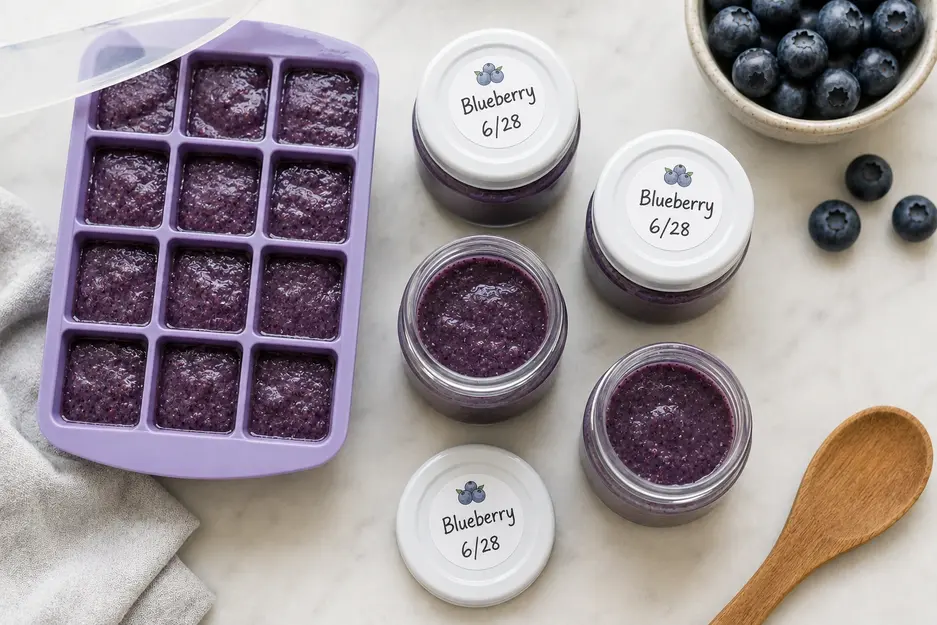
Make-ahead blueberry puree saves time and keeps nutritious food ready for busy days.
Refrigerate for Up to 3 Days
- Spoon puree into an airtight glass or BPA-free container.
- Label with the date.
- Keep in the fridge for up to 3 days.
Freeze in Single Servings
- Pour puree into clean ice cube trays.
- Cover with a lid or plastic wrap.
- Freeze 4–6 hours until solid.
- Pop out cubes and store in a labeled freezer bag.
Keeps for up to 3 months. Thaw overnight in the fridge or warm in a bowl of hot water—never microwave unevenly.
Safety Note: Once thawed, use within 24 hours and never refreeze.
Serve Blueberry Puree Safely and Creatively
Introducing new foods should be enjoyable and stress-free for both you and your baby.
Start with a Small Test Serving
- Offer 1–2 teaspoons during a calm time of day.
- Watch for allergic reactions: rash, vomiting, diarrhea, or breathing issues.
- Wait 3–5 days before introducing another new food.
Reassurance: Blueberries are rarely allergenic, but caution is key with any first food.
Mix With Other Baby Foods for Variety
Once your baby tolerates plain puree, try blending it with:
– Applesauce
– Plain Greek yogurt (for babies over 6 months)
– Oatmeal or rice cereal
– Mashed banana or sweet potato
This adds flavor, texture, and extra nutrients in one tasty bite.
Clean Up Stains Before They Set
Blueberries can leave stubborn stains on containers and clothes—act quickly.
Remove Stains from Tools
- Soak blender jars and spoons in warm water with baking soda.
- Use a bottle brush for hard-to-reach spots.
- Wipe counters with a vinegar solution to disinfect.
Pro Tip: Wash tools immediately after use to prevent dried-on residue.
Fix Common Blueberry Puree Problems
Even simple recipes can go slightly off track. Here’s how to handle common issues.
Puree Is Too Thick
Solution: Add liquid—water, formula, or breast milk—1 teaspoon at a time until smooth.
Bitter or Sour Taste
Cause: Overcooking or unripe berries.
Fix: Use fresh, ripe blueberries and avoid boiling too long.
Skins or Seeds in the Puree
Cause: Incomplete straining.
Fix: Push mixture through a fine sieve or use a food mill. Double-blend if needed.
Liquid Separation After Storage
Normal: Natural settling. Just stir or shake well before serving.
Why Blueberries Are a Top Choice for Baby’s First Foods
Beyond their sweet taste, blueberries pack a powerful nutritional punch.
Key Health Benefits
- Antioxidants (anthocyanins): Support brain development and eye health
- Vitamin C: Strengthens immunity and helps absorb iron from other foods
- Fiber: Promotes healthy digestion and prevents constipation
- Low glycemic index: Provides natural sweetness without blood sugar spikes
Pediatrician Approved: Often recommended as a safe, nutrient-rich first fruit.
Avoid These Common Mistakes

Even well-meaning parents can make errors that affect safety or texture.
Don’t Skip the Straining Step
For babies under 8 months, unstrained skins can be hard to digest. Always use a sieve or food mill for a smoother, safer puree.
Never Add Honey or Sugar
- Honey is unsafe for babies under 1 year due to the risk of infant botulism.
- Blueberries are naturally sweet—no sugar needed.
Avoid Flavored Frozen Blends
Some frozen fruit mixes contain added sugars, syrups, or preservatives.
Always choose plain, unsweetened blueberries.
Key Takeaways for Making Blueberry Puree at Home
Making blueberry puree for baby is quick, healthy, and cost-effective. With just a few simple steps, you can provide your little one with a nutrient-dense food that supports growth and development. By choosing quality berries, cooking them safely, and storing portions properly, you’ll always have wholesome meals ready to go.
Final Tip: Rotate blueberry puree with other fruits like pear, mango, or avocado to keep flavors exciting and nutrition balanced. Start small, watch for reactions, and enjoy this sweet step in your baby’s journey to solid foods.
Frequently Asked Questions About Blueberry Puree for Baby
Can I use frozen blueberries for baby food?
Yes, frozen blueberries are safe and nutritious. They’re often picked at peak ripeness and can be used straight from the freezer—just add a little extra water during cooking.
Do I need to peel blueberries for baby puree?
No, you don’t need to peel them. Cooking and blending softens the skins, but for babies under 8 months, strain the puree to remove any remaining bits for easier digestion.
How long does homemade blueberry puree last?
It lasts up to 3 days in the fridge and up to 3 months in the freezer when stored in airtight containers or ice cube trays.
Is blueberry puree safe for a 6-month-old?
Yes, blueberry puree is a safe and healthy first food for babies starting solids at 6 months. Begin with a thin consistency and watch for any allergic reactions.
Can I mix blueberry puree with formula or breast milk?
Absolutely. Mixing with breast milk or formula improves taste, adjusts texture, and helps your baby adjust to new flavors.
Why is my blueberry puree bitter?
Bitterness usually comes from overcooking or using unripe berries. Use fresh, ripe blueberries and simmer just until soft—don’t boil too long.





