
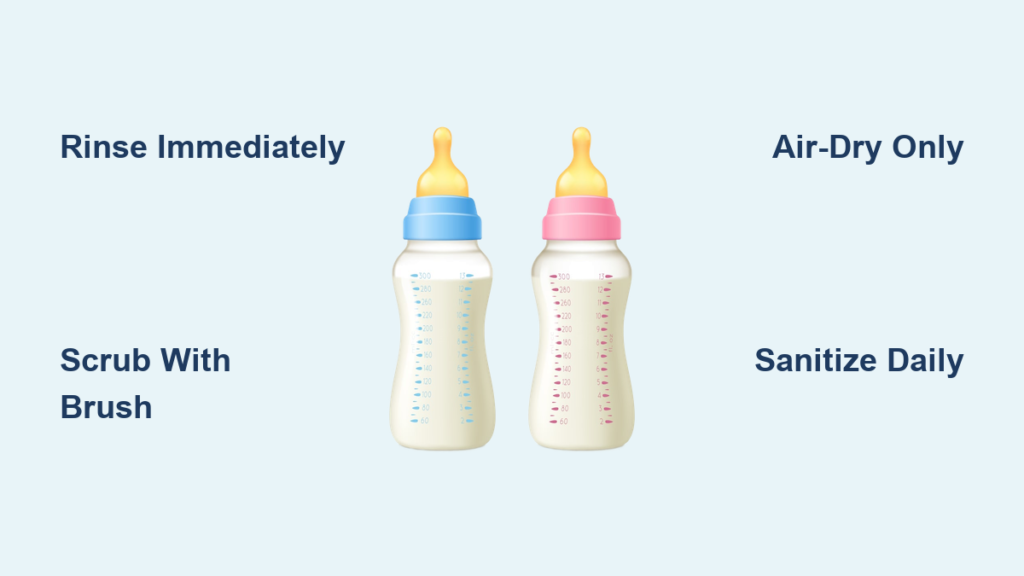
Improperly cleaned baby bottles can harbor dangerous bacteria that may lead to infections, especially in newborns and infants with weak immune systems. How to wash baby bottles properly is more than just a chore—it’s a critical step in protecting your baby’s health. Whether you’re hand-washing, using a dishwasher, or sanitizing, every part of the process matters. From rinsing immediately after feeding to air-drying correctly, skipping even one step can increase the risk of contamination.
In this guide, you’ll learn the safest, most effective ways to clean baby bottles, including step-by-step instructions for hand washing, dishwasher use, and sanitizing with boiling, steam, or bleach. You’ll also discover how to handle formula scoops and containers safely, avoid common mistakes, and store bottles properly. With expert-backed tips and clear guidelines, you’ll be equipped to keep every feeding safe and germ-free.
Hand Wash Baby Bottles Step by Step
Hand washing is ideal when bottles aren’t dishwasher-safe or when caring for a high-risk infant. Done correctly, it removes milk residue and prevents bacterial buildup.
Rinse Immediately After Feeding
Rinse bottles and nipples with cool water right after use to prevent milk from drying and sticking. This makes cleaning easier and more effective. Hold each piece under running water—never place them directly in the sink, which can be contaminated with germs.
Disassemble all parts: bottles, nipples, caps, rings, and valves. Milk hides in crevices, so full separation is essential.
Scrub With a Dedicated Bottle Brush
Fill a clean basin—used only for baby items—with hot, soapy water. Use a mild, fragrance-free dish soap to avoid harmful residues. Antibacterial or scented soaps are not recommended.
Use a soft-bristled bottle brush (reserved only for infant items) to scrub the inside of the bottle, focusing on the base and neck. For nipples, squeeze soapy water through the hole to flush out trapped milk. A small nipple brush helps clean both the inside and outside thoroughly.
Rinse and Air-Dry Completely
Rinse each part under running water or in a second clean basin of fresh water to remove all soap. Ensure no suds remain.
Place all items on a clean, unused dish towel or paper towel in a dust-free area. Let them air-dry completely—never use a dish towel to dry, as it can transfer bacteria. If using a drying rack, clean it every few days (daily for high-risk babies).
Use the Dishwasher Correctly for Baby Bottles
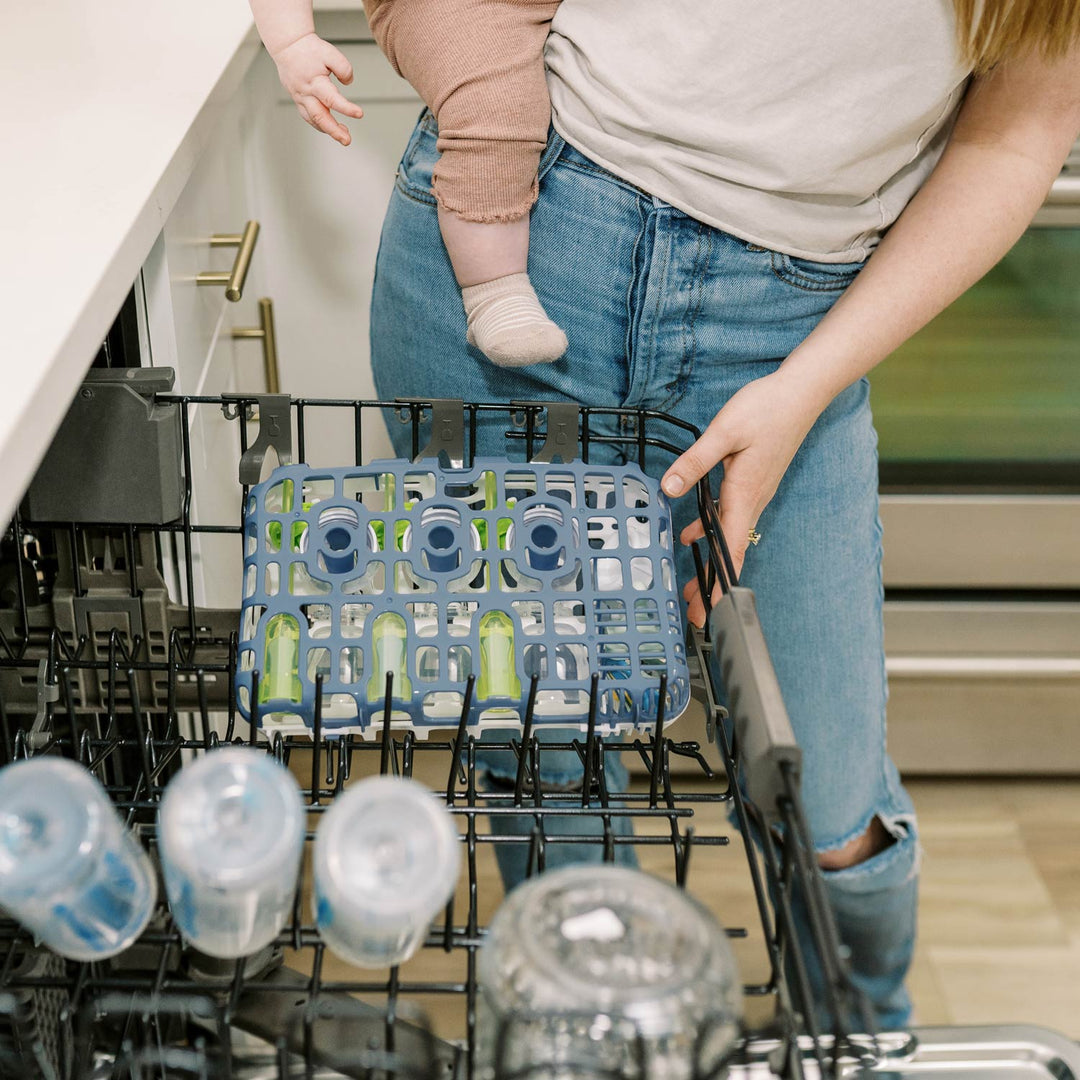
A dishwasher can clean and sanitize bottles efficiently—if used with the right settings and precautions.
Load Components in a Closed-Top Basket
Disassemble all bottle parts before loading. Small items like nipples and rings should go in a closed-top basket or mesh laundry bag to prevent them from falling into the dishwasher filter.
Place bottles upside down on the top rack so water drains out. Avoid overcrowding to ensure all surfaces are cleaned.
Run on Hot Water With Heated Dry
Use the hottest water setting and a heated drying cycle or sanitizing mode if available. These high temperatures kill more germs and eliminate the need for a separate sanitizing step.
After the cycle, wash your hands before removing items. If parts aren’t fully dry, place them on a clean towel to air-dry completely before storing.
Sanitize Baby Bottles When Necessary
Sanitizing removes extra germs and is essential for newborns, premature babies, or those with weakened immune systems.
Boil All Parts for 5 Minutes
Boiling is a reliable sanitizing method.
- Disassemble all bottle components.
- Place them in a large pot and cover completely with water.
- Bring to a rolling boil.
- Boil for exactly 5 minutes.
- Remove with clean tongs.
Let items air-dry on a clean surface. Do not towel-dry.
Steam With Microwave or Electric Sterilizer
Steam sanitizers are fast and convenient.
- Fill with water as per manufacturer instructions.
- Place disassembled items inside, ensuring they fit fully.
- Run the cycle.
- Let items cool before removing.
Always follow the device’s guidelines for safety and effectiveness.
Use a Bleach Solution Safely
When boiling or steaming isn’t possible, a bleach solution works.
Mix 2 teaspoons of unscented bleach per gallon of water in a clean basin. Submerge all parts, squeezing solution through nipple holes. Soak for at least 2 minutes.
Do not rinse afterward—residual bleach breaks down quickly and won’t harm your baby. Remove with clean tongs and air-dry completely.
Clean Bottle Brushes and Wash Basins Regularly
The tools you use can become germ hotspots if not maintained.
After each use, rinse the bottle brush and basin well and let them air-dry. Every few days, wash them in hot, soapy water or in the dishwasher (if safe). For high-risk infants, clean after every use.
Sanitize brushes and basins weekly using boiling, steaming, or bleach—whichever method the manufacturer approves.
Handle Formula Containers the Right Way
Never wash the inside of a powdered formula container. Moisture can contaminate the dry powder and promote bacterial growth.
If cleaning is desired, wipe the outside and lid with a disinfectant wipe before first use. Let it dry completely before opening. Never submerge or rinse the container.
Clean the Formula Scoop Without Contaminating Powder
The scoop should stay dry to prevent clumping and contamination. Only clean it if dropped or soiled.
Wash it like a bottle part: disassemble if possible, scrub with soap and water, rinse, and air-dry fully before returning it to the container.
Store Clean Bottles in a Germ-Free Area
Proper storage prevents recontamination.
Wait until all parts are completely dry before reassembling. Wash your hands, then place clean bottles in a closed cabinet used only for clean dishes. Avoid open shelves or countertops where dust and germs can settle.
If using a drying rack, clean and sanitize it every few days—or daily for high-risk babies.
Inspect Bottles and Nipples for Damage

Regularly check all parts for:
– Cracks
– Discoloration
– Leaks
– Warping
Replace damaged nipples or bottles immediately. Worn parts are harder to clean and can harbor bacteria.
Follow These 10 Must-Know Safety Rules
Stick to these essential guidelines to keep feedings safe:
• Discard unfinished formula after 2 hours
• Never add fresh formula to a used bottle
• Always disassemble parts before washing
• Never wash bottles directly in the sink
• Use only unscented bleach for sanitizing
• Do not rinse after bleach soak
• Air-dry only—no towel drying
• Wash hands before handling clean items
• Use mild, fragrance-free soap
• Check manufacturer instructions for your bottle brand (e.g., Comotomo, Dr. Brown’s)
When to Sanitize Daily vs. Weekly
Sanitizing every day is critical for:
– Babies under 2 months old
– Premature infants
– Babies with weakened immune systems
For older, healthy babies, thorough cleaning after each use may be enough. But when in doubt, sanitize daily for added protection.
Avoid These 5 Common Bottle Cleaning Mistakes
Even small errors can compromise safety.
• Mistake: Rinsing and reusing a bottle after partial feeding
Fix: Always wash after every use—even if the bottle wasn’t finished
• Mistake: Using a dish towel to dry
Fix: Air-dry only on clean paper or dish towels—never rub
• Mistake: Washing in the sink
Fix: Use a dedicated basin to avoid sink germs
• Mistake: Skipping brush and basin cleaning
Fix: Clean these tools regularly—especially for high-risk babies
• Mistake: Using scented or antibacterial soap
Fix: Choose mild, fragrance-free soap to avoid residue
Frequently Asked Questions About How to Wash Baby Bottles
Should I sterilize new baby bottles before first use?
Yes. Always sterilize new bottles, nipples, and feeding items before the first use, even if they are labeled “sterile.” Use boiling, steaming, or a bleach solution to kill any manufacturing germs.
Can I use a blender to mix formula?
No. Blenders are difficult to clean thoroughly and have been linked to infant illness. The safest method is shaking or swirling formula and water directly in the bottle.
How soon after feeding should I wash baby bottles?
Rinse bottles with cool water immediately after feeding to prevent milk from drying. Wash them completely within 1–2 hours to avoid bacterial growth.
Can I put baby bottles in the dishwasher?
Yes—if they are dishwasher-safe. Place small parts in a closed-top basket, run on the hottest water setting with a heated dry cycle, and avoid overcrowding.
Do I need to sanitize bottles after every use?
No, not for healthy babies over 2 months old. If you clean bottles thoroughly after each feeding, daily sanitizing may not be necessary. However, it’s recommended for newborns, preemies, and immunocompromised infants.
Is it safe to use bleach to sanitize baby bottles?
Yes, if done correctly. Use 2 teaspoons of unscented bleach per gallon of water, soak for at least 2 minutes, and do not rinse afterward. Residual bleach breaks down quickly and is safe.
Key Takeaways for Safely Washing Baby Bottles
Washing baby bottles properly is essential for protecting your infant from harmful germs. Always wash after every feeding, rinse promptly, and air-dry completely. Use a dishwasher with a heated dry cycle or hand-wash with a dedicated brush and mild soap. Sanitize daily for newborns and high-risk babies using boiling, steam, or bleach.
Never skip drying or storage steps—germs thrive in moisture. Inspect bottles regularly and replace damaged parts. By following these science-backed steps, you’ll ensure every bottle is clean, safe, and ready for feeding. Start today: clean your tools, check your routine, and make safe bottle hygiene a non-negotiable part of your baby care.





