
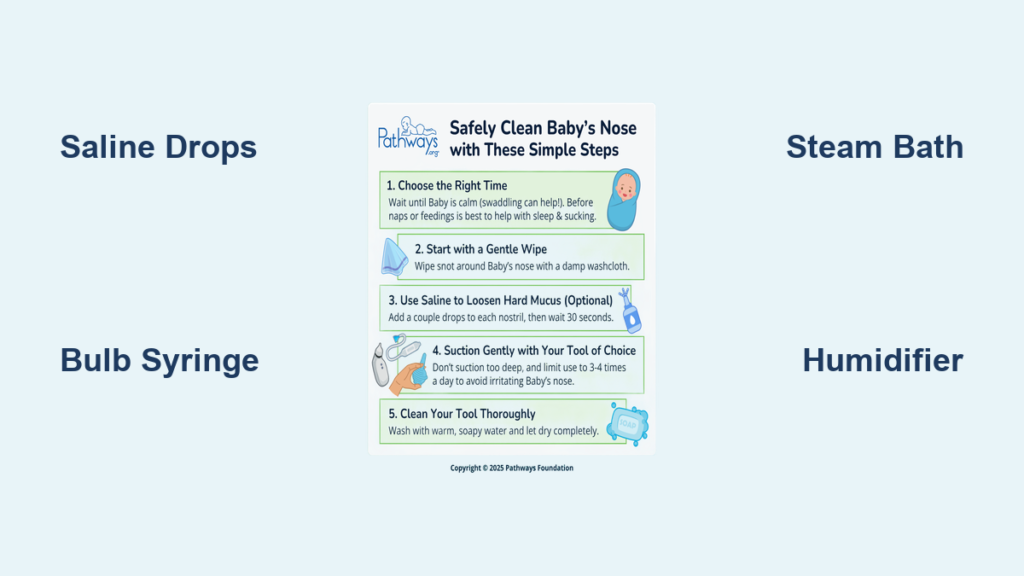
That snuffly, congested breathing is a familiar sound to most parents. Since babies are obligate nose breathers—relying almost entirely on their nose to breathe—hard boogers can quickly disrupt feeding, sleeping, and comfort. The good news is you don’t need special training or harsh tools. With safe, simple methods like saline drops, a bulb syringe, and steam, you can gently loosen and clear stubborn nasal mucus in minutes.
But safety comes first. A baby’s nasal passages are tiny and sensitive, so improper tools or forceful techniques can cause irritation or injury. This guide gives you a step-by-step, pediatrician-aligned approach to removing hard boogers from your baby’s nose using only infant-safe methods. You’ll learn how to soften dried mucus, suction safely, prevent future buildup, and recognize when it’s time to call the doctor.
Soften Hard Boogers with Saline Drops

Apply Sterile Saline Solution to Loosen Mucus
The most effective way to remove hard boogers is to soften them first. Dry suctioning can irritate your baby’s delicate nasal lining and won’t remove dried mucus effectively. Use 1–2 drops of sterile saline solution in each nostril—this over-the-counter product is specifically designed for infants and safe for daily use.
Wait 30 seconds after applying the drops. This gives the saline time to penetrate and rehydrate the hardened mucus, making it easier to suction or drain naturally. You may notice your baby breathing more easily even before suctioning begins.
Why Saline Drops Work Best
Saline solution mimics your body’s natural fluids, helping to break down thick, sticky mucus without medication. It’s gentle, non-irritating, and safe for newborns. Avoid homemade saltwater unless your pediatrician advises it—pre-packaged drops ensure sterility and proper concentration.
Pro Tip: Warm the saline bottle in your hands for a few seconds. Cold drops can startle your baby.
Use a Bulb Syringe to Gently Suction Mucus
Step-by-Step Guide to Safe Bulb Syringe Use
Once the mucus is softened, use a bulb syringe (nasal aspirator) to remove it. This simple tool creates gentle suction to draw out mucus without harming sensitive tissues.
How to use it safely:
1. Squeeze the bulb before inserting it into the nostril to expel air.
2. Gently place the tip just inside the nostril—no deeper than ½ inch.
3. Slowly release the bulb to create suction and pull out the mucus.
4. Remove the syringe and squeeze the contents onto a tissue.
5. Clean the bulb with warm, soapy water after each use and let it air-dry.
Avoid Common Bulb Syringe Mistakes
- Never insert deeply—this can trigger gagging or injury.
- Don’t use force—gentle suction is all that’s needed.
- Clean after every use to prevent bacteria.
- Replace the bulb if it cracks, discolors, or becomes hard.
Warning: Only use mechanical aspirators if they’re infant-safe and doctor-recommended.
Loosen Nasal Congestion with Steam

Try the Steamy Bathroom Method
Warm, moist air helps soften hard boogers fast. The steamy bathroom trick is safe and effective:
- Run a hot shower (not bath) to fill the room with steam.
- Hold your baby in the closed bathroom for 5–10 minutes.
- Keep them wrapped—never expose them to hot water.
- The humid air will naturally loosen mucus for easier removal.
This method works well before feeding or bedtime when clear breathing is most important.
Use a Cool-Mist Humidifier for Prevention
For ongoing relief, run a cool-mist humidifier in your baby’s room, especially during dry seasons or when heating is on. Unlike warm-mist models, cool-mist units pose no burn risk and are safe for overnight use.
Pro Tip: Clean the humidifier every 2–3 days to prevent mold and bacteria buildup.
Clean the Outside of the Nose Safely
Wipe Nasal Crust Gently with a Damp Cloth
Sometimes dried mucus collects just at the nostril openings. Use a soft, damp cloth or cotton ball to gently wipe the outside of your baby’s nose. Moisten it with water or saline and use a patting motion—never rub.
This helps prevent skin irritation from constant snuffling. If the skin looks red or chapped, apply a small amount of baby-safe moisturizer.
Never Insert Objects into the Nose
Do not use cotton swabs, fingers, or tweezers inside your baby’s nose. These can push mucus deeper, scratch the lining, or cause bleeding. Even if you see a booger near the edge, resist the urge to dig it out.
Critical Rule: Only touch what you can see—and only on the outside.
Calm Your Baby During Nose Cleaning
Handle Resistance with Soothing Techniques
Most babies dislike nose care and may cry or squirm. Stay calm—your tone and touch can help soothe them.
Tips for a smoother experience:
– Speak in soft, reassuring tones.
– Hold your baby securely in your lap or against your chest.
– Swaddle one arm to reduce sudden movements.
– Take breaks if your baby becomes overwhelmed.
Use a Two-Person Approach for Fussy Babies
If your baby is very wiggly, ask a partner to help. One person holds and comforts while the other applies saline and uses the bulb syringe. This makes the process quicker and safer.
Expert Note: It’s okay to stop and try again later. Short, calm attempts are better than a stressful struggle.
Prevent Hard Boogers from Coming Back
Keep Nasal Passages Moist to Stop Mucus Drying
Prevention is easier than removal. Keep your baby’s nose hydrated to avoid dried mucus buildup.
Daily prevention tips:
– Run a cool-mist humidifier at night.
– Use saline drops during dry weather or at the first sign of congestion.
– Keep your baby well-hydrated with breast milk or formula.
– Avoid dry, smoky, or overheated environments.
Clean and Replace Nasal Tools Regularly
A dirty bulb syringe can harbor bacteria. Wash it with warm, soapy water after each use, rinse well, and let it dry completely. Replace it every few months or if it shows wear.
When to Call the Pediatrician
Watch for Signs of Infection or Breathing Trouble
Most nasal blockages can be managed at home. But call your doctor if your baby has:
– Congestion lasting more than 5–7 days
– Yellow, green, or bloody nasal discharge
– Fever, especially in babies under 3 months
– Trouble feeding or refusing bottles
– Labored breathing—flaring nostrils, grunting, or chest retractions
– Blue tint around the lips or face
These could signal an infection, allergy, or respiratory issue.
Seek Emergency Care Immediately If:
- Your baby is struggling to breathe
- They’re too lethargic to feed
- You notice signs of dehydration (fewer wet diapers, dry mouth)
- They’re unusually irritable or hard to wake
When in doubt, call your doctor. It’s always better to be safe.
Safe Tools vs. Dangerous Items to Avoid
Use Only Infant-Safe Equipment
Stick to tools made for babies:
– Infant saline drops (sterile, preservative-free)
– Bulb syringe (soft-tipped, easy to clean)
– Cool-mist humidifier
– Soft cloths or cotton balls
Avoid:
– ❌ Cotton swabs
– ❌ Tweezers or fingers in the nose
– ❌ Adult nasal sprays or suction devices
– ❌ Medicated drops without doctor approval
Myth Busting: Breast milk is not proven to treat nasal congestion. Use saline for safe, effective results.
Best Times to Clean Your Baby’s Nose
Time It Right for Maximum Comfort
The ideal moments to clear your baby’s nose are:
– 10–15 minutes before feeding—helps them breathe and eat better
– Before bedtime—promotes restful sleep
– During bath time—steam naturally loosens mucus
Avoid cleaning right after feeding, as suctioning can trigger spit-up.
Pro Tip: Make it part of your routine, not just when congestion is bad. Regular care prevents buildup.
Step-by-Step Guide to Removing Hard Boogers
Follow This Safe, Effective Routine
- Steam (optional): Sit in a steamy bathroom for 5–10 minutes
- Softening: Apply 1–2 drops of saline to each nostril
- Wait: Let it sit for 30 seconds
- Suction: Use a bulb syringe with gentle pressure
- Wipe: Clean the outside with a damp cloth
- Repeat: Only if needed, with breaks in between
Do this 1–2 times per day during congestion. Overuse can irritate the nasal lining.
Key Takeaways for Clearing Baby Nasal Congestion
Removing hard boogers from your baby’s nose doesn’t have to be stressful. With saline drops, a bulb syringe, and a little patience, you can safely clear congestion in minutes. Always soften mucus first, suction gently, and never insert anything into the nose. Use steam or a humidifier to prevent drying, clean tools after each use, and know when to call the doctor. A clear nose means better sleep, easier feeding, and a happier baby—every gentle effort counts.
Frequently Asked Questions About Removing Hard Boogers from Baby Nose
Can I use breast milk to loosen hard boogers?
No, breast milk is not proven to treat nasal congestion. While it has immune-boosting properties, it doesn’t effectively soften mucus. Stick to sterile saline drops, which are safe, sterile, and specifically designed for this purpose.
How often can I use saline drops on my baby?
You can use saline drops 1–2 times per day during congestion. Overuse may irritate the nasal lining. If your baby needs frequent use, consider running a humidifier to maintain moisture and reduce the need for repeated applications.
Is it safe to use a bulb syringe on a newborn?
Yes, a bulb syringe is safe for newborns when used correctly. Always squeeze the bulb before inserting, use gentle suction, and never insert it more than ½ inch into the nostril. Clean it after each use to prevent infection.
What should I do if my baby cries during nose cleaning?
Stay calm and soothing. Speak softly, hold your baby securely, and take breaks if needed. Try the two-person method if possible. It’s okay to stop and try again later—short, calm attempts are more effective than forcing the process.
Can hard boogers cause breathing problems in babies?
Yes, because babies are obligate nose breathers, hard boogers can block airflow and make feeding or sleeping difficult. If your baby shows signs of labored breathing, flaring nostrils, or blue lips, seek medical help immediately.
How do I clean and maintain my baby’s nasal care tools?
After each use, wash the bulb syringe with warm, soapy water. Rinse thoroughly and let it air-dry completely before storing. Replace it every few months or if it becomes cracked or discolored. Store saline drops according to label instructions and never share bottles.





