
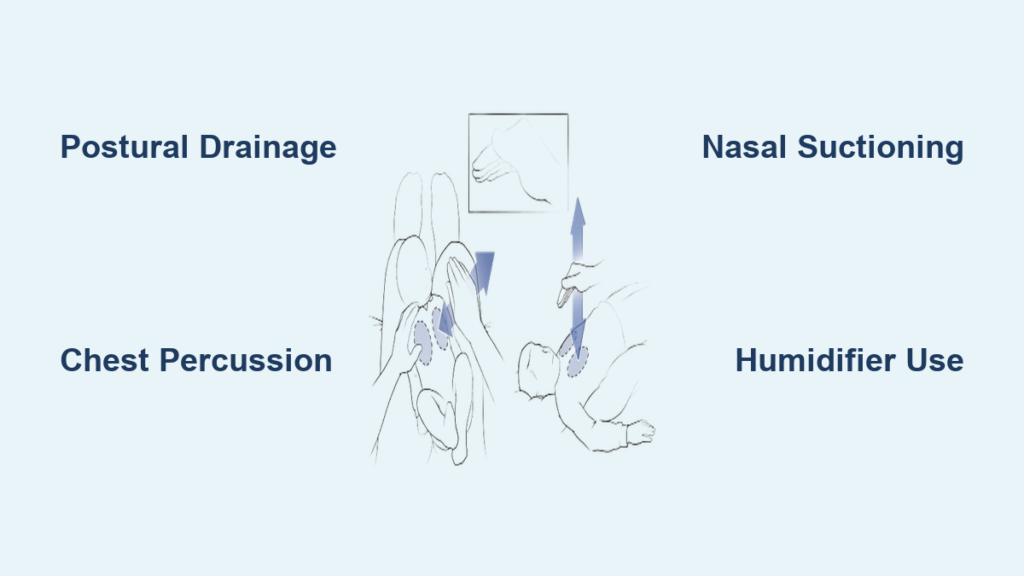
A stuffy chest can make your baby fussy, struggle to breathe, or have trouble feeding. Mucus buildup in the chest is common in infants, especially in the first few months, because their respiratory systems are still developing. While it’s usually not serious, knowing how to safely remove mucus from a baby’s chest can help your little one breathe easier and sleep more peacefully. This guide covers proven, doctor-backed techniques like postural drainage, chest percussion, nasal suctioning, and home care tips—all safe for newborns and young babies.
You’ll learn step-by-step methods to loosen and clear chest mucus, recognize when to call the pediatrician, and avoid common mistakes. With the right approach, you can help your baby feel better fast—naturally and safely.
Safe Mucus Removal Techniques for Infants
Clearing mucus from your baby’s chest involves gentle physical techniques that use gravity, vibration, and suction to help move and remove secretions. These methods are most effective when done before feeding or at least one hour after, to prevent reflux. Always consult your pediatrician before starting, especially for babies under one month old.
Use Postural Drainage Positions
Postural drainage uses gravity to help mucus drain from specific lung areas. Each position targets a different part of the lungs and should be done gently, with your baby’s head and upper body kept flat—never tilted head-down.
Drain Upper Lobes (Back Position)
Sit with your back reclined about 30 degrees. Place your baby face down on your chest, belly against you. Support their bottom with one arm. Gently clap between the spine and shoulder blade on one side of the upper back for 1–3 minutes. Switch sides.
This position helps clear mucus from the top sections of the lungs.
Drain Upper Lobes (Front Position)
Lean back slightly and rest your baby’s back against your chest. Support their waist with one arm. Clap gently between the collarbone and nipple on one side of the chest for 1–3 minutes. Repeat on the other side.
Use this to target front upper lung areas.
Clear Lower Lobes (Side Position)
Lay your baby on their side across your lap, head and torso flat. Hold them steady and clap below the armpit for 1–3 minutes. Flip to the other side and repeat.
This helps drain mucus from the lower sides of the lungs.
Clear Lower Lobes (Back Position)
Lay your baby face down on your lap, head and upper body flat. Clap over the lower ribs for 1–3 minutes per side.
This targets the lower back sections of the lungs.
Clear Lower Lobes (Front Position)
Lay your baby on their back on your lap. Clap gently on the front of the chest just below the nipple for 1–3 minutes per side.
This helps clear mucus from the lower front of the chest.
Perform Chest Percussion Correctly
Chest percussion loosens mucus so it can move toward larger airways and be coughed up.
Form a Cupped Hand
Bend your hand slightly at the knuckles, keeping your index finger and thumb together. This creates a “cup” shape. When you clap, you should hear a hollow popping sound—not a slap. If it sounds flat, adjust your hand shape.
Clap With Proper Technique
Cover your baby’s chest or back with a thin cloth or light clothing. Clap quickly and rhythmically over the targeted area. Use moderate force—firm enough to vibrate the chest, but gentle enough to avoid discomfort.
Listen for the popping sound to confirm correct technique.
Duration by Age
- Infants: 1–3 minutes per position
- Toddlers: 3–5 minutes per position
Apply Chest Vibrations
After each clapping session, apply vibrations to help move loosened mucus.
Have your baby take a slow, deep breath if possible. As they exhale, place your flat hand over the clapped area. Apply light pressure and quickly vibrate your arm and shoulder muscles. This shaking motion helps mucus rise.
Repeat after each position.
Encourage Huffing and Coughing
Even young babies can benefit from huffing—a forceful exhalation that pushes mucus upward.
For older infants: Help them take a deep breath, hold it for 2–3 seconds, then blow out hard through an open mouth—like fogging a mirror. Follow with a cough to expel mucus.
For younger babies: Rely on natural coughing triggered by vibration and positioning. Wipe any mucus from the mouth with a soft cloth.
Nasal Mucus Clearance for Newborns
Since babies breathe primarily through their nose, clearing nasal mucus helps reduce chest congestion.
Use Saline Drops Before Suctioning
Place 1–2 drops of sterile saline into each nostril to loosen thick mucus. Wait a few seconds before suctioning. This makes removal easier and less irritating.
Suction With a Bulb Syringe
Squeeze the bulb before inserting the tip into one nostril. Gently insert just the tip—do not go deep. Release the bulb to suction mucus. Squeeze it again over a tissue to empty. Repeat on the other side.
Clean the syringe with warm, soapy water after each use.
Pro Tip: Suction one nostril at a time to avoid triggering a gag reflex.
Try a Nasal Aspirator (Optional)
For stubborn mucus, a nasal aspirator like NoseFrida can be more effective. It uses gentle suction from your mouth (with a built-in filter) to remove mucus. Many parents find it easier than a bulb syringe.
Supportive Home Care Strategies

Simple changes at home can help thin mucus and support easier breathing.
Run a Cool-Mist Humidifier
Dry air thickens mucus. Use a cool-mist humidifier in your baby’s room to keep humidity between 40–50%. Clean it daily to prevent mold and bacteria.
Avoid warm-mist humidifiers—they can cause burns and overheat the room.
Keep Baby Upright After Feeding
Hold your baby upright for 15–20 minutes after each feeding. This helps prevent reflux and allows mucus to drain naturally from the chest and nose.
Ensure Proper Hydration
If breastfeeding, the mother should drink plenty of fluids. Well-hydrated breast milk helps keep your baby’s mucus thin. For formula-fed babies, stick to regular feeding schedules.
Do not give water to babies under 6 months unless directed by a doctor.
When to Call the Pediatrician
Most chest mucus is harmless, but some symptoms need immediate attention—especially in newborns.
Watch for Emergency Signs
Contact your pediatrician right away if your baby:
– Breaths faster than 60 times per minute
– Shows retractions (skin pulls in around ribs, neck, or chest with each breath)
– Has a rectal temperature of 100.4°F (38°C) or higher
– Isn’t feeding well or shows signs of dehydration (fewer wet diapers, dry mouth)
– Seems unusually lethargic or irritable
– Has a persistent cough or wheezing
These could signal bronchiolitis, RSV, or pneumonia.
Always Consult Before Starting New Methods
Never begin chest percussion or postural drainage without first talking to your pediatrician or a respiratory therapist—especially for babies under one month old. They can show you the correct technique and confirm it’s safe.
Critical Safety Rules to Follow
Safety is key when treating mucus in babies. Mistakes can cause harm.
Never Use Decongestants or Cough Medicines
Do not give any over-the-counter cold or cough medicines to babies under 2 years old. They can cause serious side effects, including slowed breathing.
Avoid Nasal Sprays Unless Prescribed
Saline drops are safe, but medicated nasal sprays should only be used if your doctor recommends them.
Don’t Insert Objects Deep Into Nose
Only insert the tip of the bulb syringe or aspirator gently. Never use cotton swabs or other tools.
Prevent Reflux During Treatment
Always do chest techniques before feeding or at least one hour after. A full stomach increases the risk of vomiting.
Never Tilt Baby Head-Down
Despite old advice, do not place infants in a head-down position. It can cause reflux, discomfort, or even aspiration.
Step-by-Step Treatment Checklist
Use this checklist to stay safe and effective.
Preparation
- [ ] Consult pediatrician or respiratory therapist
- [ ] Perform before feeding or 1+ hour after
- [ ] Gather: bulb syringe, saline drops, tissues, thin cloth, pillows
- [ ] Set up in a quiet, comfortable space
During Treatment
- [ ] Position baby correctly for target lung area
- [ ] Cover chest/back with thin clothing
- [ ] Cup hand properly (hollow popping sound)
- [ ] Clap 1–3 min per side (infants), 3–5 min (toddlers)
- [ ] Apply vibrations during exhalation
- [ ] Encourage huffing/coughing if age-appropriate
- [ ] Suction nose with saline drops if needed
After Treatment
- [ ] Wipe mouth if mucus appears
- [ ] Clean bulb syringe with soapy water
- [ ] Let baby rest or feed (if stomach is empty)
- [ ] Monitor for breathing changes or distress
Frequently Asked Questions About Removing Mucus from Baby Chest
Can I use a bulb syringe on my newborn?
Yes, a bulb syringe is safe for newborns. Squeeze the bulb before inserting the tip into one nostril, then release to suction mucus. Always clean it after use.
How often should I clear mucus from my baby’s chest?
For mild congestion, once or twice a day is enough. If your baby is very congested, follow your pediatrician’s guidance—typically up to 3–4 times daily.
Is chest percussion safe for a 1-month-old?
Yes, but only if approved by your pediatrician. Chest percussion must be done gently, with proper hand technique and positioning. Never do it on a full stomach.
What’s the best way to loosen thick mucus in a baby?
Use saline drops in the nose, run a cool-mist humidifier, keep your baby upright, and ensure proper hydration. These methods help thin mucus naturally.
Can mucus in a baby’s chest lead to pneumonia?
Sometimes. If mucus isn’t cleared and an infection develops, it can progress to pneumonia. Watch for fever, fast breathing, and lethargy—and call your doctor if they appear.
Why does my baby sound congested even when the nose is clear?
Mucus may be deeper in the chest or throat. This is common in newborns due to narrow airways. Gentle percussion, vibration, and upright positioning can help clear it.
Key Takeaways for Clearing Baby Chest Mucus
Removing mucus from a baby’s chest is safe and effective when done correctly. Use postural drainage, chest percussion, and nasal suctioning to help your infant breathe easier. Always keep your baby’s head level—never tilted down—and avoid over-the-counter medications. Support recovery with a cool-mist humidifier, proper hydration, and upright positioning after feeding.
Most importantly, trust your instincts. If your baby seems worse or shows warning signs like fast breathing or fever, seek medical help right away. With the right care, your little one will be breathing freely and sleeping soundly in no time.





