
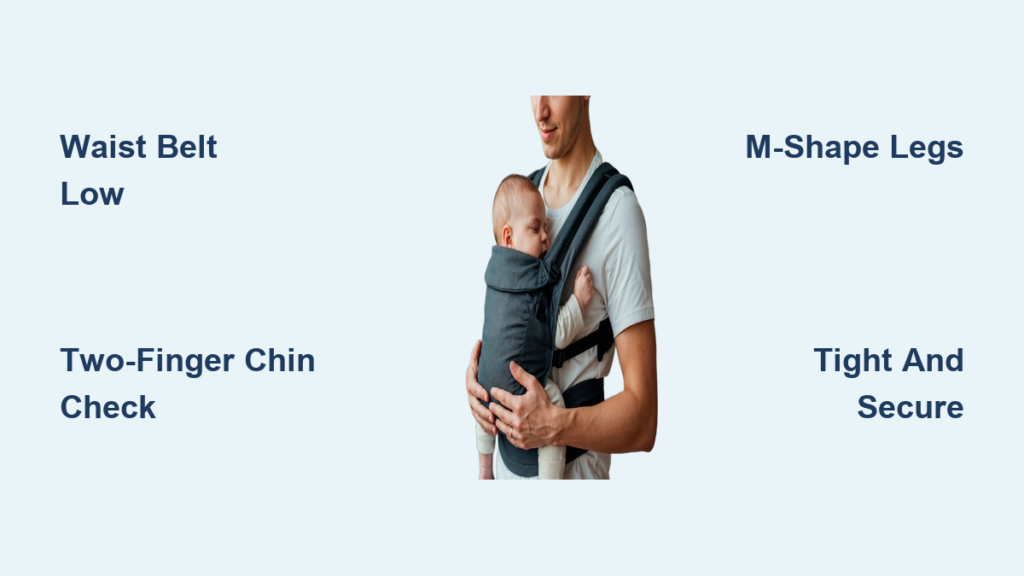
Knowing how to wear a baby carrier correctly ensures safety, comfort, and bonding while keeping your hands free for daily tasks. An improperly worn carrier can lead to breathing risks, hip problems, or back strain. The right fit and positioning depend on your body, your baby’s age, and consistent safety checks. This guide covers every step—from adjusting straps to age-specific positioning—so you can confidently carry your baby at any stage.
You’ll learn how to align the waist belt, secure your newborn’s airway, maintain healthy hip positioning for older infants, and avoid common mistakes. With clear, actionable steps and expert-backed safety rules, you’ll master safe babywearing in no time.
Fit the Carrier to Your Body First
Before placing your baby in, ensure the carrier fits you properly. A well-fitted carrier prevents back pain and keeps your baby stable.
Position Waist Belt Low on Hips
Slide the waist belt around your torso and place it low on your hips, where your hands naturally rest. This position aligns with your center of gravity, allowing the baby’s weight to rest on your pelvis—not your lower back. The belt should feel snug but not tight, supporting weight without restricting movement.
Adjust Shoulder Straps Evenly
Pull the shoulder straps over your shoulders and tighten them gradually. They must lie flat across your back, distributing weight evenly. Uneven tension causes shoulder strain and imbalance. If the fabric digs in, loosen and readjust—your shoulders should feel supported, not compressed.
Align the Back Clasp Between Shoulder Blades
Before fastening, pull the back clasp upward so it sits between your shoulder blades. Proper alignment ensures the straps angle correctly over your shoulders, improving stability. A misaligned clasp shifts weight forward, increasing pressure on your neck and lower back.
Secure Your Newborn (Under 3 Months)

Newborns need full support due to weak neck muscles and developing hips. Follow these steps for safe, comfortable carrying.
Support Head and Neck at Chest Level
Ensure the carrier supports your baby’s head so it rests at your chest level. The top edge of the fabric should reach the nape of the baby’s neck. For extra support, place a rolled receiving blanket under their bottom to slightly elevate the hips—this helps maintain an open airway.
Perform the Two-Finger Chin Check
Always verify that two fingers fit between the baby’s chin and chest. If the chin touches the chest, the airway is blocked. Gently tilt the baby’s head back by adjusting the carrier or repositioning their body until breathing space is restored.
Allow Natural Leg Positioning
Newborns can have legs straight or gently tucked in a fetal-like position. Use the carrier’s leg openings to support the thighs. While an M-shape isn’t required yet, avoid letting legs dangle or press tightly together.
Carry Babies 3+ Months Safely

As babies grow, proper hip and spine alignment become essential for healthy development.
Maintain M-Shape Leg Position
For babies over 3 months, position their legs in an M-shape: hips bent, knees higher than hips. This supports natural hip joint development and helps prevent dysplasia. The carrier should support from knee to knee, not just at the crotch.
Keep Baby Upright and Alert
Hold the baby in an upright, vertical position against your chest. Avoid slumping or curling forward, which can block the airway. Even with good head control, check posture regularly—especially during naps.
Monitor Head Position After Movement
Older babies can hold their heads up, but fatigue may cause them to nod forward. Recheck the two-finger chin rule after walking, sitting, or if the baby falls asleep. Tighten straps if they slide down.
Final Adjustments After Loading Baby
Once your baby is in, final tightening ensures safety and comfort for both of you.
Tighten All Straps After Placement
After inserting the baby, pull all straps tight—especially the shoulders. There should be no slack. The fabric should rest snugly at the nape of the baby’s neck, offering support while allowing free head movement.
Confirm Fabric Rests at Nape of Neck
Fabric that’s too high can press on the jaw or restrict breathing. Too low, and it fails to support the head. Adjust so the top edge aligns with the base of the skull—visible and accessible for quick checks.
Pre-Use Safety Checklist
Run through these checks every time you use the carrier.
Verify Face Is Fully Visible
The baby’s face must be fully visible and uncovered. Never let fabric drape over the nose or mouth. You should always see your baby’s face without moving anything.
Reapply the Two-Finger Chin Rule
Recheck that two fingers fit between chin and chest. If not, reposition immediately. This prevents positional asphyxia—one of the most serious risks in babywearing.
Inspect Straps and Buckles
Ensure all buckles are snapped shut and straps are free of twists. Test tension by gently tugging on shoulder and waist belts. Any looseness compromises safety.
Avoid Common Baby Carrier Mistakes
Even experienced parents make errors. Stay alert to these frequent issues.
Don’t Wear the Waist Belt Too High
A belt worn at the natural waist shifts weight upward, straining your back. Always keep it low on the hips—where your hands rest when standing naturally.
Never Skip the Chin Check
It’s easy to assume “this time is fine,” but babies slump quickly. Make the two-finger chin check a non-negotiable step before walking.
Avoid Loose or Uneven Straps
Slack straps reduce support and increase fall risk. Tighten evenly and recheck after movement. If one shoulder sags, rebalance the load.
Follow the T.I.C.K.S. Safety Rules

These five principles summarize best practices endorsed by babywearing experts.
Tight, In View, Close, Chin Off Chest, Supported
- Tight: No slack in fabric or straps
- In view at all times: Face always visible
- Close enough to kiss: Top of baby’s head within kissing distance
- Keep chin off chest: Two-finger airway check
- Supported back: Natural spine curvature maintained
Use T.I.C.K.S. as a mental checklist every time you load the carrier.
Adjust Carrying Style as Baby Grows

Carrying needs change with age and development.
Newborns (0–3 Months)
- Require full head and neck support
- Use rolled blanket for hip lift if needed
- Fabric must reach nape of neck
- Check position every 10–15 minutes
Infants (3–12 Months)
- M-shape leg position is essential
- Better head control allows more mobility
- Adjust straps as baby gains weight
- Transition to forward-facing only if carrier and baby are ready
Toddlers (12+ Months)
- May use back carries with appropriate carriers
- Weight distribution becomes critical
- Watch for signs of wearer fatigue
- Ensure carrier weight limits are not exceeded
Troubleshoot Common Problems Fast
Fix issues quickly to maintain comfort and safety.
Baby Seems Uncomfortable
Check for:
• Over-tightened straps
• Bunched fabric creating pressure
• Legs in unnatural position
• Overheating (sweating, flushed skin)
Loosen slightly, reposition, or remove layers as needed.
Parent Has Back or Shoulder Pain
Causes include:
• Waist belt too high
• Baby positioned too low
• Uneven strap tension
• Carrier not designed for your body type
Reposition the belt low on hips and bring baby higher—close enough to kiss the top of their head.
Baby Slumps Forward
Immediate fixes:
• Tighten shoulder straps downward
• Ensure waist belt is snug
• Add hip support (blanket or insert) for newborns
• Consider carrier size—too large won’t hold shape
Hard to Fasten Back Clasp
Try these tips:
• Pull clasp up before reaching back
• Loosen shoulder straps slightly to gain slack
• Practice clipping without baby first
• Ask for help until you master one-hand technique
Best Practices for Long Carrying Sessions
Extended wear requires extra care.
Take Regular Breaks
Limit continuous carrying to 1–2 hours. Give baby a chance to stretch and change position. Take breaks to check temperature, hydration, and comfort.
Dress for the Weather
Babies overheat easily. Dress them in one layer more than you’re wearing. In sun, use a breathable cover—not a blanket—that allows airflow and visibility.
Never Feed in Carrier
Breastfeeding or bottle-feeding in a carrier increases choking and airway risks. Always remove the baby to feed in a safe, reclined position. Burp them before returning to the carrier.
Frequently Asked Questions About How to Wear a Baby Carrier
How do I know if the baby carrier is tight enough?
The carrier is tight enough when there is no slack in the straps and the fabric rests snugly at the nape of the baby’s neck. You should not be able to pinch excess fabric. The baby should feel secure and close to your body.
Can I carry my newborn in a baby carrier?
Yes, you can carry a newborn if the carrier provides full head and neck support. Use a rolled blanket under their bottom if needed, ensure the fabric reaches the nape of the neck, and always perform the two-finger chin check.
What is the M-shape leg position and why is it important?
The M-shape means the baby’s hips are bent and knees are higher than hips, forming an “M” with their legs. This position supports healthy hip development and helps prevent hip dysplasia in babies over 3 months.
How often should I check my baby while in the carrier?
Check your baby every 10–15 minutes, especially newborns. Monitor face visibility, chin position, breathing, and temperature. Always recheck after movement or if the baby falls asleep.
Is it safe to carry a baby facing outward?
Only if your carrier and baby are ready. Most experts recommend waiting until at least 6 months, when babies have strong neck control and can handle sensory input. Always ensure the M-shape leg position and clear airway.
Can babywearing cause back pain?
Yes, if the carrier is poorly fitted. Back pain often results from a waist belt worn too high, uneven straps, or carrying too long without breaks. Position the belt low on hips and take regular rests to prevent strain.
Key Takeaways for Safe Babywearing Success
Mastering how to wear a baby carrier safely means combining proper fit, correct positioning, and constant awareness. Always position the waist belt low on your hips, perform the two-finger chin check, and maintain M-shape leg support for older babies. Follow the T.I.C.K.S. rules every time and adjust as your baby grows.
If you experience discomfort or your baby seems uneasy, pause and reassess. With practice, safe babywearing becomes second nature—offering comfort, bonding, and freedom. Trust your instincts: if something feels off, stop and make adjustments. For reliable carriers, consider options like those from Marions Baby Shop, available in navy blue, red, black, and brown.





