
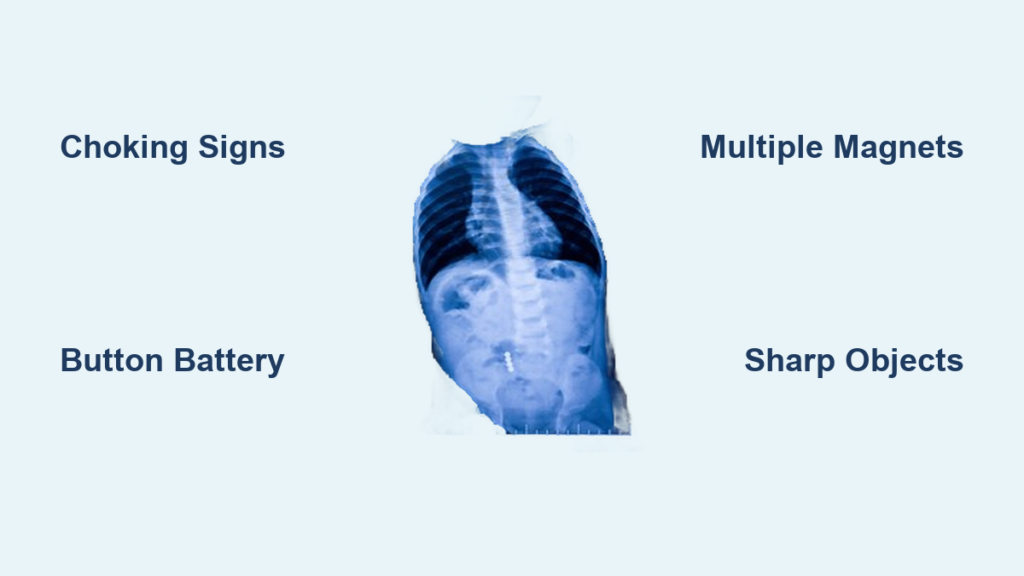
Your baby was chewing on a toy—then suddenly coughed and went quiet. Or maybe a small object is missing, and your gut says they swallowed it. The fear hits fast: Did my baby ingest something dangerous? You’re not alone. Thousands of parents face this scare every year. Most swallowed items—like coins or plastic beads—pass harmlessly through the digestive tract. But others—like button batteries or multiple magnets—can cause life-threatening injuries in just hours. Recognizing the signs early, knowing what to watch for, and acting quickly can prevent serious complications.
This guide will help you identify the symptoms of ingestion, distinguish between harmless and high-risk objects, and know exactly when to monitor at home, call your pediatrician, or rush to the ER. With clear steps, expert-backed advice, and a quick-reference decision guide, you’ll be equipped to respond confidently—and keep your baby safe.
Recognize Immediate Choking and Airway Blockage Signs
Sudden Coughing, Gagging, or Inability to Breathe
If your baby starts coughing violently, turns red or blue, or suddenly goes silent, they may be choking.
– A strong, forceful cough can sometimes clear the object on its own.
– If coughing stops, breathing becomes noisy, or your baby becomes limp, call 911 immediately.
– Do not attempt to fish out the object with your fingers—this can push it deeper and worsen the blockage.
Wheezing, Gasping, or Chest Retractions
Noisy breathing, high-pitched sounds (stridor), or visible pulling in of the skin around the ribs or neck means the airway is partially or fully blocked.
– These signs suggest the object is in the windpipe, not the esophagus.
– Begin infant choking first aid (back blows and chest thrusts) if you’re trained while someone else calls emergency services.
Excessive Drooling or Refusal to Swallow
If your baby suddenly stops feeding, spits up saliva, or drools nonstop, something may be stuck in the esophagus.
– This is common with coins, batteries, or small toy parts.
– Even if calm, this requires urgent medical evaluation—do not wait for symptoms to worsen.
Identify Life-Threatening Swallowed Objects

Button Batteries: A 2-Hour Emergency
Swallowing a button battery (found in remotes, hearing aids, and small toys) is a true medical emergency.
– It can burn through the esophagus in as little as two hours, causing severe damage or death.
– Symptoms may include drooling, vomiting, chest pain, or trouble breathing.
– If your baby is over 1 year old and can swallow safely, give ½ to 1 teaspoon of honey every 10 minutes on the way to the ER.
– Honey helps protect the esophagus until doctors can remove the battery.
Multiple Magnets or Magnet + Metal Object
Swallowing more than one magnet, or a magnet with another metal piece (like a screw), is extremely dangerous.
– Magnets can attract across intestinal walls, causing perforations, blockages, or tissue death.
– Even one large or sharp magnet requires urgent imaging.
– Go to the ER immediately—do not wait for symptoms to appear.
Sharp or Long Objects (Needles, Pins, Nails)
Items like needles, pins, or broken plastic can puncture the throat, stomach, or intestines.
– These often require endoscopic removal.
– Signs include pain, refusal to eat, or blood in saliva or stool.
– Seek emergency care right away—even if your baby seems fine at first.
Poisonous Substances (Medication, Cleaning Products, Toothpaste)
If your baby swallowed medicine, bleach, deodorant, or large amounts of toothpaste, call poison control or 911 immediately.
– Even small amounts can be toxic.
– Have the product container ready when you call for fast, accurate help.
Watch for Delayed Symptoms of Digestive Blockage
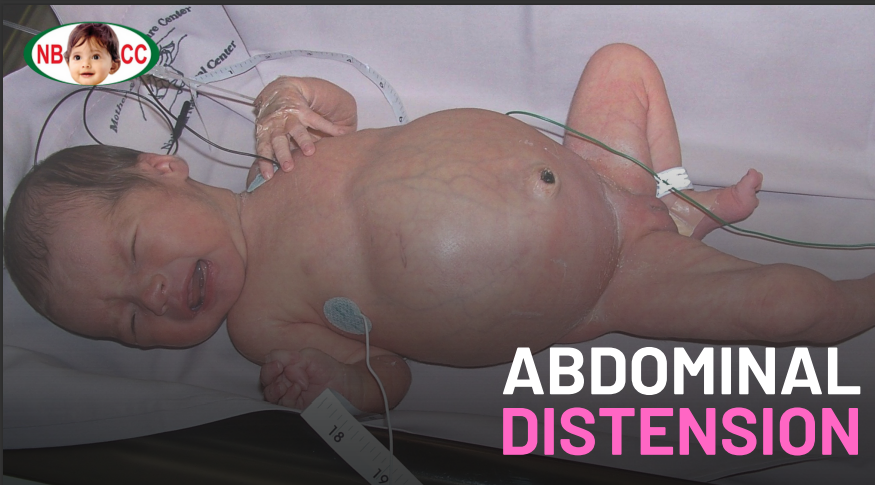
Abdominal Pain, Bloating, or Swelling
Stomach pain, a distended belly, or tenderness may mean the object is stuck in the intestines.
– This can lead to bowel obstruction.
– Watch for persistent crying, pulling legs up, or vomiting.
Repeated or Green Vomiting
Vomiting that continues—or contains green bile—may signal a blockage in the digestive tract.
– Do not assume it’s a stomach virus.
– Seek medical attention promptly if vomiting persists.
Fever, Neck Swelling, or Chest Pain
Fever, cough, or swelling in the neck or chest could mean the object caused a tear or infection.
– These are late but serious signs.
– Go to the ER immediately if infection is suspected.
Persistent Feeling That Something Is Stuck
Even after an object passes, your baby may still act like something is lodged.
– This can happen if the throat was scratched during swallowing.
– Discomfort may last a few days.
– Offer soft foods and contact your doctor if symptoms don’t improve.
When It’s Safe to Monitor at Home
Small, Blunt, Non-Toxic Objects
Items like coins, plastic toy pieces, or buttons often pass without issue.
– If your baby is breathing normally, feeding well, and acting playful, the object likely moved into the stomach.
– No emergency treatment is needed—just careful monitoring.
Normal Behavior Is a Strong Indicator
If your baby:
• Is alert and interactive
• Eats without pain
• Has no coughing or breathing issues
→ The risk is low.
Still, call your pediatrician to discuss whether an X-ray is recommended.
How to Track Swallowed Object Passage
Check Every Diaper for 7 Days
Most swallowed objects appear in stool within 2–5 days.
– Inspect every bowel movement carefully.
– Use gloves and a flashlight if needed.
– If the object doesn’t appear within 7 days, call your doctor—imaging may be required.
Never Induce Vomiting
Do not try to make your baby vomit.
– This can cause choking or internal damage if the object is sharp.
– Let the digestive system work—unless a doctor advises otherwise.
Don’t Wait for Stool Passage with High-Risk Items
Never use a “wait-and-see” approach if your baby swallowed:
• A button battery
• Multiple magnets
• A sharp object
These require immediate medical intervention, not home monitoring.
When to Call the Doctor or Nurse Line
Uncertain What Was Swallowed
If you’re not sure what your baby ingested, call your pediatrician or nurse advice line.
– In Canada, dial 811 for health advice.
– In the U.S., call your doctor or poison control at 1-800-222-1222.
Symptoms That Worsen or Don’t Improve
Call if your baby develops:
• New or worsening vomiting
• Lethargy or unusual sleepiness
• Refusal to eat
• Abdominal swelling or pain
Even mild symptoms can escalate quickly.
Object Not Passed After 7 Days
If the item hasn’t shown up in stool after a week, your doctor may order an X-ray or ultrasound to locate it.
– Some objects (like plastic) don’t show on X-rays, so clinical judgment is essential.
Medical Evaluation and Treatment Options

X-Ray or Imaging to Locate the Object
Doctors use imaging to:
• Confirm ingestion
• Pinpoint the object’s location
• Check for blockages or perforations
• Multiple magnets or batteries always require imaging.
Endoscopic Removal for Stuck Objects
If an object is lodged in the esophagus or is high-risk, a doctor may use an endoscope—a thin tube with a camera—to remove it.
– Done under sedation.
– Fast and effective for esophageal blockages.
Surgery (Rare but Necessary in Severe Cases)
Surgery is only needed if:
• The object causes a perforation
• It doesn’t pass after weeks
• There’s a bowel obstruction
This is uncommon but life-saving when required.
Home Care After Ingestion or Removal
Soothe Throat Discomfort
If the object scratched the throat, your baby may have pain for a few days.
– Offer soft foods: applesauce, yogurt, mashed bananas.
– Ask your doctor about infant-safe pain relief like acetaminophen.
Monitor Eating, Behavior, and Bowel Movements
Keep an eye on:
• Appetite and energy levels
• Number and consistency of stools
• Any sudden changes in behavior
Contact your doctor if anything seems off.
Safely Dispose of Unused Medications
If your baby swallowed medicine, ensure all medications are locked away.
– Return unused prescriptions to a pharmacy disposal program.
– Never store pills in easy-to-open containers.
Prevent Future Swallowing Incidents

Childproof High-Risk Areas
- Store batteries, magnets, and small items in locked drawers.
- Use outlet covers and cabinet locks.
- Check floors, couch cushions, and laundry baskets daily—babies find dropped items fast.
Choose Age-Appropriate Toys
- Follow age labels: toys for 3+ often have small parts.
- The safest toys are at least 1.25 inches (3 cm) wide or 2.25 inches (6 cm) long.
- Regularly inspect toys for loose or broken parts.
Supervise Play and Eating Closely
- Never leave babies unattended with toys or food.
- Cut food into pea-sized pieces.
- Avoid grapes, nuts, popcorn, and hard candy until age 4.
Educate Older Siblings
- Teach kids to keep small toys and games out of reach.
- Use bins with lids for Lego, marbles, or magnetic tiles.
Frequently Asked Questions About Baby Swallowing Objects
What should I do if I think my baby swallowed something?
Call your pediatrician if your baby is acting fine. Go to the ER immediately if they show signs of choking, swallowed a battery, magnet, or sharp object, or are having trouble breathing.
How long does it take for a swallowed object to pass?
Most objects appear in stool within 2 to 5 days. If not passed within 7 days, contact your doctor for evaluation.
Can a swallowed coin hurt my baby?
Coins are usually harmless and pass on their own. However, if your baby has symptoms like drooling, vomiting, or pain, get an X-ray to confirm it’s not stuck.
Is honey safe if my baby swallowed a battery?
Yes, if your baby is over 1 year old and can swallow safely, give ½ to 1 teaspoon of honey every 10 minutes on the way to the ER. Honey helps protect the esophagus.
What if my baby swallowed a magnet?
Go to the ER immediately. Swallowing one magnet may be low risk, but multiple magnets—or a magnet with metal—can cause life-threatening intestinal damage.
Should I make my baby vomit after swallowing something?
No. Never induce vomiting. It can cause choking or internal injury. Let the digestive system handle it—unless a doctor advises otherwise.
Key Takeaways for Responding to Baby Ingestion
Most babies who swallow small, non-toxic objects recover without issues. But timing is critical with high-risk items like button batteries and magnets—damage can occur within hours. If your baby is breathing, eating, and acting normally, monitoring at home may be safe. But if they swallowed a battery, multiple magnets, sharp object, or poison, go to the ER now. When in doubt, call your pediatrician or poison control. Keep emergency numbers handy, childproof your home, and trust your instincts. You know your baby best—your quick action could save their life.





