
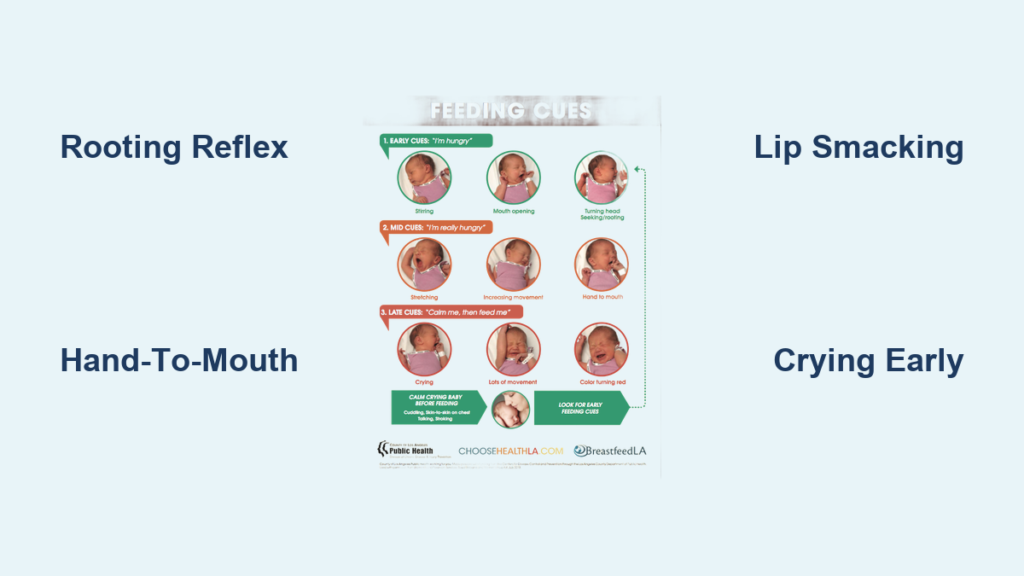
Figuring out how to know if baby is hungry can feel overwhelming at first. Babies don’t cry just because they’re hungry—they cry when tired, overstimulated, or uncomfortable. But before the tears start, they give subtle signals. These early hunger cues are your baby’s way of saying, “I’m ready to eat.” Learning to spot them helps you feed your baby calmly and effectively, especially in the newborn stage when feeding happens every 2 to 3 hours.
This guide breaks down the real signs of hunger by age, explains how cues change from rooting to crying, and shows you how to respond before frustration builds. You’ll also learn how to distinguish true hunger from other needs, support healthy feeding habits, and know when to seek help. By tuning in to your baby’s natural rhythm, you’ll build confidence—and a stronger bond.
Spot Early Hunger Cues
Acting on early signs prevents crying and makes feeding smoother. These cues mean your baby is hungry but still calm enough to feed well.
Look for Rooting and Mouth Movements
Rooting is one of the clearest signs you how to know if baby is hungry. When you stroke your baby’s cheek, they turn their head toward your hand and open their mouth, searching for food. This reflex helps them latch during breastfeeding or find the bottle. Other early mouth cues include:
• Smacking or licking lips
• Opening and closing the mouth
• Puckering lips as if sucking
• Making small sucking motions, especially with hands near the face
These aren’t random—they’re deliberate signals. If your newborn does this after waking, it’s time to feed.
Watch for Hand-to-Mouth Actions
Sucking on fingers, fists, or clothing is often a hunger cue, not just self-soothing. In young babies, this behavior is rhythmic and focused. If your baby suddenly starts gnawing on their hand after a nap, they’re likely hungry. Clenched fists can also signal rising hunger, especially when paired with head movement or lip smacking.
Pro tip: Don’t wait. It takes time to get comfortable, unlatch clothes, or warm a bottle. Responding early keeps your baby calm and feeding efficient.
Recognize Mid Hunger Cues

If early cues are missed, your baby will escalate. These mid-stage signs mean they’re getting hungrier and more insistent.
Notice Increased Movement and Alertness
A hungry baby becomes more active. You might see:
• Stretching arms and legs
• Squirming or wriggling
• Moving their head side to side
• Appearing restless or distracted
They may also become more alert—eyes wide open, looking around intensely. This isn’t just wakefulness; it’s a sign they’re ready to feed. If your baby was calm but suddenly starts fidgeting in your arms, check for other hunger cues.
Identify Intense Sucking and Rooting
At this stage, hand-sucking becomes forceful. Your baby might chew aggressively on their fingers or rub their face against your shoulder, searching for the breast. They may root more persistently, turning their head sharply when touched.
What to do: Feed now. Your baby is still calm enough to latch or take the bottle, but waiting longer could lead to crying. Move quickly but calmly—your energy affects theirs.
Calm Late Hunger Cues
Crying is a late sign of hunger. By this point, your baby is already overwhelmed and stressed.
Crying Means Hunger—But Also Distress
When a baby cries from hunger, they’re not just saying “feed me”—they’re saying “I’m upset!” Trying to feed a crying baby often backfires. They may refuse the breast or bottle, swallow air, or feed inefficiently. The best first step? Calm them.
Skin-to-skin contact is the fastest reset. Here’s how:
1. Strip baby down to just their nappy
2. Place them on your bare chest
3. Cover their back with a blanket
4. Hold quietly for 5–10 minutes
This regulates their heart rate, breathing, and stress levels. Most babies will stop crying and return to mid cues—like sucking their hands or rooting—within minutes. Then offer the breast or bottle.
Nighttime hack: If you’re tired or need to use the bathroom, wake your partner. They can do skin-to-skin while you prepare. By the time you’re ready, baby is often calm and feeding-ready.
Hunger Signs by Age Group

Babies change fast—and so do their hunger signals. What works for a newborn won’t always apply at 6 months.
Birth to 5 Months: Instinct-Driven Cues
Newborns rely on reflexes. Key hunger signs include:
• Turning head toward breast or bottle
• Sucking on hands or lips
• Puckering or smacking mouth
• Clenched fists
Fullness cues are just as important:
• Closing mouth
• Turning head away
• Relaxing hands
Feed on demand. Don’t force a bottle finish or push for “just a little more.” Let your baby decide when they’re done.
6 to 23 Months: Communication Through Actions
As babies grow, they use gestures and sounds to say “I’m hungry” or “I’m full.”
Hunger signs:
• Reaching for food
• Opening mouth when spoon comes near
• Getting excited at mealtime
• Making sounds or pointing to indicate they want more
Fullness signs:
• Pushing food away
• Closing mouth when offered more
• Turning head away
• Using hand motions (like waving “no”) or vocalizing fullness
Respect these signals. Toddlers are learning to self-regulate. Forcing food teaches them to ignore fullness cues—setting the stage for overeating later.
Decode Feeding Patterns
Feeding isn’t just about cues—it’s also about timing and frequency.
Newborns Eat Every 2–3 Hours
Most newborns feed 8–12 times in 24 hours. This frequent eating supports rapid brain and body growth. Cluster feeding—multiple feeds close together—is normal, especially in the evening. It often happens during growth spurts.
Growth spurts occur around:
• 2 weeks
• 4 weeks
• 6 weeks
• 3 months
• 6 months
During these periods, your baby may seem constantly hungry. This is temporary and healthy. Feed on demand—they’re not “using you as a pacifier.” They’re fueling a growth leap.
No Universal Timeline for Cues
How long does it take to go from rooting to crying? There’s no standard answer. Some babies escalate fast—one minute calm, the next screaming. Others give long warning periods. Factors include:
• Sleep length (long naps = hungrier wake-up)
• Personality (calm vs. intense)
• Age (newborns often move faster through cues)
The good news: You’ll learn your baby’s rhythm. Within weeks, you’ll predict when they’ll be hungry and how quickly they’ll escalate.
Respond to Cues Effectively
Knowing the signs is only half the battle. Responding the right way makes all the difference.
Feed on Demand, Not on Schedule
Babies don’t run on the clock. While routines develop over time, newborns need flexible feeding. Watch for cues, not the time. Feeding on demand:
• Supports milk supply (for breastfeeding parents)
• Prevents over-hunger and crying
• Builds secure attachment
Warning: Rigid schedules can lead to underfeeding, especially in early weeks.
Avoid Common Mistakes
• Waiting for crying: This increases stress for both of you.
• Forcing a bottle finish: Babies know when they’re full. Respect that.
• Using food as comfort: It’s okay to soothe with feeding sometimes, but don’t rely on it. Over time, babies may confuse hunger with tiredness or boredom.
• Ignoring fullness cues: Pushing food undermines self-regulation.
Trust Your Baby’s Appetite
Your baby doesn’t need to finish every bottle or eat every bite on the plate. Some days they eat more, some days less. That’s normal. Let them guide the amount. This builds healthy eating habits for life.
Use a Feeding Cues Checklist
Keep this quick reference in mind—especially in the early weeks when everything feels new.
Hunger cues to watch for:
• Rooting or head turning
• Sucking on hands/fingers
• Lip smacking or mouth opening
• Increased alertness or fussiness
• Crying (last resort—act before this)
Fullness cues to respect:
• Mouth closed
• Head turned away
• Pushing food or bottle away
• Relaxed hands
• Falling asleep (in younger babies)
Post this list on the fridge or save it in your phone. Over time, it becomes second nature.
Support Healthy Nutrition Habits
The first two years are critical for development. Responsive feeding—reading and respecting hunger and fullness cues—lays the foundation for lifelong healthy eating.
Why Responsive Feeding Matters
• Helps babies learn to regulate their own intake
• Reduces risk of overfeeding or underfeeding
• Builds trust between parent and child
• Supports emotional and physical development
Food Is Not a Reward
Avoid saying things like, “Eat your veggies, then you get fruit.” This teaches kids to value some foods over others and can lead to picky eating. Let your child explore food without pressure.
Frequently Asked Questions About How to Know If Baby Is Hungry
How do I know if my baby is hungry or just fussy?
Hunger cues are specific and repeatable—like rooting, hand-sucking, or lip smacking. Fussiness from tiredness or overstimulation often includes crying without these signs, arching the back, or avoiding eye contact. Try soothing first. If calming techniques don’t work and feeding cues appear, your baby may be hungry.
Should I wake my newborn to feed?
Yes, in the first few weeks. Newborns should feed every 2–3 hours, even at night. If your baby sleeps longer than 4 hours, gently wake them to feed. This ensures they gain weight and stay hydrated, especially before milk supply is well established.
How often do babies show hunger cues?
Newborns may show hunger cues every 2–3 hours, up to 12 times a day. As they grow, cues become more predictable. Cluster feeding is common in the evening and during growth spurts, so expect more frequent signals at those times.
Can a baby be hungry even after feeding?
Yes. Growth spurts, inefficient feeding, or fast digestion can cause babies to feel hungry again soon after eating. If your baby shows strong hunger cues shortly after a full feed, offer more. They may be going through a growth leap.
What if my baby cries but won’t eat?
A crying baby is often too upset to feed. Try skin-to-skin contact to calm them first. Once relaxed, they’ll likely return to mid hunger cues like rooting or hand-sucking. Then try feeding again. If this happens often, check for reflux, tongue tie, or other feeding issues.
How do I know if my baby is getting enough milk?
Signs of adequate feeding include:
• 6 or more wet nappies a day by day 5
• 3–4 yellow, seedy poos daily in the first month
• Steady weight gain
• Contentment after feeds
• Alertness and responsiveness
If you’re unsure, talk to your health visitor or doctor.
Key Takeaways for Recognizing Baby Hunger Cues
• Crying is a late sign of hunger—act on rooting, hand-sucking, and lip smacking first
• Newborns need to feed every 2–3 hours; cluster feeding is normal
• Skin-to-skin contact calms a crying baby and resets them for feeding
• Let your baby decide when they’re full—don’t force bottles or meals
• Every baby has a unique feeding rhythm—learn yours over time
Start today by watching for one early cue—like hand-to-mouth motion—and responding right away. With practice, you’ll become fluent in your baby’s language. Trust the process, trust your instincts, and remember: you’re doing an amazing job.





