
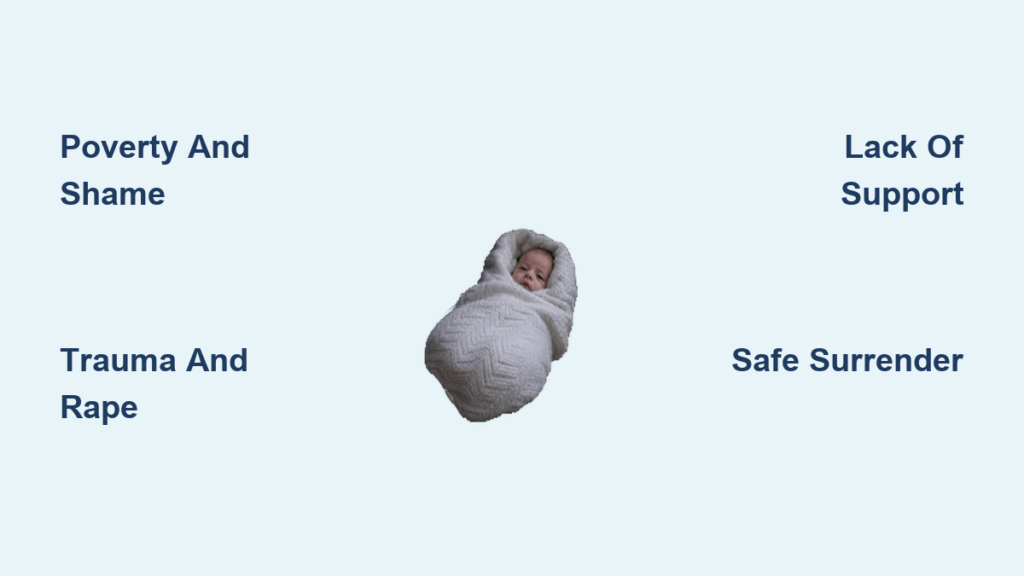
Every year, over 3,000 infants are abandoned in South Africa—left in dumpsters, sewers, and pit latrines, often still alive but cold and crying. These acts are not random; they stem from deep social fractures, trauma, and systemic neglect. While baby abandonment might seem like a modern tragedy, its roots stretch back into ancient history—though not always in the way we assume. From ritual deposits in Roman drains to survival-driven exposure in antiquity, and now to desperation-fueled abandonment in marginalized communities, the story of discarded infants reveals how culture, poverty, and support systems shape life and death. This article explores how people have abandoned babies across time, what drives it today, and how intervention can turn despair into hope.
You’ll learn why abandonment is often not neglect but a silent cry for help, how early humans actually nurtured their young, and what modern solutions like safe surrender and community education are doing to save lives. Most importantly, you’ll see that behind every abandoned baby is not a failed mother—but a failing system.
Ancient Rituals vs. Infant Exposure in Rome and Greece

Roman Wells: Sacred Offerings, Not Baby Burials
Archaeologists have uncovered caches of coins, figurines, and altars in Roman-era wells and drains across Europe—sites in London, Bordeaux, and Rome show deliberate placement of objects like a lead tablet inscribed to Minerva or miniature altars with incense residue. These were ritual offerings to water deities, not evidence of infant disposal.
Water was sacred in Roman religion, believed to connect the human and divine. Depositing valuables in underground spaces was a form of prayer—for health, fertility, or protection. While some speculate these sites were used for baby abandonment, no infant remains have been found in these deposits. The practice was symbolic, not a method of discarding children.
Why Infant Exposure Was Common in Antiquity
In ancient Greece and Rome, exposure—leaving a newborn outdoors—was a socially accepted way to control family size. Unwanted infants, especially girls or those with disabilities, were left on hillsides or at crossroads.
This wasn’t always infanticide. Some were left with hope of rescue, adoption, or enslavement. In rare cases, exposed children were taken in and raised by others. But survival rates were low, and the decision often reflected economic strain, gender bias, or family honor.
Unlike today’s abandonment crisis, exposure was a cultural norm, not a sign of personal failure. It showed how societal values determined which lives were deemed worth saving.
Early Humans: Strong Fathers, Communal Care

No Evidence of Paternal Abandonment in Paleolithic Times
Contrary to myths of primitive indifference, early human fathers did not abandon their children. Paleolithic humans lived in small, mobile bands where survival depended on cooperation. Childcare was a shared responsibility among parents, grandparents, and extended kin.
Human infants require years of care, making paternal investment evolutionarily essential. Abandonment would have threatened group survival—not just the child’s life.
What Modern Hunter-Gatherers Reveal About Ancient Parenting
Anthropologists study the Hadza of Tanzania and the Aka of Central Africa to understand early parenting:
• Hadza fathers carry infants, play with them, and help feed
• Aka fathers spend more time in physical contact with babies than most Western dads
These patterns suggest strong paternal bonds evolved early in human history. Abandonment was likely rare and only occurred under extreme duress—never as a routine practice.
Burial Sites Show Emotional Attachment, Not Neglect
Infant burials from early human settlements often include ornaments, tools, or food offerings—clear signs of emotional investment. There is no archaeological evidence of routine abandonment or neglect.
Instead, findings point to intentional care, even in harsh conditions. When infants died, they were mourned and buried with dignity. The idea that early humans casually discarded babies is a myth—unsupported by science.
Modern Abandonment Crisis in South Africa

3,000 Babies Abandoned Every Year
South Africa faces one of the world’s worst baby abandonment crises:
• Over 3,000 infants abandoned annually
• A baby left behind every 8 hours in greater Johannesburg
• Many found in dumpsters, sewers, rivers, or pit latrines
These numbers represent not just neglect—but often infanticide disguised as abandonment, where babies are suffocated or drowned before being discarded.
Where and How Babies Are Left Behind
Abandoned infants are often found in degrading, dangerous places:
• Dumpsters: Wrapped in plastic or paraffin-soaked blankets
• Sewers: Thrown into open drains, sometimes in garbage bags
• Pit latrines: Left in unsanitary, inaccessible holes
• Gates and doorsteps: Like baby Hope, left cold and crying
The use of paraffin-soaked blankets suggests attempts to silence cries—indicating awareness, desperation, and fear.
Why Mothers Abandon Babies Today

Young, Poor, and Without Support
Most mothers who abandon babies are teenagers or in their early 20s, facing unplanned pregnancies without emotional or financial support. Many live in poverty, lack housing, and fear family rejection.
• No access to reproductive healthcare
• No safe place to give birth
• Fear of being disowned or shamed
In many cases, the father is absent, leaving the mother to face the crisis alone.
Cultural Stigma and Fear of Shame
Cultural beliefs intensify the pressure:
• Polygamous households where pregnancy outside marriage brings dishonor
• Single motherhood seen as a moral failure
• Beliefs that certain children are “cursed” or bring bad luck
These stigmas push women to hide pregnancies and abandon babies in secret.
Trauma from Rape and Gender-Based Violence
Many abandoning mothers have experienced sexual violence, rape, or incest. In South Africa, one of the highest rates of gender-based violence globally, pregnancy from assault is tragically common.
• Victims often don’t report due to fear or shame
• No access to post-exposure care or abortion services
• Resulting in hidden pregnancies and desperate acts
Without confidential support, abandonment becomes a last resort.
Systemic Failures That Enable Crisis
The crisis is not just personal—it’s structural:
• Poverty and lack of housing make child-rearing impossible
• Inadequate healthcare access prevents prenatal support
• Weak social services fail to intervene early
• Child trafficking networks exploit vulnerable newborns
Without safety nets, abandonment becomes the only perceived option.
Infanticide Disguised as Abandonment
When Abandonment Means Death
True abandonment implies the child is left alive with a chance of rescue. But in many South African cases, infants are already dead when found.
Signs include:
• Suffocation in plastic bags
• Drowning in toilets or rivers
• Blunt force trauma
Experts call this “infanticide disguised as abandonment”—a silent pandemic masked by underreporting and lack of forensic investigation.
Desperation, Not Malice
This is not cruelty—it’s desperation. Women in crisis may feel they have no options. Without confidential support, safe birthing facilities, or legal protection, they resort to extreme measures.
How Intervention Saves Lives: The Story of Hope
Rescued from a Gate, Soaked in Paraffin
A month-old girl was left at a gate, cold, crying, and reeking of paraffin. She was diagnosed with Fetal Alcohol Syndrome (FAS)—a lifelong condition caused by prenatal alcohol exposure.
Rescued by Impact Baby Rescue, part of The Truth Foundation (TTF), she received:
• Immediate medical care
• Bathing, feeding, and nurturing
• Long-term emotional support
Today, Hope is healthy, loved, and thriving—proof that intervention works.
Fetal Alcohol Syndrome: Preventable, Not Curable
• Caused by alcohol consumption during pregnancy
• No cure exists
• Leads to developmental delays, behavioral issues, and physical abnormalities
• Preventable with education and support
Hope’s story highlights the need for early intervention and maternal education.
The Truth Foundation: Prevention and Rescue

Promise Homes: Safe Havens for Abandoned Infants
TTF operates five Promise Homes in Johannesburg—safe, nurturing environments for abandoned babies.
Services include:
• 24/7 medical and emotional care
• Adoption and family reunification support
• Long-term developmental monitoring
Each home acts as a sanctuary and prevention hub.
Mobile Outreach: Reaching Women Before Crisis
TTF’s mobile teams patrol high-risk areas and partner with clinics to reach nearly 2,000 pregnant women weekly.
They provide:
• Education on pregnancy stages
• Infant care basics
• Emotional and financial preparedness
• Dangers of substance use during pregnancy
This preventative approach addresses root causes before abandonment occurs.
Education That Changes Minds
Key topics covered:
• Stages of pregnancy – demystifying the process
• Infant care – building confidence
• Substance risks – especially alcohol and FAS
• Support systems – showing women they’re not alone
Knowledge gives women alternatives to abandonment.
Global Child Protection Frameworks
International Rights and Policies
The world has agreed on children’s rights through:
• UN Convention on the Rights of the Child (CRC)
• 2019 UNGA Resolution on Child Rights
• Guidelines on Alternative Care
• Global Campaign to End Child Institutionalization
These emphasize family-based care, prevention, and child participation.
Strengthening Family Care to Prevent Abandonment
Solutions must go beyond rescue:
• Parenting support programs
• Health and nutrition services
• Psychosocial counseling
• Economic empowerment for vulnerable mothers
Strengthening families prevents separation before it happens.
Continuum of Care When Family Isn’t Possible
When family care isn’t safe, alternatives exist:
• Kinship care – placement with relatives
• Foster care – temporary family-based care
• Adoption and Kafala – permanent solutions
• Community-based care – local support networks
Institutional care should be a last resort due to proven developmental harms.
How to End the Abandonment Crisis
Government Investment Is Essential
NGOs like TTF do heroic work, but cannot scale alone. Lasting change requires:
• Increased funding for maternal and child health
• National education campaigns on pregnancy and parenting
• Legal reforms to protect vulnerable mothers
• Safe surrender laws allowing anonymous, safe baby drop-offs
Community Support Over Stigma
Local communities must become safety nets, not sources of shame. This includes:
• Church and school outreach
• Peer support groups for young mothers
• Safe spaces for confidential counseling
Changing attitudes starts at the grassroots.
Prevention Over Rescue
While rescue saves lives, prevention saves futures. The key is early intervention:
• Identify at-risk women during prenatal visits
• Provide emotional and material support
• Connect them to social services
Every avoided abandonment is a victory.
The Power of One Intervention
Hope’s survival wasn’t luck—it was intentional intervention. Someone answered the door. Someone called for help. Someone provided care.
That chain of action proves every baby deserves a chance—and every mother deserves support.
Historical vs. Modern Abandonment: What’s Changed?
Key Differences in Context
| Aspect | Early Humans | Ancient Rome | Modern South Africa |
|---|---|---|---|
| Evidence of abandonment | None; burials show care | Ritual deposits, not infant remains | 3,000+ abandoned yearly |
| Paternal role | High involvement | Unknown | Often absent |
| Main causes | Survival (rare) | Cultural/religious | Poverty, stigma, trauma |
| Community response | Communal care | Religious offerings | NGO-led rescue and prevention |
Shared Threads Across Time
Despite vast differences, common themes emerge:
• Infants are vulnerable and require long-term care
• Social support systems determine survival
• Cultural beliefs shape parenting choices
• Desperation drives extreme actions
The core issue remains: when support fails, babies pay the price.
Frequently Asked Questions About Baby Abandonment
Why do mothers abandon babies?
Most mothers who abandon babies are young, poor, and unsupported. They face unplanned pregnancies, fear of shame, trauma from rape, or lack access to healthcare. Abandonment is often a last resort when no help is available.
Is baby abandonment the same as infanticide?
Not always. True abandonment means leaving a child alive with hope of rescue. But in many cases—especially in South Africa—babies are killed before being discarded, making it infanticide disguised as abandonment.
Did ancient Romans abandon babies in wells?
No direct evidence shows Romans abandoned babies in wells. Archaeological finds in drains—coins, altars, figurines—are ritual offerings, not infant remains. The idea is a misconception based on the sacred use of underground spaces.
How can baby abandonment be prevented?
Prevention requires early intervention: education for pregnant women, access to healthcare, emotional support, and safe surrender options. Community programs like TTF’s mobile outreach reach thousands weekly with life-saving information.
What happens to abandoned babies who are rescued?
Rescued infants go to safe care facilities like TTF’s Promise Homes. They receive medical care, emotional support, and are prepared for adoption or family reunification. Long-term monitoring ensures healthy development.
Are there laws to protect abandoned babies?
Yes. Safe surrender laws allow mothers to leave newborns at hospitals or designated safe spots without legal penalty. These laws encourage life-saving decisions and reduce abandonment in dangerous places.
Key Takeaways for Ending Baby Abandonment
Baby abandonment is not a sign of maternal failure—it’s a symptom of societal failure. From ancient rituals to modern desperation, the story of abandoned infants reflects our values, priorities, and compassion. The solution isn’t judgment, but investment, education, and empathy.
Hope’s survival shows that one intervention can change everything. With the right support—safe spaces, education, and community care—every mother can choose life. Every baby can have a future. And every Hope can grow up loved.





