
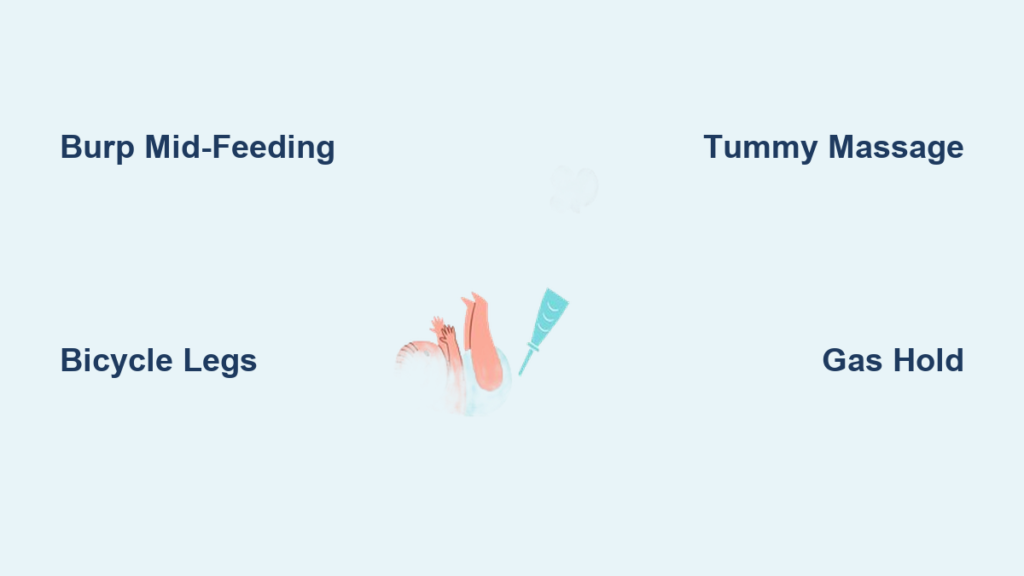
If your baby is crying, pulling their legs up, or has a bloated belly, they’re likely struggling with gas. This common issue affects most infants, especially in the first few months. Baby gas happens when air gets trapped in the digestive tract during feeding, crying, or even from certain foods in a breastfeeding mom’s diet. The good news? You don’t need medication to fix it. With simple, proven techniques—like proper burping, tummy massage, and leg movements—you can relieve your baby’s discomfort quickly and safely.
In this guide, you’ll learn how to prevent gas before it starts, recognize the signs early, and apply gentle, effective relief methods that work. You’ll also know when it’s time to talk to a doctor and how to build a daily routine that keeps gas at bay.
Spot the Gas Symptoms Early
Catching gas early makes relief faster and easier. Babies can’t tell you what’s wrong, so look for these clear signs:
• Excessive fussiness after feeding
• Frequent passing gas
• Hard, swollen belly
• Pulling legs toward the chest
• Arching back or crying during feeding
These behaviors often peak during the evening, a pattern sometimes called “evening colic.” But unlike colic, gas-related crying usually improves with burping, massage, or position changes. If your baby calms down after passing gas, that’s a strong clue.
Why Babies Get Gassy
Their digestive systems are still developing. Swallowed air from feeding or crying doesn’t move through smoothly, leading to trapped gas. Immature gut muscles also struggle to push gas along, causing discomfort.
Prevent Gas Before It Starts
The best way to stop baby gas is to reduce air intake during feeding and keep digestion smooth.
Feed Before Baby Cries
Wait too long, and hunger turns into frantic crying—this increases air swallowing. Watch for early hunger cues like:
• Rooting (turning head side to side)
• Sucking on hands
• Smacking lips
Feeding early means calmer sucking and less air intake.
Use the Right Feeding Position
Hold your baby with their head slightly above their stomach during feeding. This uses gravity to keep milk down and air up—where it can be burped out.
For bottle-fed babies, tilt the bottle so the nipple stays full of milk. This prevents your baby from sucking in air as the level drops.
Choose Gas-Reducing Bottles
If you bottle-feed, use anti-colic bottles with:
• Vent systems (like Dr. Brown’s)
• Slowed flow nipples to reduce gulping
These designs minimize air bubbles in the milk and control feeding pace.
Ensure a Deep Latch (Breastfeeding)
A shallow latch causes babies to suck in air. To fix it:
• Bring baby to the breast with mouth wide open
• Aim the nipple toward the roof of their mouth
• Make sure more areola is covered on top than below
A good latch means less air, better milk transfer, and fewer gas episodes.
Burp to Release Trapped Air
Burping removes air before it reaches the intestines. Do it at key moments.
Burp Mid-Feeding and After
• Breastfed babies: Burp when switching breasts and after finishing
• Bottle-fed babies: Burp every 2–3 ounces and at the end
Even if your baby doesn’t burp, the upright position helps gas rise.
Best Burping Positions
Try these three methods to find what works:
-
Over the Shoulder
Hold baby upright against your chest. Support their head and gently pat their back. -
Sitting on Lap
Sit baby on your lap, leaning forward slightly. Support their chest and head with one hand, pat with the other. -
Face-Down on Lap
Lay baby belly-down across your legs. Support their head and gently rub or pat the back.
Tip: Place a burp cloth under their chin—just in case.
Use Gravity and Movement to Relieve Gas
Sometimes burping isn’t enough. Trapped gas needs help moving through the intestines.
Try the Gas Hold (Belly-Down Bounce)
Place your baby face-down across your forearm. Support their head and chest with your hand. Gently bounce or walk in place.
• Why it works: Pressure on the abdomen and gentle motion help push gas along
• Bonus: The snug hold mimics the womb, calming your baby
Do this for 5–10 minutes. Many parents see relief within minutes.
Do the Bicycle Legs Routine
Lay your baby on their back. Hold their ankles and gently move their legs in a slow cycling motion.
• How it helps: This compresses the abdomen, massaging the intestines and releasing trapped gas
• Pro tip: Do this during diaper changes to make it part of your routine
Repeat for 2–3 minutes. Stop if your baby seems uncomfortable.
Massage the Tummy Clockwise
Use your fingertip or palm to rub your baby’s belly in a clockwise circle—the natural direction of digestion.
• Start near the right hip bone
• Move up, across, and down the left side
• Use light pressure; skin should not turn red
Try this for 3–5 minutes. Some babies relax instantly.
Add warmth: Place a warm (not hot) washcloth on their belly first. The heat relaxes muscles and eases pain.
Support Digestion with Tummy Time

Tummy time isn’t just for muscle development—it helps with gas too.
How Tummy Time Aids Gas Relief
Lying on the stomach applies gentle pressure to the abdomen, helping move gas through the intestines. It also strengthens core muscles needed for rolling, crawling, and digestion.
Safe Tummy Time Tips
• Start with 2–3 sessions a day, 3–5 minutes each
• Do it after a nap, not right after feeding
• Get down on the floor with your baby—eye contact keeps them calm
• Use a mirror or soft toy to hold attention
If your baby hates tummy time, try it across your lap or chest. Even a few minutes help.
Adjust Diet for Breastfeeding Moms
What you eat can affect your baby’s gas—especially if they’re sensitive to certain foods.
Common Gas-Trigger Foods
Some babies react to:
• Dairy products (milk, cheese, yogurt)
• Cruciferous veggies (broccoli, cauliflower, cabbage)
• Beans and lentils
• Onions and garlic
• Caffeine and chocolate
These don’t cause gas in all babies, but they can worsen it in sensitive ones.
How to Test for Food Sensitivity
- Eliminate one food at a time for 5–7 days (start with dairy)
- Watch for changes in fussiness, gas, or stool
- If symptoms improve, avoid that food for now
- Reintroduce it later to confirm the link
Don’t cut out major food groups without talking to your doctor. You still need balanced nutrition.
Consider Formula Changes If Needed
If your baby is formula-fed and still gassy despite good feeding habits, the formula might be the issue.
Signs It Might Be the Formula
• Frequent gas with fussiness
• Loose or mucousy stools
• Spitting up more than usual
• No improvement with burping or massage
When to Switch Formulas
Talk to your pediatrician before changing. They may suggest:
• Hydrolyzed formulas (like Nutramigen) for sensitivities
• Gentle or “comfort” formulas with partially broken-down proteins
• Lactose-free options if lactose intolerance is suspected
Never dilute formula or switch brands without medical advice.
Use Gas Drops the Right Way

Over-the-counter remedies can help—but only if used correctly.
Simethicone: What It Does
Simethicone (found in brands like Mylicon or Little Tummys) breaks up gas bubbles in the stomach. It’s not absorbed into the bloodstream, making it safe for infants.
How to Use It
• Give after feeding or before bed if gas is predictable
• Follow the dose on the label based on baby’s weight
• Use only as needed—not daily unless advised
Note: It doesn’t work for everyone. If there’s no improvement in 2–3 days, stop using it.
Avoid These “Remedies”
• Gripe water – Not regulated; some contain alcohol or herbs unsafe for infants
• Herbal teas – Can interfere with nutrition or cause allergic reactions
• Infant probiotics – Talk to your doctor first; evidence is mixed
Know When to Call the Doctor
Most gas is normal and harmless. But some symptoms need medical attention.
Red Flags: Call Your Pediatrician If
• Baby isn’t gaining weight
• Frequent vomiting (especially green or bloody)
• Blood in stool
• Fever with fussiness
• No bowel movements for more than 3 days
• Extreme crying lasting hours with no relief
These could point to reflux, food allergies, lactose intolerance, or other conditions.
Call 811 or Seek Care If
You’re unsure whether symptoms are serious. HealthLink BC (811) offers free nursing advice 24/7. Nurses can help you decide if a doctor visit is needed.
Build a Gas-Relief Routine
The fastest way to stop baby gas is to combine prevention and relief strategies daily.
Sample Evening Routine (Gas-Prone Time)
- Feed early—before full-blown crying
- Burp mid-feed and after
- Hold upright 10–15 minutes
- Gentle tummy massage
- Bicycle legs
- Tummy time on your chest
- Gas hold if still fussy
Repeat steps 4–7 as needed. Many parents find this routine cuts crying time in half.
Frequently Asked Questions About Baby Gas
Why does my baby get so gassy at night?
Babies often get gassier in the evening because their digestive system is still maturing. Activity during the day builds up gas, and crying from fatigue increases air swallowing. Stick to a consistent feeding and burping routine to reduce nighttime discomfort.
Can breast milk cause gas in babies?
Breast milk itself doesn’t cause gas, but certain foods in a breastfeeding mom’s diet—like dairy or beans—can contribute to gas in sensitive babies. Track your diet and your baby’s reactions to identify possible triggers.
Is it safe to use gas drops every day?
Gas drops with simethicone are safe for occasional use but should not be used daily unless recommended by your pediatrician. Overuse may mask underlying issues like reflux or food sensitivity.
How long does baby gas last?
Most babies experience gas from birth to around 3–4 months. As their digestive system matures and they gain better muscle control, gas episodes naturally decrease.
Does tummy time help with gas?
Yes. Tummy time applies gentle pressure on the abdomen, helping trapped gas move through the intestines. It also strengthens core muscles that support digestion.
Can a pacifier cause gas?
Yes. Excessive pacifier use, especially when your baby is already full or crying, can lead to swallowing air. Limit pacifier use to calming moments and avoid it during or right after feeding.
Key Takeaways for Soothing Baby Gas Quickly
• Recognize early signs like leg pulling, bloating, and fussiness
• Prevent gas with proper feeding, burping, and positioning
• Relieve trapped gas with massage, bicycle legs, and the gas hold
• Adjust diet if needed, under medical guidance
• Know when to call the doctor for red flag symptoms
Stick to one change at a time to see what works best. With patience and the right techniques, you can help your baby feel better fast—and get more peaceful moments for both of you.





