
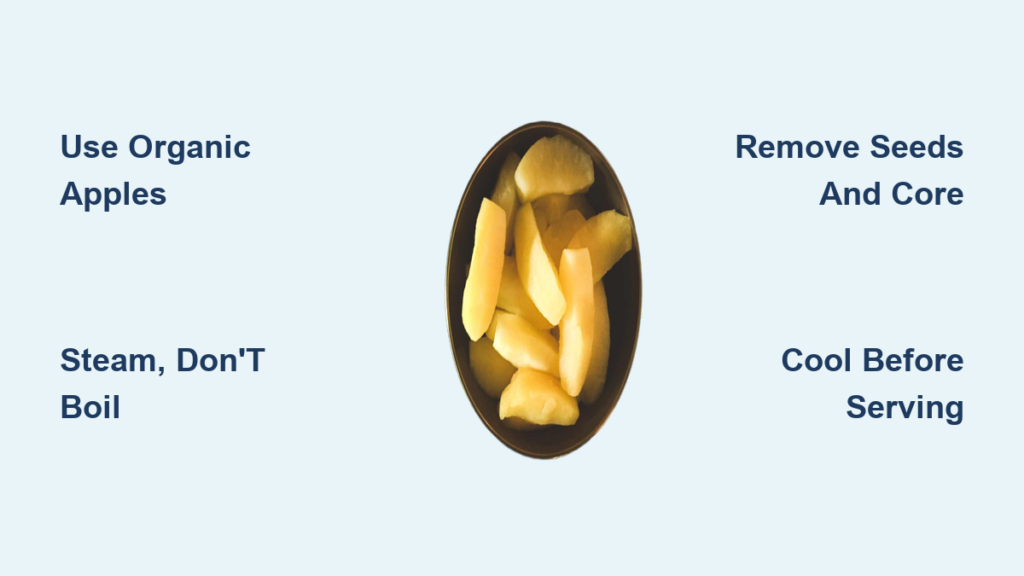
Steaming apples for baby is a safe, nutritious way to introduce solids starting around 6 months. This method softens the fruit while preserving more vitamins than boiling, especially vitamin C and fiber. Steamed apples are naturally sweet, easy to digest, and nonallergenic—making them a top choice for first foods. Whether you’re preparing smooth purees or soft finger foods for baby-led weaning, steaming ensures a gentle transition to solid eating without added sugars or unsafe ingredients.
In this guide, you’ll learn how to steam apples perfectly for your baby’s age and feeding style. From choosing the best apple varieties to storing leftovers safely, every step is designed for ease, safety, and nutrition. You’ll discover how to avoid choking hazards, adjust textures as your baby grows, and prepare meals in bulk—no special equipment required. Let’s get started with simple, healthy feeding your baby will love.
Choose the Best Apples for Steaming
Opt for Organic When Possible
Select organic apples to minimize your baby’s exposure to pesticide residues. Since babies’ systems are still developing, reducing chemical intake is crucial. If organic isn’t available, wash non-organic apples thoroughly under running water and scrub the skin before peeling. This helps remove surface contaminants that could transfer during cutting or peeling.
Pick the Right Variety for Your Baby’s Needs
• Gala, Fuji, Honeycrisp: Sweet and soft—ideal for smooth purees and first tastes
• Granny Smith: Firmer texture, holds shape well—great for finger foods
• Red Delicious: Mild flavor and breaks down easily—good for runny purees
Softer types like Fuji steam quickly and blend into silky textures. Firmer apples like Granny Smith stay intact longer, making them better for self-feeding. Always match the variety to your baby’s age and feeding method.
Prepare Apples Safely for Steaming
Wash, Peel, and Core Thoroughly
- Rinse the apple under cool running water
- Scrub the surface with a clean produce brush
- Peel the entire apple—skin is hard to digest and a choking risk
- Cut in half and remove the core completely using a knife or melon baller
Never skip washing—even if you plan to peel. Bacteria or residues on the skin can spread to the flesh during handling.
Why You Must Remove Apple Seeds
Apple seeds contain amygdalin, a compound that can release cyanide when digested. While a few seeds won’t cause harm, infants are especially sensitive. To be safe, always core apples completely and double-check each piece before steaming.
Cut for Even Cooking Results
For Puree:
• Chop into 1-inch cubes
• Keep sizes uniform so all pieces cook at the same rate
For Finger Food:
• Slice into thick wedges around the core
• Make them about the length of your finger for easy gripping
Consistent sizing prevents some chunks from staying hard while others turn mushy.
Steam Apples Using Any Kitchen Setup

Use a Steamer Basket the Right Way
- Add 1–2 inches of water to a saucepan
- Place a steamer basket inside—ensure it doesn’t touch the water
- Arrange apple pieces in a single layer
- Cover with a tight-fitting lid
- Bring to a boil, then reduce to a steady simmer
Steam for:
• 8–10 minutes for puree (fork-tender)
• 5–7 minutes for finger food (soft but still hold shape)
Test doneness by piercing a piece with a fork—it should slide in easily.
No Steamer? Create One in Minutes
You don’t need special tools. Here’s how to improvise:
- Use a wide pot with a metal trivet, cooling rack, or heat-safe colander
- Add 1–2 inches of water (never let it touch the apples)
- Place apple pieces on the rack
- Cover tightly to trap steam
- Steam as above
Avoid plastic or non-stick containers—they can melt or release harmful chemicals when exposed to heat.
Make a Smooth, Safe Apple Puree
Blend Until Completely Smooth
- Transfer steamed apples to a blender or food processor
- Blend on high until no lumps remain
- For babies 6 months old, aim for a thin, pourable texture—like heavy cream
Lump-free puree reduces gagging and supports early swallowing skills.
Adjust Texture by Age
| Age | Ideal Consistency | Recommended Liquid |
|---|---|---|
| 6–7 months | Thin, runny | 1–2 tbsp water, breast milk, or formula |
| 8–9 months | Thicker, spoon-coachable | Less or no liquid |
| 10+ months | Mashed or lumpy | Serve as soft pieces |
Breast milk or formula adds familiarity. Water keeps it simple and sugar-free.
Strain for Extra-Smooth Results
For sensitive babies or early feeders, press the puree through a fine mesh strainer. This removes fibrous bits and creates a silky texture that’s easier to swallow and digest.
Serve Steamed Apples as Finger Food

Cool Completely Before Offering
Let steamed apple wedges cool to room temperature before serving. Test a piece on your wrist—no warmth should be felt. Hot food can burn delicate mouths.
Cut Into Safe, Manageable Pieces
After steaming, slice wedges into:
• ½-inch cubes for easy chewing
• Or leave as soft sticks for gumming
The apple should mash easily between your fingers—this means it’s safe for your baby’s gums.
Add Lemon Juice to Prevent Browning
A few drops of lemon juice before steaming helps keep apples from turning brown. It also boosts vitamin C, which helps your baby absorb iron from other foods. Use sparingly—too much can be tart for little taste buds.
Match Texture to Your Baby’s Development
6 Months: Start with Runny Puree
At this stage, babies are learning to move food to the back of their mouth and swallow. Serve a thin, smooth puree on a pre-loaded spoon. Let your baby lean in—never force-feed.
7–9 Months: Thicken and Introduce Lumps
As oral skills improve, offer thicker purees or mashed apples with soft lumps. If your baby shows readiness—like reaching for food or making chewing motions—introduce soft finger foods.
10–12 Months: Encourage Chewing and Self-Feeding
Offer small, soft apple cubes or sticks. This builds hand-eye coordination and chewing strength. Always supervise to prevent choking, even with soft foods.
Store Steamed Apples Safely

Refrigerate for Up to 3 Days
• Store puree or leftover finger food in an airtight container
• Label with the date
• Keep in the back of the fridge (not the door) for stable temperature
• Use within 3 days
Freeze for Easy Batch Prep
Freezing saves time and reduces waste:
- Spoon puree into ice cube trays
- Cover with plastic wrap or a lid
- Freeze for 4–6 hours
- Transfer cubes to a freezer-safe bag or container
- Label and use within 3 months
Each cube holds about 1–2 ounces—perfect for single servings.
Reheat Steamed Apples the Safe Way
Thaw Properly
• Overnight in the fridge
• Or use microwave defrost setting in a glass bowl
Never leave puree at room temperature to thaw.
Warm Gently on the Stove
- Place portion in a small saucepan
- Heat over low heat, stirring often
- Warm until just warm—never boil
Never reheat in plastic, especially in the microwave. Use glass or stainless steel instead.
Test Temperature Before Serving
Always test a small amount on your wrist. It should feel neutral or slightly warm—not hot.
Avoid These Common Mistakes
❌ Never Add Honey or Sugar
Honey can cause infant botulism, a serious illness in babies under 12 months. Skip sugar and spices too—they’re unnecessary and can strain developing kidneys.
❌ Always Check Texture Before Serving
• Puree should drip slowly off a spoon
• Finger food should mash easily with gums
If it’s too firm, steam longer.
❌ Don’t Use Uneven Apple Pieces
Irregular sizes lead to uneven cooking. Some may stay hard while others turn mushy. Always cut uniformly.
❌ Avoid Microwaving in Plastic
Even BPA-free plastics can leach chemicals when heated. Use glass or ceramic for reheating.
Support Baby-Led Weaning with Steamed Apples
Steamed apple wedges are a perfect first finger food for baby-led weaning. They’re soft, grippable, and encourage self-feeding. Offer one piece at a time and let your baby explore at their own pace.
Tips for Success:
• Serve in thick, spear-like shapes (easy to grasp)
• Let baby bring food to mouth—don’t hand-feed
• Expect mess—it’s part of learning
Gagging is common at first. As long as your baby is breathing and pushing food forward, let them work it out.
Watch for Allergic Reactions
Though apples are nonallergenic, always introduce new foods one at a time.
How to Test Safely:
- Serve a small amount (1–2 teaspoons)
- Wait 3–5 days before introducing another new food
- Watch for signs of reaction:
• Rash or hives
• Vomiting or diarrhea
• Swelling or breathing issues (rare)
If any reaction occurs, stop feeding and contact your pediatrician.
Clean and Sanitize Equipment After Use
Wash All Tools Thoroughly
• Clean blender, steamer basket, and containers with hot, soapy water
• Rinse well and air-dry
• For extra safety, boil metal parts or run through the dishwasher
Prevent Staining and Leaching
Apple puree can stain plastic over time. Use glass jars or silicone trays for freezing to avoid discoloration and chemical exposure.
Key Takeaways for Steaming Apples Safely
• ✅ Use organic apples when possible—reduces pesticide exposure
• ✅ Steam, don’t boil—preserves more nutrients and flavor
• ✅ Supervise every feeding—choking can happen in seconds
• ✅ Introduce one food at a time—easier to spot allergies
• ✅ Freeze in single servings—saves time and reduces waste
• ✅ Reheat gently on the stove—safer and more even than microwaving
Following these steps ensures your baby gets the full benefits of real, wholesome food—without risks.
Frequently Asked Questions About Steaming Apples for Baby
Can I steam apples without a steamer basket?
Yes. Use a wide pot with a metal trivet, cooling rack, or heat-safe colander. Add 1–2 inches of water, place apple pieces on top, cover, and steam as usual. Avoid plastic or non-stick surfaces.
How long do steamed apples last in the fridge?
Steamed apples—whether puree or finger food—last up to 3 days in an airtight container in the refrigerator. Store in the back, not the door, for consistent temperature.
Can I freeze steamed apples for baby?
Yes. Cool puree completely, then freeze in ice cube trays. Transfer to a freezer-safe bag and label. Use within 3 months. Thaw overnight in the fridge or defrost gently.
Why can’t babies have honey with steamed apples?
Honey can contain spores that cause infant botulism, a rare but serious illness in babies under 12 months. Never add honey—even in small amounts.
What’s the best apple for baby puree?
Gala, Fuji, or Honeycrisp are best for puree—they’re sweet, soft, and blend smoothly. Granny Smith works well for finger foods since it holds its shape.
Can I add lemon juice to steamed apples?
Yes, a few drops of lemon juice before steaming helps prevent browning and boosts vitamin C. Use sparingly—it’s only needed for finger food prep.
Final Thoughts on Steaming Apples for Baby
Steaming apples for baby is a simple, safe, and nutritious way to start solids. With minimal prep, you can serve a wholesome first food that supports digestion, development, and healthy eating habits. Whether you choose smooth purees or soft finger foods, this method adapts perfectly to your baby’s growth stage.
Follow the steps in this guide to avoid common mistakes, store meals safely, and introduce new foods with confidence. Always supervise feeding, check textures, and never add honey. With these practices, you’re setting the foundation for a lifetime of healthy eating. Start today—your baby’s first bite of real food is a moment to celebrate.





