
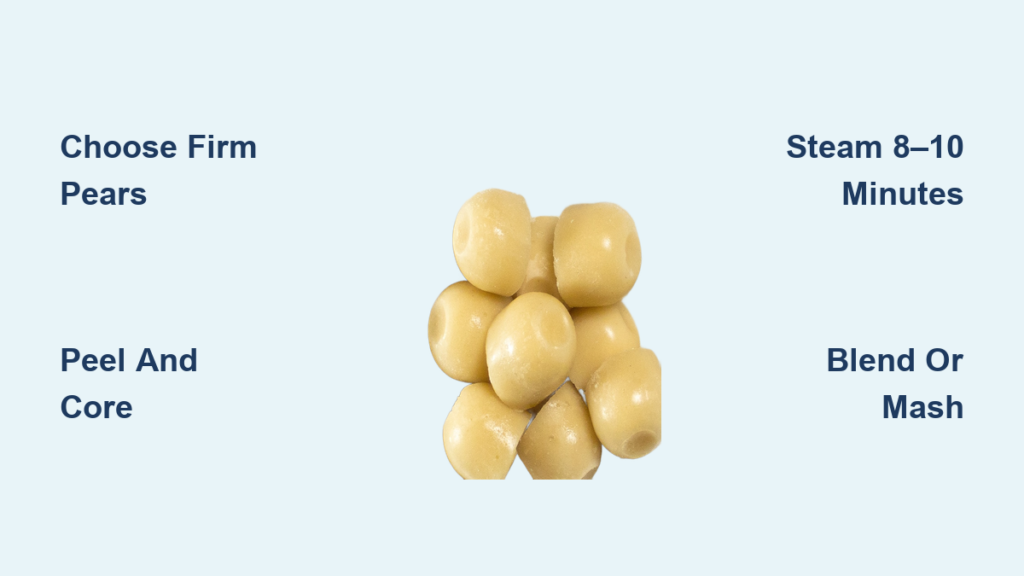
Steaming pears for baby is a safe, healthy way to introduce sweet, fiber-rich fruit into your little one’s diet. Pears are naturally gentle on digestion, low in allergens, and easy to prepare—making them a top choice for first foods. When you steam pears properly, you preserve essential nutrients like vitamin C and dietary fiber while creating a soft texture perfect for tiny mouths. This guide walks you through every step, from selecting the best pear varieties to storing leftovers safely.
You’ll learn how to steam pears to the ideal consistency, avoid common mistakes, and serve them in age-appropriate ways. Whether you’re batch-prepping for the week or serving fresh, this method ensures your baby gets the most out of this wholesome fruit. Let’s get started with choosing the right pears for steaming.
Choose the Right Pear Type for Baby
Opt for Firmer Varieties Like Bartlett, Bosc, or Anjou
Firm pears such as Bartlett, Bosc, or Anjou hold their shape during steaming and blend into a smooth puree without turning grainy. These types soften evenly and offer a naturally sweet flavor babies love. Choose pears that yield slightly to gentle pressure near the stem—this indicates ripeness without over-softness.
Avoid rock-hard pears, as they may need longer cooking and can result in uneven texture. Overly ripe pears break down too quickly, leading to watery purees that lose nutritional value.
Avoid Canned Pears and Pre-Cut Options
Skip canned pears in syrup or pre-packaged fruit cups. These often contain added sugars, preservatives, or excess sodium unsuitable for infants. Even “no sugar added” versions may have natural juices that concentrate sugars during processing. Fresh pears give you full control over ingredients and ensure a clean, pure taste.
If using organic pears, you reduce exposure to pesticides. But whether organic or conventional, always wash thoroughly before peeling and cutting.
Prepare Pears Safely Before Steaming
Wash Pears Under Cool Running Water
Even if you plan to peel them, wash pears under cool running water to remove surface dirt, wax, or pesticide residues. Use a soft vegetable brush to gently scrub the skin. This step is crucial because bacteria can transfer from the outside to the flesh during cutting.
Never use soap or produce washes—these can leave harmful residues. Rinsing with water is sufficient and recommended by food safety experts.
Peel, Core, and Dice for Even Cooking
Peel each pear with a vegetable peeler to remove the fibrous skin, which can be hard for babies to digest. Cut the pear in half vertically and use a spoon or melon baller to scoop out the core and seeds. Pear seeds contain trace amounts of amygdalin, a compound that can release cyanide when digested—so always remove them completely.
Dice the pear into 1-inch chunks. Keep the pieces uniform so they steam evenly. Smaller pieces cook faster and blend smoother, especially important for newborns starting solids.
Steam Pears Properly for Maximum Nutrition

Use a Steamer Basket Over Boiling Water
Place the pear chunks in a stainless steel or silicone steamer basket. Set it over 1–2 inches of boiling water in a saucepan, making sure the water doesn’t touch the fruit. Cover with a tight-fitting lid to trap steam and speed up cooking.
Steaming preserves more nutrients than boiling, which leaches vitamins into the water. It also maintains flavor and color better than microwaving or baking.
Cook for 8–10 Minutes Until Fork-Tender
Steam the pears for 8 to 10 minutes, or until they’re soft enough to mash easily with a fork. The exact time depends on the ripeness and size of the chunks. Check doneness by piercing a piece with a fork—it should slide in smoothly.
Over-steaming leads to mushy texture and nutrient loss, especially heat-sensitive vitamin C. Under-steaming leaves chunks too firm for safe swallowing. Aim for soft but intact pieces.
Check Texture Before Blending
Remove a few cooled pieces and press between your fingers. They should feel tender and yield easily. If they resist, return to the steamer for another 1–2 minutes. Proper texture ensures a smooth puree and reduces choking risk.
Avoid letting the water boil dry. Add more hot water as needed to maintain the steam level.
Blend or Mash to the Right Consistency for Your Baby’s Age

Create a Smooth Puree for Beginners (4–6 Months)
For babies just starting solids, transfer the steamed pears to a blender or food processor. Add 1–2 tablespoons of the reserved steaming liquid to help achieve a silky texture. Blend until completely smooth—no lumps should remain.
Pour through a fine mesh strainer if needed to remove any stray fibers. Serve immediately or store for later use. This thin consistency helps babies transition from liquids to solids safely.
Offer a Chunky Mash for Older Infants (8+ Months)
Once your baby develops chewing motions and handles thicker foods, switch to a fork-mashed version. Simply mash steamed pears in a bowl to leave soft, small lumps. This encourages oral motor development and prepares them for table foods.
You can also offer cooled, steamed pear wedges for self-feeding. Let your baby gum or suck on the soft fruit to build hand-eye coordination and food exploration skills.
Serve Steamed Pears Safely and Fresh
Cool to Room Temperature Before Feeding
Never serve hot or warm puree directly from the blender. Let it cool for 10–15 minutes, then test on the inside of your wrist. It should feel neutral—not warm or hot.
If refrigerating or freezing, cool the puree quickly by placing the bowl in an ice bath before storing.
Watch for Allergic Reactions
Pears are low-allergy risk, but always introduce one new food at a time. Start with 1–2 teaspoons and observe for 3–5 days. Look for signs like rash, diarrhea, vomiting, or difficulty breathing. If any occur, stop feeding and consult your pediatrician.
Use Clean Utensils and Bowls
Always serve in sterilized or freshly washed bowls and spoons. Never double-dip a used spoon into the storage container to avoid bacterial contamination.
Store Leftover Steamed Pears Correctly

Refrigerate for Up to 48 Hours
Transfer cooled pear puree to an airtight glass or BPA-free plastic container. Label with the date and store in the refrigerator. Use within two days to ensure freshness and prevent spoilage.
Do not leave puree at room temperature for more than 2 hours (1 hour if above 90°F).
Freeze in Portions for Future Meals
Pour puree into clean ice cube trays. Cover with plastic wrap to prevent freezer burn. Once frozen (usually 4–6 hours), pop out the cubes and store in a labeled freezer bag.
Each cube is roughly 1–2 ounces—perfect for single servings. Use within 1 month for best nutrient retention and flavor.
Thaw and Reheat Safely
Defrost frozen pear cubes in the refrigerator overnight. To warm, place in a small saucepan over low heat or microwave in 10-second bursts. Stir well and check temperature before serving.
Never reheat steamed pears more than once.
Avoid Common Mistakes When Steaming Pears for Baby
Never Add Sugar, Honey, or Spices
Do not sweeten pear puree with sugar, maple syrup, or honey. Honey is unsafe for babies under 1 year due to the risk of infant botulism. Let your baby enjoy the natural sweetness of pears to build healthy taste preferences.
Avoid cinnamon or other spices unless approved by your pediatrician. Early palates benefit from simple, unflavored foods.
Progress from Puree to Texture Gradually
Don’t keep your baby on smooth purees beyond 7–8 months. Delaying texture progression can lead to feeding difficulties later. Slowly thicken the mash and introduce soft finger foods to support chewing development.
Protect Non-Stick Cookware
If using a non-stick steamer basket, avoid metal utensils that can scratch the coating. Use silicone or wooden tools instead to prevent harmful chemicals from leaching into food.
Make Steaming Pears a Simple Weekly Routine
Batch-Prepare for Busy Days
Steam 4–5 pears at once and freeze the puree in cubes. Having ready-to-use portions saves time during hectic mornings or evenings. Just thaw and serve—no last-minute prep needed.
Rotate with Other First Fruits
While pears are excellent starters, rotate with apples, peaches, avocados, and bananas. This variety exposes your baby to different flavors and nutrients, reducing picky eating risks.
Encourage Self-Feeding and Exploration
Let your baby hold a cooled, steamed pear wedge (cut into a grippable shape) during meals. Even if they mostly suck or gum it, this builds hand strength and food curiosity. Expect mess—it’s part of learning.
Key Takeaways for Steaming Pears for Baby
Steaming pears for baby is a quick, nutritious way to support healthy growth and development. By choosing firm pears like Bartlett or Anjou, preparing them safely, and steaming just until tender, you preserve flavor and nutrients. Serve in age-appropriate textures—from smooth purees to chunky mashes—and always watch for allergies.
Store leftovers properly in the fridge for 2 days or freeze for up to a month. Avoid added sugars and progress textures on time to support oral development. With a little prep, you can make steamed pears a staple in your baby’s diet.
Start today: wash, peel, steam, and blend one pear to see how easy it is to make wholesome baby food at home.
Frequently Asked Questions About Steaming Pears for Baby
Can I steam pears in the microwave for baby food?
Yes, you can microwave pears safely. Place peeled and diced pears in a microwave-safe bowl with 2 tablespoons of water. Cover and cook on high for 3–4 minutes, stirring halfway. Check for softness before blending. While convenient, steaming on the stove preserves more nutrients.
Do I need to peel pears before steaming for baby?
Yes, always peel pears before steaming for babies under 8 months. The skin is fibrous and harder to digest. Even after steaming, it may cause discomfort or gagging. Older babies can try soft, steamed skin under supervision.
How do I know when steamed pears are done?
Pears are done when they’re fork-tender—easily pierced and mashed. They should be soft but not falling apart. Overcooked pears become watery and lose nutrients. Test a cooled piece by pressing it between your fingers.
Can I mix steamed pears with other fruits?
Yes, once each fruit is individually introduced and tolerated, you can mix steamed pears with apples, bananas, or peaches. This adds flavor variety and nutrition. Start with small blends to monitor for reactions.
Is it safe to reheat frozen pear puree more than once?
No, only reheat steamed pear puree once. Reheating multiple times increases the risk of bacterial growth and nutrient loss. Serve only the amount your baby is likely to eat, and discard leftovers after feeding.
How long should I steam pears for baby food?
Steam pear chunks for 8 to 10 minutes over boiling water. Use a steamer basket and cover with a lid. Cooking time may vary slightly based on pear size and ripeness. Always check for fork-tenderness before blending.





