
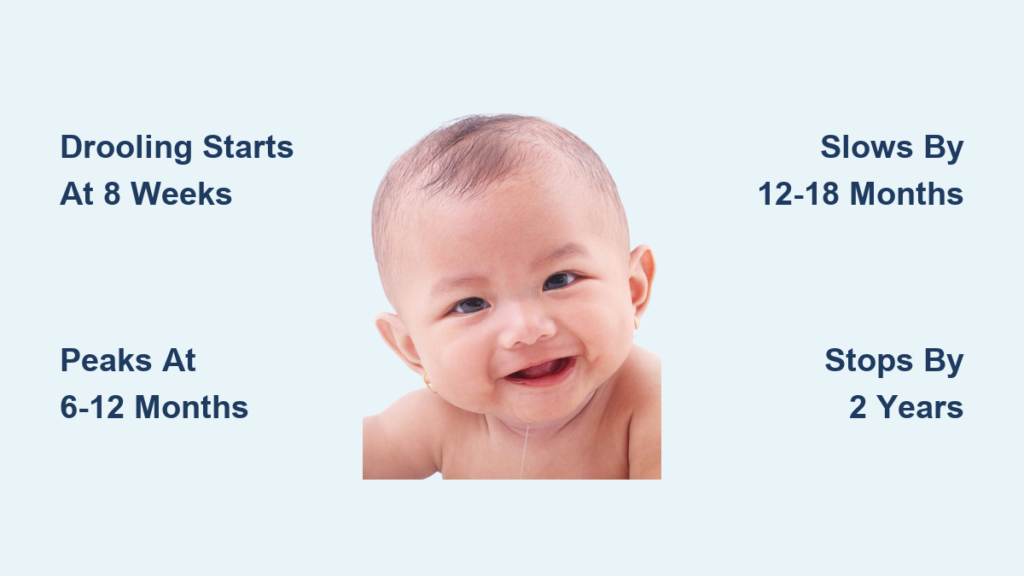
If your baby is constantly drooling, soaking through bibs, and leaving wet patches on clothes and toys, you’re not alone. Excessive drooling is a normal part of infant development—and most babies naturally outgrow it between 12 and 24 months. While it can feel endless during those messy months, drooling typically begins as early as 8 to 12 weeks, peaks between 6 and 12 months, and gradually fades as your child gains better control over swallowing and oral motor skills.
This phase is tied to your baby’s growth, not just teething. You’ll learn the full drooling timeline, why it happens, when it could signal a problem, and how to protect your baby’s skin—all based on medical insights and real parent experiences. By the time your toddler reaches age 2, drooling usually stops completely, making those slobbery kisses a thing of the past.
Drooling Timeline: From 8 Weeks to 2 Years

Drooling Starts at 8–12 Weeks
Saliva production kicks in around 8 to 12 weeks old, even though babies can’t yet swallow efficiently. At this age, your baby often lies with their mouth open, and without the reflex to swallow, saliva escapes. This early drooling is completely normal and marks the start of oral development.
By 3 to 4 months, drooling becomes more visible. Many parents assume it’s a sign of early teething, but it’s actually due to increased mouthing behavior—like chewing on fists or toys—which signals the brain to produce more saliva, just as eating would.
Peak Drooling: 6–12 Months
The 6- to 12-month period is when drooling hits its highest point. Babies are exploring everything with their mouths, which continuously triggers saliva glands. This behavior mimics eating, so the body responds by producing more saliva—even without food.
Teething usually starts around 6 months, and while it doesn’t directly cause drooling, the urge to chew on fingers or toys to soothe sore gums makes drooling worse. This is when parents see the most soaked clothes, damp sleeves, and redness around the chin.
Drooling Slows Between 12–18 Months
Between 12 and 18 months, most babies drool significantly less—especially when not teething. By now, they’ve developed better control over their mouth muscles and swallowing reflex. Eating solid foods helps train these skills, reducing the need to constantly dribble.
However, drooling can return temporarily when toddlers get molars at 18 months or later. The chewing and gum discomfort during these teething phases can trigger another round of excess saliva.
Drooling Ends by 18 Months to 2 Years
By 18 months to 2 years, drooling typically stops for good. Full coordination of the mouth and throat allows toddlers to swallow saliva automatically. They no longer need to chew on objects for sensory input, and saliva stays inside the mouth.
If your child still drools frequently after age 2, it may indicate an oral motor delay, neurological condition, or enlarged tonsils. In such cases, a pediatrician evaluation is recommended.
Why Babies Drool: It’s Not Just Teething
Mouthing Behavior Triggers Saliva Production
While teething often gets the blame, the real reason babies drool is mouthing behavior. When babies chew on hands, toys, or clothes, their brain interprets it as eating—triggering saliva production. This starts long before the first tooth appears.
Other key causes include:
– Immature swallowing reflex: Babies are still learning to coordinate sucking, swallowing, and breathing
– Increased saliva production: A natural developmental milestone
– Teething-related chewing: Soothing sore gums increases mouthing, which boosts drool
Teething doesn’t directly cause drooling—but it makes it worse.
Saliva Supports Healthy Development
Drooling isn’t just messy—it’s functional. Saliva helps:
– Keep the mouth moist
– Break down food, especially starches
– Wash away food particles
– Protect emerging teeth from decay
– Aid in swallowing solid foods
So while it’s inconvenient, drooling is a sign your baby is developing normally.
When to Worry: Signs of a Problem
Persistent Drooling After Age 2
If your toddler still drools frequently after turning 2, talk to your pediatrician. Ongoing drooling could indicate:
– Oral motor delays: Difficulty controlling mouth muscles
– Neurological conditions: Such as cerebral palsy
– Enlarged tonsils or adenoids: These can block the airway and make swallowing difficult
A simple evaluation can help identify the cause and guide next steps.
Excessive Drooling in Babies Under 1 Year
While some drool is normal, constant, uncontrollable drooling in infants under 1 should be checked. It could signal:
– Swallowing difficulties
– Airway obstruction
– Structural issues in the mouth or throat
See a doctor if drooling is sudden, severe, or accompanied by other symptoms.
Other Red Flags to Watch For
Contact your pediatrician if your baby:
– Has trouble swallowing or frequently chokes
– Shows delayed milestones (not sitting, crawling, or babbling)
– Refuses to eat or has poor feeding
– Has fever, rash, or irritability with drooling
– Starts drooling before 8 weeks
These could point to underlying medical issues needing attention.
How to Manage Drool and Protect Your Baby’s Skin
Prevent Drool Rash on Face and Neck
Constant moisture can cause drool rash—red, irritated skin on the chin, cheeks, and neck. Prevent it by:
– Gently dabbing drool with a soft cotton cloth—never rub
– Letting skin air-dry when possible
– Applying a barrier cream like zinc oxide or petroleum jelly after cleaning
– Avoiding scented wipes or lotions—they can irritate sensitive skin
Reapply the barrier cream during each wipe-down, especially after feeding or naps.
Choose the Best Bibs for Heavy Droolers
The right bib helps keep your baby dry and comfortable. Look for:
– Cotton or bamboo: Soft, breathable, and absorbent
– Double-layered design: Extra protection
– Waterproof backing: Prevents soak-through
– Clip-on style: Stays in place better than ties
– Dark colors or patterns: Hide stains better
Change bibs every 15–20 minutes during peak drooling times to keep skin dry.
Never Leave a Bib On During Sleep
Bibs can be a choking hazard if they come loose. Always remove them before naps or bedtime. Instead, use a drool pad under the sheet or dress your baby in a onesie with a high collar.
Teething and Drooling: What’s the Connection?

Chewing, Not Teeth, Increases Drool
Teething doesn’t directly cause drooling—but the chewing behavior it triggers does. Babies chew on fingers, toys, and anything within reach to relieve gum pressure. This constant mouthing tricks the brain into producing more saliva.
Common teething signs include:
– Excessive drooling
– Chewing on hands or toys
– Red, swollen gums
– Fussiness or irritability
– Mild fever (under 101°F)
Soothe Gums to Reduce Drooling
A calm baby drools less. Try these safe teething remedies:
– Chilled (not frozen) teething rings: Cool gums without damaging tissue
– Teething toys with textured surfaces: Provide pressure relief
– Cold washcloth: Let your baby chew on a clean, damp cloth stored in the fridge
Avoid numbing gels with benzocaine—they are not safe for infants.
Proven Parent Tips for Less Drool
Real Strategies That Work
Parents dealing with constant drool have found practical solutions:
“I change my 7-month-old’s bib every 15 minutes. Cotton ones absorb best!” – Sarah, mom of one
“Zinc cream after every wipe keeps her chin from turning red.” – James, dad of a 9-month-old
“A cold teething ring calms her down and cuts drooling in half.” – Lena, parent of twins
Quick Routine for Daily Drool Care
- Dab drool gently with a soft cloth
- Air-dry the face and neck
- Apply a thin layer of zinc oxide or petroleum jelly
- Change to a fresh, dry bib
- Offer a chilled teething toy if teething
Repeat every 20 minutes during peak drooling times.
Oral Motor Skills and Drool Control
Drooling Decreases as Skills Improve
Drooling fades as babies gain control over their mouth and throat muscles. Key milestones include:
– 6 months: Begins to chew and gum food
– 9 months: Can manage saliva while crawling or sitting
– 12 months: Swallows more efficiently, especially with solid foods
– 18–24 months: Fully coordinated swallowing reflex
Eating solid foods helps train these muscles—so don’t delay solids if your pediatrician approves.
Every Baby Develops at Their Own Pace
There’s no exact age when all babies stop drooling. Some dry up by 12 months, others continue until 2 years. Factors include:
– Number of teeth
– Frequency of teething
– Oral motor development
– Habits like thumb-sucking
As long as your child is meeting other milestones, slight variation is normal.
Best Products for Drool Control
Top Bibs for Heavy Droolers
Choose bibs that are:
– Highly absorbent: Cotton, bamboo, or terry cloth
– Waterproof-backed: Prevents clothing soak-through
– Easy to clean: Machine washable
– Comfortable fit: Snap or clip closures
Top picks:
– Bamboo double-layer bibs (eco-friendly and ultra-absorbent)
– Silicone bibs with crumb traps (great for meals)
– Bandana bibs with snap closures (stylish and functional)
Best Skin Protection Products
Use only gentle, fragrance-free products:
– Zinc oxide cream (like Desitin or Triple Paste)
– Petroleum jelly (Vaseline)
– Barrier ointments recommended by pediatricians
Avoid anything with alcohol, perfume, or dyes.
Best Teething Toys
Look for:
– BPA-free materials
– Easy-to-grip designs
– Chillable (not freezable) options
Recommended:
– Munchkin Chill Pal
– Sophie the Giraffe
– Nuby Ice Gel Teether Keys
Frequently Asked Questions About Baby Drooling
When do babies start drooling?
Babies typically start drooling between 8 and 12 weeks old due to increased saliva production. It becomes more noticeable around 3 to 4 months as they begin putting hands and toys in their mouths.
Is drooling a sign of teething?
Not directly. Drooling starts before teething begins. However, the chewing behavior during teething increases saliva production, making drooling worse around 6 months when teeth start to emerge.
How can I stop my baby’s drool rash?
Prevent drool rash by gently dabbing moisture, letting skin air-dry, and applying a barrier cream like zinc oxide or petroleum jelly. Change bibs frequently and avoid scented wipes.
Should I be worried if my 1-year-old still drools?
No—drooling is normal up to 2 years old. Most babies drool less by 12–18 months, but it can return during teething. Only be concerned if drooling is excessive, sudden, or accompanied by other symptoms.
Can drooling be a sign of a developmental delay?
Persistent drooling after age 2 may signal an oral motor delay or neurological issue. If your toddler still drools frequently, consult your pediatrician for an evaluation.
How often should I change my baby’s bib?
Change bibs every 15–20 minutes during heavy drooling periods. Keeping the skin dry helps prevent rashes and irritation.
Key Takeaways for Parents on When Babies Stop Drooling
- Drooling starts at 8–12 weeks, becomes noticeable by 3–4 months, and peaks at 6–12 months
- Most babies drool less by 12–18 months and stop completely by 18 months to 2 years
- Drooling is normal and part of healthy development—driven by mouthing behavior, not just teething
- Use barrier creams, frequent bib changes, and chilled teething toys to manage drool and protect skin
- See a doctor if drooling continues past age 2, is sudden or excessive, or comes with swallowing issues or delayed milestones
Drooling is messy, but it’s temporary. With the right care, you’ll get through this phase—and one day, you might even miss those slobbery baby kisses.





