

Bringing home a newborn is one of life’s most joyful—and overwhelming—experiences. From the first cry to the first smile, every moment matters. Knowing how to raise infants in their first year sets the foundation for their lifelong health, learning, and emotional well-being. This guide cuts through the noise with clear, actionable steps based on trusted health and development resources. You’ll learn how to support your baby’s growth, keep them safe, feed them properly, and care for yourself while doing it all.
Whether you’re a first-time parent or looking for a refresher, this is your roadmap to confident, informed infant care. Every tip is grounded in expert guidance from the CDC, AAP, NICHD, and other leading organizations. You’ll discover how simple daily interactions build brain connections, how to spot key milestones, and what real safety looks like—from car seats to sleep routines.
Build Strong Brain Development in the First Year
The first 12 months are the most critical for brain growth. Over one million neural connections form every second in your baby’s brain. These connections shape how they learn, behave, and respond to the world. You don’t need fancy toys or apps—just consistent, loving interaction.
Talk, Read, and Respond to Boost Language Skills
Babies learn language through real, back-and-forth exchanges. Talk to your infant throughout the day—describe what you’re doing, name objects, and respond when they coo. When your baby babbles “ba-ba,” say back “Yes, that’s a ball!” This builds communication skills and strengthens bonding.
Start reading early, even in the first weeks. Choose board books with high-contrast images or simple words. As your baby grows, point to pictures and name them. Reading daily supports vocabulary, attention, and emotional connection.
Pro tip: Make eye contact during interactions. Babies learn from facial expressions and emotional cues. Turn off background noise to keep their focus on your voice.
Use the 5 Daily Brain-Building Steps
Turn everyday moments into brain-boosting opportunities with these five simple actions:
• Talk, sing, and point to objects to grow language
• Count, sort, and describe toys to develop thinking
• Play together with games like peek-a-boo or pat-a-cake to strengthen social skills
• Cuddle and comfort to build emotional security
• Set routines for feeding, sleeping, and play to provide stability
These steps, backed by the CDC, help your baby feel safe, engaged, and ready to learn.
Track Key Developmental Milestones by Age
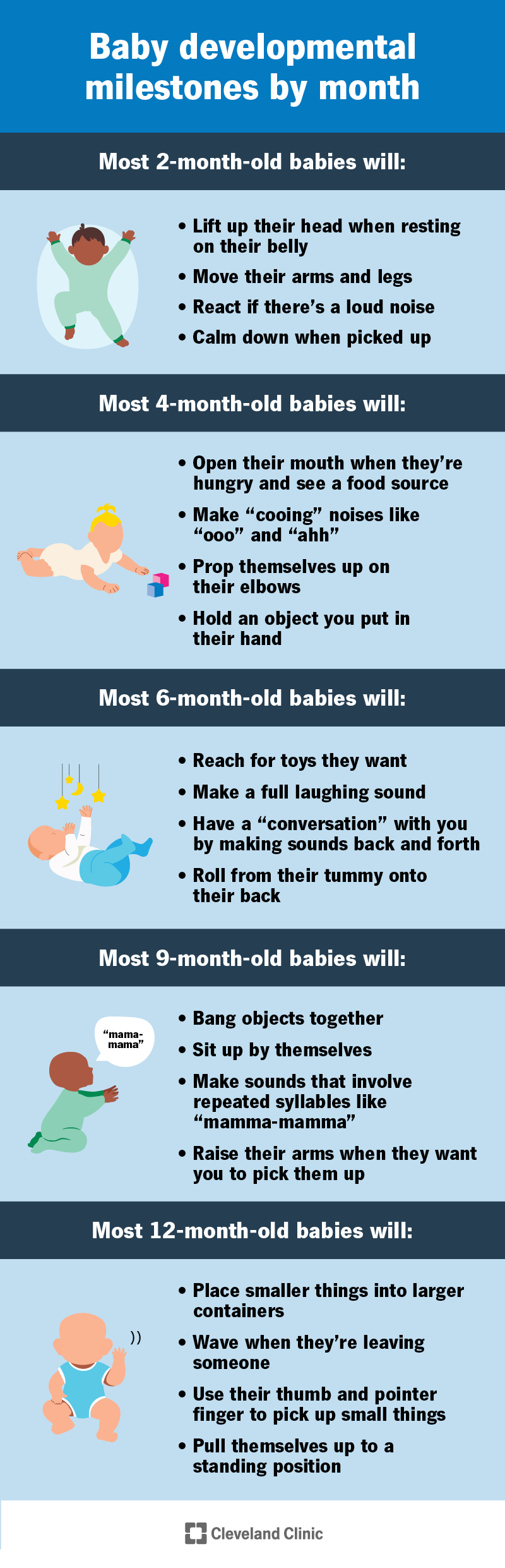
Every baby grows at their own pace, but most reach certain milestones within predictable windows. Monitoring progress helps catch delays early and celebrate growth.
Watch for Physical, Social, and Cognitive Signs
Use these age-based markers to track your baby’s development:
• 2 months: Smiles at people, follows objects with eyes, coos
• 4 months: Laughs, pushes up when on stomach, reaches for toys
• 6 months: Rolls over, sits with support, babbles (“ba-ba”)
• 9 months: Crawls, waves “bye-bye,” responds to name
• 12 months: Stands with support, says “mama” or “dada” meaningfully, uses pincer grasp
Download the free CDC’s Milestone Tracker app to log progress with photos and videos. If your baby isn’t meeting milestones, talk to your pediatrician.
Support Cognitive Growth Through Play
Cognitive development includes memory, problem-solving, and understanding cause and effect. Encourage it by:
• Letting your baby explore safe toys with different textures and sounds
• Playing hide-and-seek games—like covering a toy with a blanket and encouraging them to find it
• Responding quickly to cries—this builds trust and security
Babies who feel safe and engaged develop stronger thinking skills.
Baby-Proof Your Home Before Mobility Starts

A safe environment lets your baby explore freely and grow with confidence. Start safety checks before your baby can roll.
Prevent Accidents Before They Happen
Many infant injuries happen in the home. Reduce risks with these steps:
• Cover electrical outlets
• Secure heavy furniture to walls to prevent tipping
• Install safety gates at stairs
• Keep small objects, cords, and cleaning supplies out of reach
• Set water heater to 120°F to prevent scalds
Get down on your hands and knees to see the world from your baby’s view. You’ll spot hazards you might otherwise miss.
Prevent Shaking and Head Injuries
Never shake a baby. Their neck muscles are too weak to support their head, and shaking can cause brain bleeding, disability, or death.
If your baby won’t stop crying:
• Check for hunger, wet diaper, or illness
• Rock, walk, or swaddle gently
• Take a break—place baby safely in the crib and step away for a few minutes
Call the National Parent Helpline (1-855-427-2736) if you feel overwhelmed.
Ensure Safe Sleep and Reduce SIDS Risk

Safe sleep practices are essential to reduce the risk of Sudden Infant Death Syndrome (SIDS).
Follow the ABCs of Safe Sleep
• Alone: No bed-sharing. Baby should sleep in their own crib or bassinet.
• Back: Always place baby on their back to sleep.
• Crib: Use a firm mattress with a fitted sheet—no blankets, pillows, bumpers, or stuffed animals.
Room-sharing (but not bed-sharing) for the first 6–12 months reduces SIDS risk by up to 50%.
Create a Calm, Low-Risk Sleep Environment
• Keep room temperature between 68–72°F
• Use a wearable blanket instead of loose bedding
• Avoid smoking during pregnancy and after birth—secondhand smoke increases SIDS risk
The NICHD’s Safe to Sleep® campaign offers free resources to help families create safe sleep spaces.
Feed for Growth and Lifelong Health
Nutrition in the first year directly impacts brain development, immunity, and long-term health.
Breastfeed Exclusively for 6 Months
Breast milk provides perfect nutrition and antibodies. The World Health Organization and AAP recommend exclusive breastfeeding for about 6 months.
After 6 months, continue breastfeeding while introducing solid foods. Breast milk remains a key source of nutrients through 12 months.
Need help? Call the National Breastfeeding Helpline at 800-994-9662 or consult an International Board-Certified Lactation Consultant.
Introduce Solids at 6 Months
Signs your baby is ready:
• Sits with support
• Holds head steady
• Shows interest in food
• Can move food to the back of the mouth
Start with iron-rich foods like:
• Pureed meats
• Iron-fortified cereals
• Mashed beans
Then add fruits and vegetables. Offer one new food every 3–5 days to watch for allergies.
Avoid honey (risk of botulism) and cow’s milk as a drink before 12 months.
Build Healthy Feeding Habits
• Feed slowly and watch for fullness cues (turning head away, closing mouth)
• Don’t force your baby to finish a bottle or bowl
• Let your baby try self-feeding with fingers or a spoon around 9 months
Use USDA’s MyPlate for Infants as a guide for balanced nutrition.
Protect Your Baby in the Car
Car crashes are a leading cause of infant death. Proper car seat use saves lives.
Use a Rear-Facing Car Seat
All infants and toddlers should ride in a rear-facing car seat in the back seat until they reach the top height or weight limit.
Rear-facing seats protect the baby’s head, neck, and spine in a crash. Most convertible seats allow rear-facing use until age 2 or more.
Check Installation and Stay Updated
• Use the LATCH system or seat belt correctly
• Ensure the seat doesn’t move more than 1 inch side-to-side
• Register your car seat with the manufacturer to receive recall notices
Visit NHTSA.gov for installation videos, seat check events, and recall updates.
Support Your Own Well-Being as a Parent
You can’t care for your baby if you’re running on empty. Your health is part of your baby’s health.
Prioritize Physical and Mental Health
• Rest when your baby sleeps
• Eat balanced meals and stay hydrated
• Ask for help with chores or baby care
• Talk to your doctor about postpartum mood changes
Feeling tired, emotional, or frustrated is normal. But if sadness or anxiety lasts more than two weeks, seek professional support.
Build a Parenting Support Network
Connect with other parents through:
• WIC breastfeeding support groups
• Local parenting classes
• Online communities like Just in Time Parenting (JITP)
Sharing experiences reduces isolation and builds confidence.
Prevent Illness in the First Month
Newborns have weak immune systems. Extra precautions protect them during their most vulnerable time.
Limit Exposure to Germs
For the first 4 weeks:
• Avoid crowded places like malls or public transit
• Ask visitors to wash hands before holding the baby
• Say no to anyone who is sick
Even a mild cold can become serious in a newborn.
Keep Vaccinations On Schedule
Follow the CDC’s immunization schedule. Vaccines protect against:
• Hepatitis B (first dose at birth)
• Rotavirus
• DTaP (diphtheria, tetanus, pertussis)
• Hib
• Pneumococcal disease
• Influenza (starting at 6 months)
Vaccines are safe, effective, and essential for community protection.
Monitor Development and Seek Help Early
Early intervention makes a big difference if delays are present.
Use CDC’s Milestone Tracker App
Download the free CDC’s Milestone Tracker app to log progress and get reminders. It includes photos and videos so you can see what each milestone looks like.
If you’re concerned:
• Talk to your pediatrician
• Contact your state’s early intervention program
• Use the “Act Early” resources for next steps
Waiting is not the best strategy. Early support leads to better outcomes.
Know When to Call the Doctor
Seek medical help if your baby:
• Isn’t gaining weight
• Has trouble breathing
• Won’t stop crying
• Has a fever (100.4°F or higher in infants under 3 months)
• Shows no interest in feeding or people
Trust your instincts. You know your baby best.
Frequently Asked Questions About How to Raise Infants
When should I start tummy time?
Begin tummy time in the first week—2 to 3 times a day for 3 to 5 minutes. Gradually increase to 15–30 minutes daily by age 3 months. Tummy time strengthens neck and shoulder muscles and helps prevent flat spots on the head.
How often should a newborn eat?
Newborns typically feed every 2 to 3 hours, about 8 to 12 times a day. Breastfed babies may feed more often. Watch for hunger cues like rooting, sucking on hands, or fussing.
What if my baby isn’t hitting milestones on time?
Some variation is normal, but delays can signal developmental issues. Use the CDC Milestone Tracker to monitor progress. If you’re concerned, talk to your pediatrician. Early action leads to better outcomes.
Can I sleep train a 6-month-old?
Yes, many babies are ready for gentle sleep training at 6 months. Start with consistent bedtime routines and self-soothing techniques. Always follow safe sleep practices—back to sleep, alone in the crib.
How do I know if my baby is getting enough breast milk?
Signs of adequate intake include 6 wet diapers and 3–4 yellow, seedy stools per day by week 6. Your baby should gain weight steadily and seem satisfied after feedings. If unsure, consult a lactation specialist.
Is it safe to give water to a 4-month-old?
No. Babies under 6 months should not drink water. Breast milk or formula provides all the hydration they need. Giving water too early can lead to low sodium levels and feeding problems.
Key Takeaways for Raising Healthy Infants
Raising an infant is a journey of love, learning, and constant adaptation. Focus on five core areas: brain-building interactions, safety, nutrition, health, and your own well-being. Simple daily actions—like talking, reading, and cuddling—create lasting impact.
Use trusted resources like the CDC, AAP, and NICHD to guide your decisions. Track milestones, follow safe sleep and feeding practices, and don’t hesitate to ask for help. You’re not alone—thousands of parents are on the same path.
Your baby’s future starts now. Every hug, every word, every safe sleep routine adds up to a healthier, happier life. You’ve got this.





