
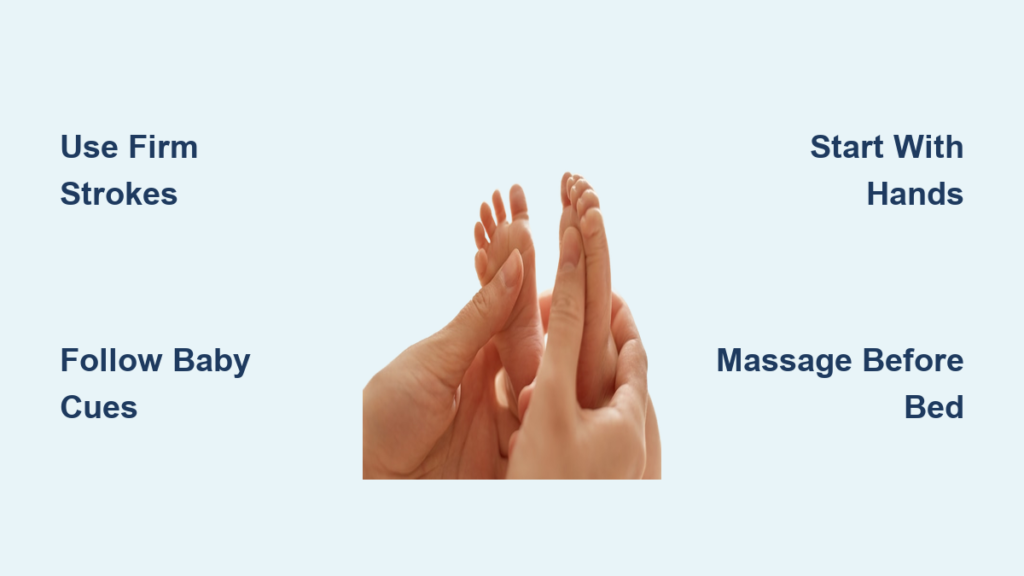
Babies communicate through movement, sound, and touch—and infant massage is one of the most powerful ways to respond. How to massage a baby isn’t just about soothing fussy moments; it’s a science-backed practice that strengthens your bond, calms their nervous system, and supports healthy growth. Recommended by the American Academy of Pediatrics (AAP), just 5–10 minutes of daily massage can improve sleep, ease digestion, reduce stress hormones, and prepare your baby for motor milestones like tummy time.
You don’t need special training or expensive tools—just clean hands, a quiet space, and your full attention. Whether your baby is newborn or several months old, these expert-approved techniques help you connect through touch in ways that nurture both of you. Watch for cues, follow your baby’s lead, and turn massage into a daily ritual of closeness and calm.
Deep-Pressure Back Strokes to Improve Body Awareness
Stimulate body awareness and support early motor development with firm, calming strokes along the back.
Avoid the Spine, Stroke the Sides
Use the heel of your hand or both palms to apply steady pressure from the shoulders down to the lower back—never directly on the spine. Move slowly and rhythmically, one stroke at a time. Keep your baby’s hips stabilized by placing one hand gently on their bottom. This grounding helps them feel secure.
Why Deep Pressure Helps with Motor Skills
Deep pressure activates sensory receptors that help babies understand where their body is in space—a skill called proprioception. This builds confidence for future movement, especially during tummy time. The rhythmic motion also mimics comforting sensations from the womb, promoting relaxation.
Pro Tip: Try this after bath time or before bedtime to signal it’s time to wind down.
Hand Massage to Encourage Healthy Grip Development
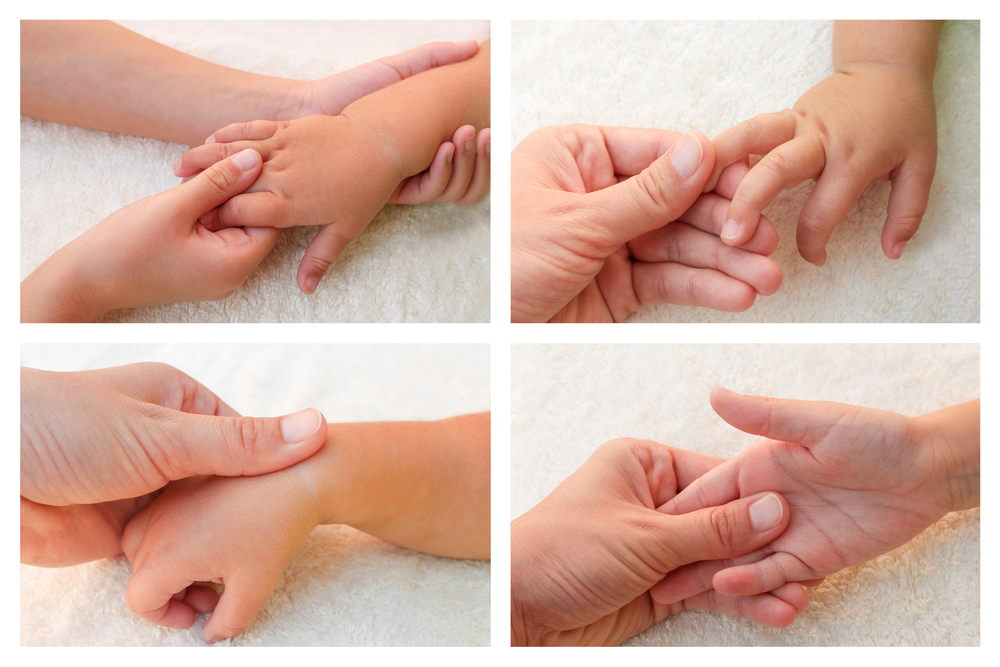
Boost hand-eye coordination and encourage voluntary hand control with gentle palm and finger stimulation.
Open the Fist with Circular Pressure
If your baby’s hand is tightly clenched, start by making small circles on the center of the palm with your thumb. Once the hand begins to relax, place your thumb inside the palm and gently press the fingers from base to tip using your other hand. Repeat 3–5 times per hand.
Connect Hands Together for Bilateral Coordination
After massaging each hand separately, bring both hands together and gently clap them or press palms face-to-face. This simple gesture reinforces bilateral coordination and can delight older infants who are beginning to notice their own hands.
Expert Note: Babies are born with a reflexive grasp—regular hand massage helps them gain voluntary control over opening and closing their hands.
Foot and Ankle Massage to Boost Circulation and Limb Awareness
Firm, intentional strokes on the feet reduce tension and increase limb awareness—without tickling.
Stroke Sole from Heel to Toe
Hold one foot securely in your hand. Use your thumbs on the sole and fingers wrapped over the top. Apply firm, slow pressure from heel to toes. Then, gently tug each toe—this feels surprisingly comforting and may even help with teething-related foot clenching.
Encourage Movement with Clapping
After massaging both feet, gently clap them together three times. This playful motion stimulates neural pathways and encourages kicking and leg movement.
Visual Cue: Look for relaxed toes and soft sighs—these mean your baby is enjoying the pressure.
Arm and Shoulder Rubs to Strengthen Emotional Bonding
This technique is ideal for caregivers who want to deepen connection during quiet moments.
Massage from Shoulder to Fingertips
Sit with your baby on your lap, facing you. Begin at the shoulder and use firm, gliding pressure down the outside of the arm. Continue to the wrist, then incorporate the hand massage technique described earlier. Repeat on the other arm.
Perfect After Feeding or Nap Time
This routine works well when your baby is alert but calm—about 20–30 minutes after feeding. It’s especially effective for dads or partners who may feel less involved in early care routines.
Pro Tip: Sing softly or maintain eye contact during the massage to enhance emotional bonding.
Abdominal Massage to Relieve Gas and Aid Digestion

Ease gas, support bowel movements, and calm colic symptoms with clockwise tummy strokes.
Move Clockwise to Aid Digestion
Start at the lower right abdomen (near the appendix), move up toward the ribs, across the upper belly, and down the left side—following the path of the colon. Use gentle, circular motions with flat palms or fingertips. Apply only light to moderate pressure.
⚠️ Stop immediately if your baby arches, cries, or seems uncomfortable. Never massage a full or recently fed stomach.
Try the “I Love U” Technique for Constipation Relief
Trace the letters “I,” “L,” and “U” on your baby’s belly with your fingertips:
– I: Vertical line down the right side
– L: Up the right, then across the top
– U: Down the right, curve under the belly, up the left
This sequence gently stimulates intestinal flow and is often used in infant massage therapy for constipation relief.
Time Estimate: 3–5 minutes is sufficient. Many parents find success doing this before bath or bedtime.
Facial Massage to Promote Calm and Emotional Recognition
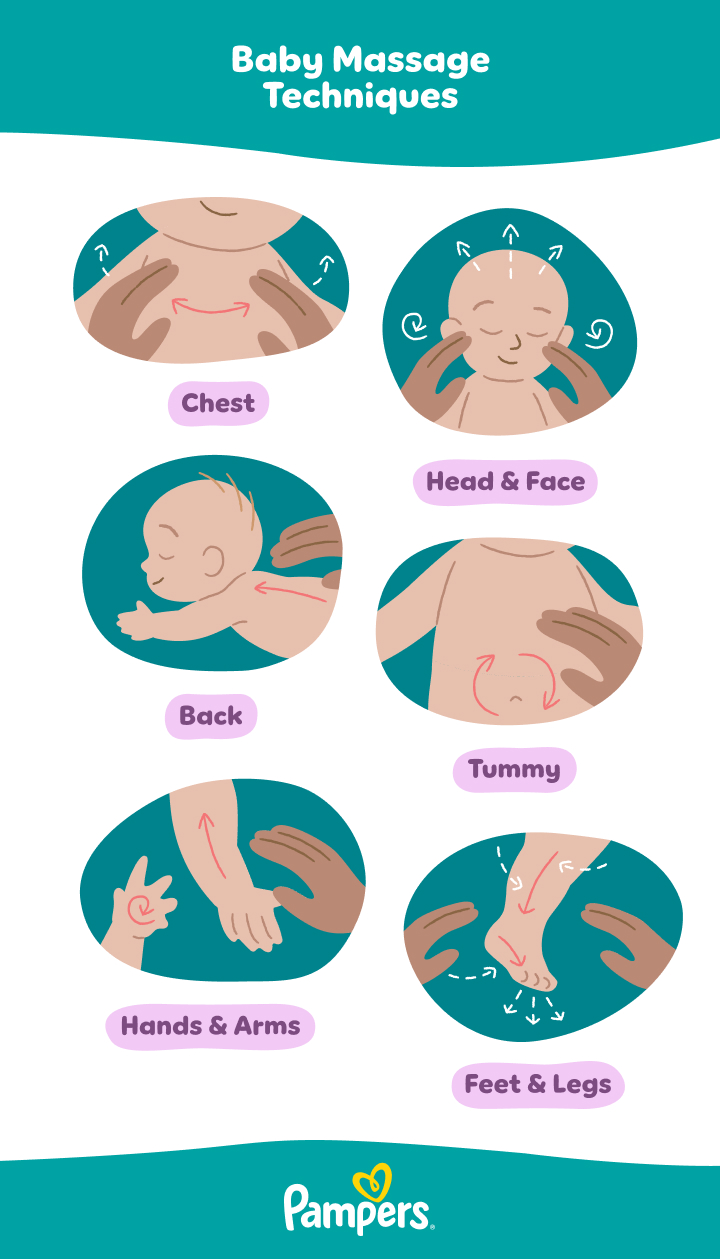
Gentle facial touches promote relaxation and strengthen emotional recognition.
Stroke the Jawline and Forehead
Cup your hands around your baby’s head and glide from the crown down over the ears. Then, trace the jaw from ear to chin. Use light circular motions on the cheeks, and gently stroke across the eyebrows and forehead.
Squeeze Chin, Soothe Expression
Lightly squeeze the chin between your thumb and forefinger—this mimics natural soothing gestures babies respond to instinctively. Pair this with soft eye contact or whispering their name.
Why It Matters: Facial massage activates cranial nerves linked to calming responses. It also helps babies become more aware of facial expressions, supporting future social development.
Read Baby’s Body Language to Guide Your Touch
There’s no one-size-fits-all approach—your baby will tell you what they need.
Signs of Enjoyment
• Soft cooing or sighing
• Open hands and relaxed arms
• Steady breathing
• Focused gaze or smiling
These mean keep going.
Signs to Stop
• Turning head away
• Arching back
• Crying or fussing
• Clenching fists
These are clear signals your baby is overwhelmed or overstimulated. Pause and try again later.
Expert Insight: Some babies take several sessions to adjust. Consistency builds trust—try the same time and place each day.
Choose the Right Time and Environment for Massage
Timing affects how well your baby receives touch.
Best Times to Massage
• After a warm bath
• Before bedtime
• During a calm alert period (not right after feeding)
Avoid massaging when your baby is hungry, sleepy, or fussy.
Create a Calm Space
• Dim the lights
• Reduce background noise
• Use a soft towel or mat on a safe surface
• Keep the room warm (babies lose heat quickly)
Safety First: Never leave your baby unattended on a raised surface.
Use Safe, Gentle Touch Techniques for Maximum Comfort
Your touch should be firm but loving—not too light (which can tickle) and not too hard (which can hurt).
Pressure Guidelines
• Too light: Causes ticklishness or squirming
• Just right: Skin moves slightly under fingers, baby stays relaxed
• Too firm: Baby tenses, cries, or pulls away
Start with lighter pressure and gradually increase as your baby responds.
Warm Your Hands First
Rub your palms together before touching your baby. Cold hands can startle them.
Pro Tip: If using oil, choose fragrance-free, hypoallergenic options like coconut or almond oil (do a patch test first).
Support Developmental Milestones Through Regular Massage
Massage isn’t just comfort—it’s preparation for growth.
Prepares for Tummy Time
Back and shoulder massages help babies develop muscle tone and body awareness needed to lift their heads and push up.
Enhances Motor Skills
Hand and foot stimulation support neural connections involved in reaching, grasping, and kicking.
Builds Body Awareness
Proprioceptive input from deep pressure helps babies understand their limbs’ position—key for rolling, crawling, and walking.
Long-Term Benefit: Regular touch correlates with improved motor scores in early infancy, according to developmental studies.
Strengthen Parent-Infant Bonding Through Daily Touch
Touch is the first language of love—and massage deepens attachment.
Boosts Oxytocin in Both of You
Skin-to-skin contact during massage increases oxytocin, the “bonding hormone,” in both parent and baby. This reduces parental stress and enhances caregiving confidence.
Encourages Mindful Parenting
Focusing on your baby’s cues during massage trains you to be more attuned to their needs—a skill that extends far beyond the massage session.
Final Note: You don’t have to be perfect. Even imperfect attempts at massage build connection. What matters most is presence.
Frequently Asked Questions About How to Massage a Baby
When is the best time to massage a baby?
The best time is during a calm, alert period—such as after a bath or before bedtime. Avoid massaging right after feeding, when your baby is hungry, or when they’re already sleepy or fussy.
Can I use oil when massaging my baby?
Yes, but choose fragrance-free, hypoallergenic oils like coconut or almond oil. Always do a patch test on a small area of skin first to check for reactions, and avoid oils if your baby has eczema or sensitive skin.
How long should a baby massage session last?
Aim for 5–10 minutes. Even short sessions are effective. You can gradually increase time as your baby becomes more comfortable with the routine.
What if my baby cries during the massage?
Stop immediately. Crying, arching, or turning away are signs your baby is overstimulated or uncomfortable. Try again later at a different time or with lighter touch. Some babies take a few sessions to adjust.
Can dads and other caregivers do baby massage?
Absolutely. Baby massage is a powerful way for all caregivers to bond. Dads often find arm and shoulder rubs especially effective for building connection during quiet moments.
Does baby massage help with colic and gas?
Yes. Abdominal massage, especially using clockwise strokes or the “I Love U” technique, can help move trapped gas and support digestion. Always use gentle pressure and stop if your baby shows discomfort.
Key Takeaways for How to Massage a Baby
• Start with 5–10 minutes of daily massage to build trust and routine
• Use firm, slow strokes—avoid tickling or pressing too hard
• Follow your baby’s cues: stop if they turn away, cry, or tense up
• Focus on connection, not perfection—your presence matters most
Begin today with a simple hand or foot massage. Over time, you’ll learn your baby’s preferences and create a soothing ritual that supports their health and deepens your bond. In a busy world, this quiet moment of touch is a gift—for both of you.





