
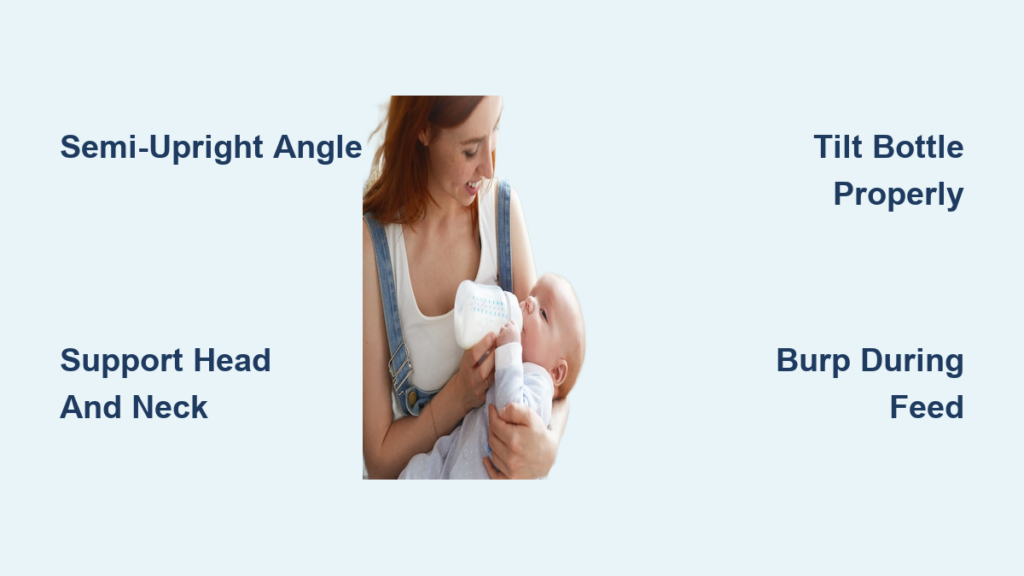
Feeding your baby is one of the most intimate and essential parts of early parenting. Knowing how to hold a baby while bottle feeding correctly ensures they swallow safely, stay comfortable, and feel secure. Poor positioning can lead to gas, spit-up, choking, or even ear infections—issues that stress both baby and caregiver. Getting the hold right from the start supports healthy digestion and strong bonding.
In this guide, you’ll learn the safest and most effective ways to hold your baby during bottle feeding. We’ll cover the best positions for newborns and older infants, how to avoid common mistakes, and practical tips for keeping both of you relaxed. With step-by-step advice, you’ll build confidence in every feeding session.
Choose the Right Feeding Position

The way you hold your baby directly impacts their comfort and safety. The ideal bottle-feeding posture keeps your baby semi-upright, with their head slightly above their stomach and spine fully supported. This position helps control milk flow and prevents choking.
Always feed your baby at a 45- to 90-degree angle—never flat on their back. Lying down during feeding increases the risk of milk entering the Eustachian tubes, which can cause ear infections. It also makes it harder for your baby to breathe and swallow safely.
Support your baby’s head, neck, and back throughout the feed. Use a nursing pillow or regular cushion to lift them to your level so you don’t hunch over. Proper alignment reduces strain on your arms, shoulders, and lower back—especially important during nighttime or frequent feeds.
Cradle Hold for Bottle Feeding
The cradle hold is a natural, cozy position ideal for full-term babies with decent head control.
Sit in a comfortable chair with armrests. Place a feeding pillow across your lap if needed. Hold the bottle in your dominant hand and use your opposite arm to support the baby. Tuck the baby’s head into the crook of your elbow, with their body resting along your forearm. Their chest should face yours, legs curled up like they’re in the womb.
Tilt the bottle so the nipple stays filled with milk—never air. This prevents your baby from swallowing gas, which can cause colic. Let them latch onto the nipple at their own pace. Watch for steady sucking and swallowing motions.
Switch arms between feeds to balance muscle use and prevent strain. This also gives your baby a different view, which can keep them engaged.
• Use a burp cloth under the baby’s head to protect your clothes
• Keep the baby’s nose clear so they can breathe while feeding
• Avoid pressing the bottle too hard against their mouth
Pro tip: This hold works best once your baby can hold their head up steadily, usually around 3 months.
Cross-Cradle Hold for Better Head Control
This position gives you more control over your baby’s head and is perfect for newborns, preemies, or babies still developing neck strength.
Instead of using the same-side arm, use the opposite arm to hold your baby. For example, hold the baby with your left arm while feeding with a bottle in your right hand. This allows you to guide their head more precisely.
Cradle the baby across your body, chest to chest. Support their head with your hand—palm at the base of the skull, fingers gently around the ears. This helps you adjust their angle and ensure they’re not straining to reach the bottle.
The cross-cradle hold is especially helpful if you’re combining breastfeeding and bottle feeding, as it mimics the nursing position.
• Gives better visibility of the baby’s latch
• Ideal for babies who need extra neck support
• Helps prevent jaw fatigue during long feeds
Football Hold for C-Section Recovery

Also called the clutch hold, this position keeps pressure off your abdomen—perfect if you’re recovering from a cesarean section.
Tuck the baby along your side, with their legs and feet tucked under your arm on the same side. Use your hand to support their head and bring them up to bottle level. Their body should face you, hips bent, feet pointing behind them.
This hold gives you excellent control and visibility. It’s also great for feeding twins—one baby under each arm.
Use a pillow to elevate the baby so you don’t lean forward. Keep their head in line with their spine—no twisting or tilting.
• Reduces strain on abdominal incisions
• Offers clear view of baby’s face and latch
• Works well for larger babies or those with reflux
Common mistake: Letting the baby’s head fall back. Always keep a firm but gentle grip on the neck and head.
Upright Position for Reflux and Colic
Babies with acid reflux, gas, or swallowing difficulties benefit from a more upright feeding angle.
Hold your baby nearly sitting—between 60 and 90 degrees—cradled against your chest. Support their head and back with one arm, hold the bottle with the other. You can also sit them on your lap, facing forward, with their back against your chest.
Gravity slows milk flow, reducing spit-up and choking risk. Keep the bottle tilted so the nipple stays full of milk and free of air.
After feeding, keep your baby upright for 20–30 minutes to aid digestion and prevent reflux.
• Best for babies with frequent spit-up
• Helps reduce gas and discomfort
• Easier to monitor swallowing and breathing
Warning: Never feed a baby lying flat in a crib, stroller, or car seat. This increases the risk of choking and middle ear infections.
Avoid Common Bottle Feeding Mistakes
Even small errors can cause discomfort, gas, or health issues. Avoid these common pitfalls for safer, smoother feeds.
Propping the bottle is one of the most dangerous habits. While it might free up your hands, it removes your ability to respond to your baby’s cues. It can lead to choking, overfeeding, and ear infections.
Forcing the nipple into the baby’s mouth can cause gagging or feeding aversion. Let your baby open wide and latch naturally.
Incorrect bottle angle affects milk flow. If the nipple isn’t full, your baby swallows air. If it’s overfilled, milk flows too fast, overwhelming them.
Ignoring feeding cues—like rooting, sucking hands, or fussing—can lead to overtired, frantic feeds. Feed on demand, not a strict schedule.
• Never leave a baby unattended with a bottle
• Watch for signs of fullness: turning away, slowing down, closing mouth
• Adjust pace based on your baby’s rhythm
Support Head and Neck Properly
Newborns can’t hold their heads up on their own. Their neck muscles are weak and need full support until around 3 to 4 months.
Always cradle the back of the head and neck when lifting and holding your baby. Use your hand or forearm to keep the head aligned with the spine. Never let it flop backward—that can block the airway.
As your baby grows, you’ll notice improvements: they’ll hold their head steady when pulled to sit and resist bobbing during movement. Until then, maintain consistent support during every feed.
Red flag: If your baby consistently arches their back, refuses feeds, or turns blue, contact your pediatrician. These may signal reflux, allergies, or neurological concerns.
Keep Baby and Caregiver Comfortable
Comfort affects how well your baby eats and how calm the experience feels for both of you.
Choose a quiet, low-light space to minimize distractions. Use a supportive chair with armrests and lumbar support. Place your feet on a footstool to reduce back strain.
Wear soft, easy-access clothing. Nursing-friendly tops work well even for bottle feeding.
Hold the baby close so they don’t have to turn their head to reach the bottle. Their nose should stay clear to breathe easily. If it’s pressed into the bottle, adjust the angle.
Let your baby set the pace. Some newborns feed in short bursts over 20–30 minutes. Pause if they look tired or distracted.
• Use a blanket for warmth and comfort
• Keep feeding supplies within reach
• Stay hydrated and rested during night feeds
Burp Baby During and After Feeding
Burping helps release trapped air, reducing gas, fussiness, and spit-up.
Pause halfway through the bottle and again at the end to burp your baby. Try one of these methods:
• Hold them upright against your shoulder, patting gently between the shoulder blades
• Sit them on your lap, leaning slightly forward, with head supported
• Lay them face-down across your lap, supporting the head and chest
If no burp comes after a minute or two, resume feeding. Not every baby burps every time.
Tip: Always keep a burp cloth ready—spit-up is common.
Transition Between Positions as Baby Grows
Your baby’s feeding needs change as they grow stronger and more coordinated.
Newborns need full head and body support in semi-upright positions. By 3–6 months, many can sit with support and may prefer a more upright angle. Some even start holding the bottle themselves—though close supervision is still required.
Avoid letting babies fall asleep with a bottle. Milk pooling in the mouth increases the risk of tooth decay and ear infections. Remove the bottle once feeding ends and transition to quiet bonding or tummy time.
Encourage tummy time after feeding (once burped) to strengthen neck and shoulder muscles and aid digestion.
Key Takeaways for Holding a Baby While Bottle Feeding
Mastering how to hold a baby while bottle feeding creates safer, calmer, and more connected feeding experiences. Use supportive positions like the cradle, cross-cradle, football, or upright hold based on your baby’s age and needs. Always keep the head above the stomach, support the neck, and avoid propping the bottle.
Stay alert to your baby’s cues—turning away, slowing down, or falling asleep means they’re full. With practice and patience, feeding becomes a nurturing ritual you both can look forward to.
Next time you feed, try one new position or adjust your posture for better comfort. Small changes make a big difference.
Frequently Asked Questions About Holding a Baby While Bottle Feeding
What is the safest position to bottle feed a newborn?
Hold your baby in a semi-upright position at a 45-degree angle, with head and neck fully supported. Use the cradle or cross-cradle hold to keep them close, tummy-to-tummy. Never feed lying flat, as this increases choking and ear infection risks.
Can I feed my baby while lying down?
You can feed while reclining slightly, but only if your baby remains semi-upright in your arms. Never let the baby lie flat during feeding. A true side-lying position with proper support may work for some parents, but it requires caution to prevent milk from entering the ears.
How do I prevent my baby from swallowing air during bottle feeding?
Keep the bottle tilted so the nipple stays full of milk, not air. Hold your baby upright, and burp them halfway through and after feeding. Use slow-flow nipples for newborns to control milk flow and reduce gulping.
When can my baby start holding their own bottle?
Most babies begin showing interest in holding a bottle around 6 months. You can let them help, but always supervise. Never prop the bottle or leave them unattended, as this poses choking and dental health risks.
Why does my baby choke during bottle feeding?
Choking often happens when milk flows too fast. Check the nipple size—newborns need slow-flow nipples. Also, ensure your baby isn’t lying too flat and that their head is properly supported. Adjust the bottle angle to slow the flow.
Is it okay to feed a baby in a car seat?
No. Feeding in a car seat changes the baby’s posture, increasing choking and aspiration risks. Always remove your baby from the car seat for feeding. If you must feed on the go, stop the car and transfer them to your arms.





