
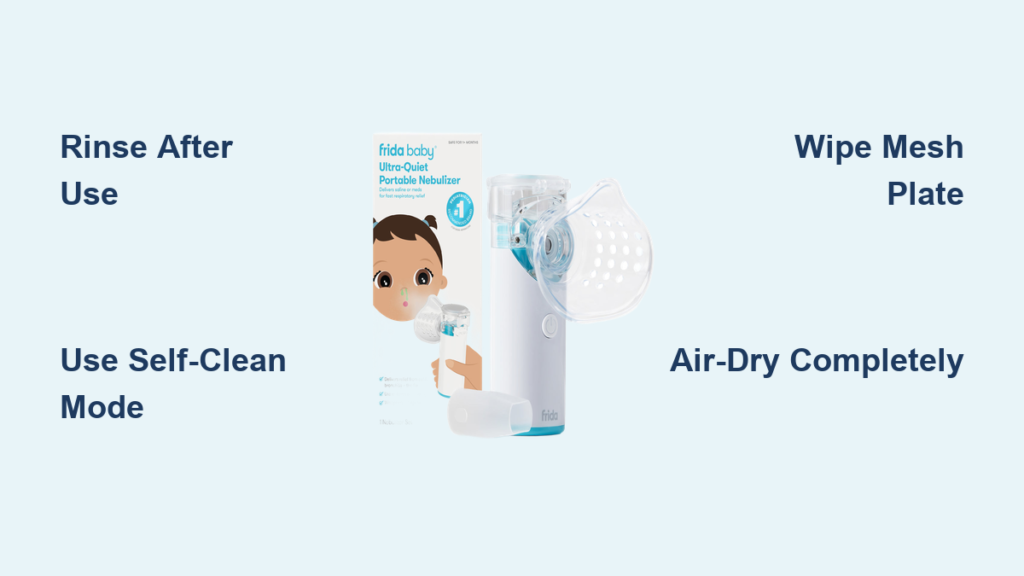
If your child uses the Frida Baby Nebulizer for asthma, allergies, or respiratory infections, keeping it clean is critical for safe and effective treatment. A dirty nebulizer can harbor bacteria, reduce mist output, or deliver contaminated medication. The good news? Cleaning the Frida Baby Nebulizer is fast, simple, and built into the device with its self-cleaning mode. This guide covers every step—from after-use rinsing to mesh plate care and sanitizing—using only water and manufacturer-approved methods. You’ll also learn what not to do (no dish soap, no submersion, no boiling water) to avoid damaging this $40–$50 device. By the end, you’ll know exactly how to maintain peak performance and protect your child’s health.
This step-by-step guide is based entirely on official cleaning instructions and real-world usage tips. You’ll learn how to activate self-clean mode, remove mineral buildup, sanitize safely, and prevent common issues like clogs or weak mist. Whether you’re a new parent or a seasoned caregiver, this routine ensures your nebulizer delivers consistent, safe treatments every time.
After-Use Cleaning Routine for Optimal Performance
Cleaning your Frida Baby Nebulizer after each treatment prevents medication residue from hardening and clogging the mesh plate. The process takes less than 10 minutes and requires no disassembly of the base unit.
Empty and Rinse All Detachable Parts
Right after your child’s treatment, discard any leftover medication or saline solution. Remove the top cap, breather cup, and straight inhaler tube (if used). Rinse each piece under hot tap water—not boiling—to flush out residual medicine. Do not use dish soap, cleaners, or abrasive cloths. These can damage the mesh plate or leave toxic residues. Simply run water through the cup, cap, and tubing, then set them aside for the next step.
Activate Self-Clean Mode With Hot Water
The Frida Baby Nebulizer features a built-in self-clean function that uses vaporized hot water to flush the internal flow path.
- Fill the top cap with hot tap water (up to 10 ml, but do not exceed the max line)
- Reattach it securely to the base until it clicks
- Press and hold the power button for 3 seconds
- A solid green light confirms self-clean mode is active
- The device will pulse mist for up to 10 minutes, or until the water evaporates
This cycle clears the mesh nebulizer head and internal channels without opening the unit. Never leave the device unattended during cleaning.
Final Rinse and Air-Dry All Components
Once the self-clean cycle finishes, remove the top cap and pour out any remaining water. Rinse all detachable parts again with hot water to remove loosened residue. Then, disassemble completely: separate the top cap, breather cup, and inhaler tube. Place all pieces on a clean towel in a well-ventilated area. Allow them to air-dry fully before reassembling or storing. Pay special attention to the mesh plate—moisture trapped here can lead to clogs or mineral deposits.
Deep Cleaning the Internal Flow Path
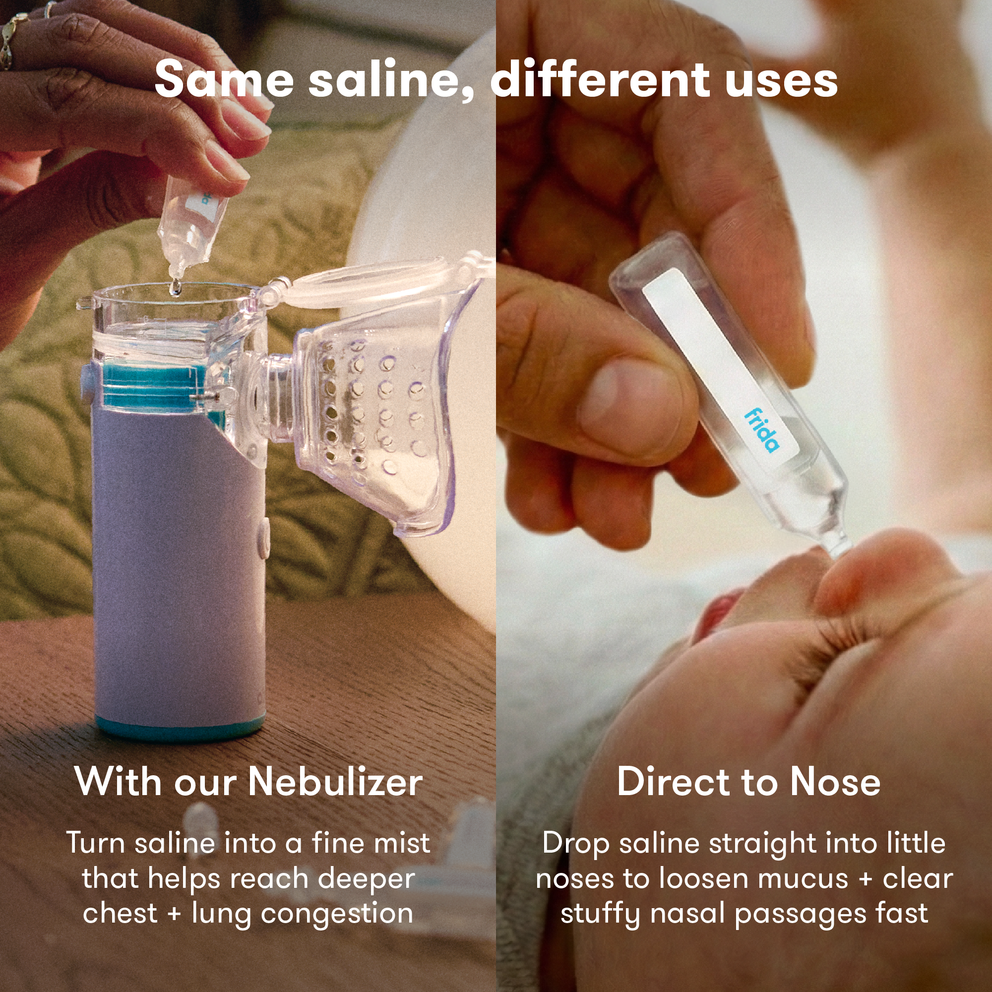
Even with regular self-cleaning, mineral deposits or medication buildup can occur over time. A deeper clean restores optimal mist output and prevents clogs.
Run a Hot Water Flush at 85°C (185°F)
For a more thorough internal flush, use water heated to 85°C (185°F)—just below boiling.
- Fill the top cap with 5–10 ml of hot water at this temperature
- Attach to the base and press the power button for 3 seconds
- Let the device run for 2–3 minutes, then stop
- Discard water and rinse all parts
- Air-dry completely
Repeat this process if mist output seems weak or inconsistent. This method safely clears the medicine container interior and mesh head without disassembling the unit.
Maintain the Mesh Plate to Prevent Clogs

The mesh plate is the heart of the nebulizer—it turns liquid into a fine mist. Mineral buildup or dried medication can block its tiny pores, reducing performance.
Wipe the Mesh Plate With a Damp Lint-Free Cloth
- Dampen a lint-free cloth with hot water
- Gently wipe the surface of the mesh plate (located inside the base unit)
- Avoid scrubbing or using paper towels—they can scratch the mesh
This should be done as needed, especially if you notice reduced mist or visible residue.
Follow With a Hot Water Cleaning Cycle
After wiping, always run a 2–3 minute cycle with 5–10 ml of hot water (85°C) to flush out loosened particles. Then rinse and air-dry. Never apply alcohol or cleaning solutions directly to the mesh unless followed by a full rinse.
Sanitize the Frida Baby Nebulizer After Illness

While daily cleaning with water is sufficient, occasional sanitizing kills bacteria—especially after your child has been sick.
Use 70% Isopropyl Alcohol Spray Safely
- Spray isopropyl alcohol (70% or higher) on the top cap, breather cup, and tubing
- Let sit for 30 seconds
- Rinse thoroughly with hot water—alcohol residue is unsafe for inhalation
- Air-dry completely
Never spray alcohol into the base unit or onto the mesh plate unless absolutely necessary—and always rinse if you do. Overuse can degrade internal components.
Avoid These Common Cleaning Mistakes

Prevent damage and ensure safety by avoiding these frequent errors.
Never Submerge the Base Unit in Water
The base contains electronic components. Never immerse it in water or run it under the tap. Only the detachable parts (cap, cup, tube) should be rinsed. Wipe the base with a damp cloth if needed.
Never Use Dish Soap or Cleaning Solutions
The manufacturer explicitly prohibits dish soap, thinners, benzene, or any cleaning solutions. These can corrode the mesh plate or leave toxic residues. Water only—hot tap water or 85°C water for deep cleaning.
Never Use Boiling Water
Boiling water can warp plastic or damage the mesh head. Stick to hot tap water or water heated to 85°C (185°F). If you don’t have a thermometer, let boiled water cool for 1–2 minutes before use.
Never Store While Damp
Storing the nebulizer while wet encourages mold, bacteria, and mineral buildup. Always air-dry all parts completely—this may take 1–2 hours depending on humidity. Store in a clean, dry place.
Recommended Cleaning Schedule
Follow this routine to keep your nebulizer in top condition.
After Every Use
• Rinse all detachable parts with hot tap water
• Run self-clean mode with hot water
• Air-dry fully before storage
Weekly or As Needed
• Wipe mesh plate with damp lint-free cloth
• Run hot water (85°C) cycle for 2–3 minutes
• Inspect for clogs or reduced mist
After Illness
• Sanitize with isopropyl alcohol spray (rinse thoroughly)
• Perform deep clean cycle
• Replace tubing or cup if discolored or cracked
Troubleshooting Common Cleaning Issues
Even with proper care, problems can arise. Here’s how to fix them.
Weak or No Mist Output
Possible causes:
– Clogged mesh plate
– Mineral buildup
– Incomplete seal
Fix:
1. Wipe mesh plate with damp cloth
2. Run 2–3 minute cycle with 85°C water
3. Ensure top cap clicks securely into place
4. Check that breather cup is pressed evenly for an airtight seal
Device Won’t Turn On
Check:
• Use only the original USB-C cable—third-party chargers may not power the device
• Ensure the battery is charged
• Confirm no moisture is trapped in the base
Leaking or Poor Seal
Fix:
• Align the breather cup straight and press firmly
• Avoid over-tightening the top cap
• Replace cracked or warped parts
Proper Storage and Long-Term Care
Proper storage prevents damage and keeps your nebulizer ready for use.
Store in a Dry, Clean Case
Use the original box or a clean plastic container. Keep all parts disassembled and fully dry. Include the USB-C cable for travel readiness.
Replace Worn Parts Promptly
Over time, the breather cup, tubing, or top cap may crack or discolor. Replace them as needed—do not use damaged components. The mesh head lasts 6–12 months with proper care.
Charge Before Long-Term Storage
If storing for more than a few weeks, charge the device fully. A dead battery can reduce lifespan. Recharge every 3 months if unused.
Key Takeaways for Cleaning Your Frida Baby Nebulizer
Cleaning the Frida Baby Nebulizer is essential for your child’s safety and treatment effectiveness. Always rinse detachable parts and run the self-clean mode after every use. Use only hot tap water or 85°C water for deep cleaning—never dish soap, boiling water, or submersion. Wipe the mesh plate as needed and sanitize with alcohol only when necessary, followed by a full rinse. Allow all parts to air-dry completely before storage.
By following this routine, you’ll prevent clogs, extend the device’s life, and ensure every treatment delivers the right amount of medication. Stick to water-only cleaning, avoid prohibited methods, and dry thoroughly. With proper care, your nebulizer will provide reliable relief for months to come.
Frequently Asked Questions About Cleaning the Frida Baby Nebulizer
Can I use soap to clean the Frida Baby Nebulizer?
No. The manufacturer prohibits dish soap, cleaners, thinners, and benzene. These can damage the mesh plate or leave harmful residues. Use only hot tap water for rinsing and cleaning.
How do I activate the self-clean mode?
Fill the top cap with hot tap water, reattach it to the base, then press and hold the power button for 3 seconds. A solid green light means self-clean mode is active. The cycle runs up to 10 minutes.
Can I boil the parts to sterilize them?
No. Boiling water can warp plastic or damage the mesh head. Use hot tap water or water heated to 85°C (185°F) instead. Never immerse the base unit in any liquid.
How often should I clean the mesh plate?
Wipe the mesh plate with a damp lint-free cloth as needed—especially if mist output decreases. Always follow with a 2–3 minute hot water cycle and full air-drying.
Why is my nebulizer not producing mist?
Possible causes include a clogged mesh plate, low battery, or poor seal. Clean the mesh, ensure the top cap clicks into place, check the breather cup alignment, and verify the device is charged.
Can I use alcohol to sanitize the nebulizer?
Yes, but only on detachable parts (cap, cup, tube). Spray 70% isopropyl alcohol, wait 30 seconds, then rinse thoroughly with hot water. Never spray alcohol into the base or onto the mesh unless absolutely necessary.





