
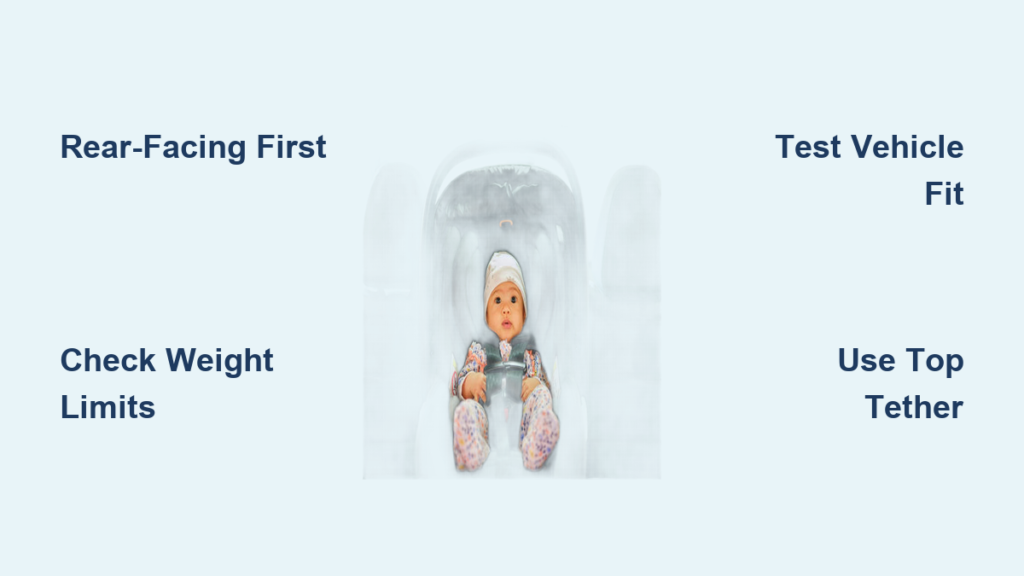
Every time you buckle your baby into the car, you’re making a decision that could save their life. Yet with so many models, features, and conflicting advice, how to choose a baby car seat can feel overwhelming. The truth is simple: the best car seat isn’t the most expensive or feature-packed—it’s the one that fits your child, installs securely in your vehicle, and gets used correctly every single time.
Car crashes remain a leading cause of death for children under 13. But here’s the good news: 325 children under age 5 are saved each year by properly used car seats. And when used correctly, car seats reduce the risk of fatal injury by 71% for infants and 54% for toddlers. The catch? Studies show that nearly half of all car seats are installed or used incorrectly, putting kids at risk even when a seat is in place.
This guide cuts through the noise. You’ll learn exactly how to pick the right seat based on your child’s size, your vehicle, and real-world safety standards—no guesswork, no marketing hype. From rear-facing limits to tether use, registration to recalls, we’ll walk you through every critical step so you can make a confident, informed choice.
Match the Car Seat to Your Child’s Stage
Choosing the right car seat starts with your child’s age, height, and weight—not age alone. The four-stage progression ensures maximum protection as your child grows.
Keep Your Baby Rear-Facing Until They Outgrow the Seat
Keep your baby rear-facing from birth until they reach the maximum height or weight limit of their seat. This could be well past age 2. Rear-facing seats cradle the head, neck, and spine during a crash, reducing injury risk significantly. Most infant seats support rear-facing up to 30–35 pounds, while convertible seats can go much higher—some up to 50 pounds.
Key Rule: Rear-facing harness straps should be at or below the shoulders.
Switch to Forward-Facing Only After Reaching Limits
Once your child outgrows the rear-facing limits, switch to forward-facing with a five-point harness. Keep them in this stage until they hit the seat’s upper limits—usually between ages 4 and 7. Never rush this transition.
Key Rule: Forward-facing harness straps must be at or above the shoulders.
Use a High-Back Booster If Your Car Lacks Head Support
After outgrowing the harness, move to a high-back booster if your vehicle lacks headrests. It positions the seat belt correctly across the chest and hips, protecting vital organs.
Wait for Seat Belt Readiness Until Age 8–12
Only when your child can pass the seat belt fit test—lap belt across the thighs (not stomach), shoulder belt across chest (not neck)—can they safely use the vehicle’s seat belt alone. Most kids aren’t ready until age 8–12.
Know the 4 Types of Baby Car Seats

Each type serves a specific purpose. Understanding them ensures you choose the right one for your child’s current stage.
Infant-Only Seats (Rear-Facing Only)
Designed for newborns up to about 30–35 pounds. These often come with carrying handles and can snap into strollers. Ideal for frequent travel but must be replaced once your baby outgrows the height or weight limit.
Best for: Birth to 12–15 months
Pros: Portable, easy to carry, often part of travel systems
Limitation: Not for extended rear-facing beyond ~35 lbs
Convertible Car Seats (Rear- to Forward-Facing)
Can be used rear-facing from birth and later converted to forward-facing. Look for models with extended rear-facing limits (up to 50 lbs) to keep your child safer longer.
Best for: Birth to 4+ years
Pros: Long-term use, higher rear-facing limits
Tip: Install rear-facing at a 30–45° angle for newborns
All-in-One Car Seats (3 Stages in One)
Start as rear-facing, convert to forward-facing with harness, then become a booster. While convenient, they may not offer the same ease of use or fit as dedicated seats.
Best for: Birth to 10+ years
Pros: Grows with child
Cons: Bulkier, may not fit well in smaller cars
Booster Seats (Harness-Free Protection)
Used after the harness seat. High-back boosters provide head support; backless are compact and work in vehicles with high seat backs.
Best for: 4–12 years
Rule: Child must be at least 40 lbs and able to sit properly
Check Height and Weight Limits Before Buying
Never rely on age alone. The manufacturer’s height and weight limits are what matter.
Rear-Facing Limits: Don’t Guess, Measure
- Minimum: Most seats support babies as light as 4 lbs
- Maximum: Ranges from 30 lbs (infant seats) to 50 lbs (convertible seats)
- Head Position: Top of child’s head must be at least 1 inch below the top of the seat shell
Forward-Facing Limits: Stay in the Harness as Long as Possible
- Harness Height: Shoulder straps at or above shoulders
- Weight: Up to 65–90 lbs depending on model
- Head Position: Ears below top of seat back
Booster Seat Limits: Safety Depends on Fit
- Minimum: Typically 40 lbs and 4 years old
- Maximum: Up to 120 lbs or more
- Seat Belt Fit: Must pass the 5-step test (lap across thighs, shoulder across chest)
Pro Tip: Always check the label on the seat or the instruction manual—limits vary widely.
Test for Vehicle Compatibility Before Purchase
A seat that doesn’t fit your car is a safety risk—even if it’s top-rated.
Bring the Seat to Your Car Before Buying
- Try installing it in your back seat
- Check for tight fit, proper angle, and clearance from front seats
- Test both LATCH and seat belt installation methods
Watch for These Common Fit Issues
- Seat too wide for your back seat
- Interference with center console or armrests
- Inability to achieve proper recline angle
- Tether anchor out of reach
Confirm Anchor Locations in Your Vehicle
- Lower Anchors: Located in the seat bight (where seat back meets cushion)
- Tether Anchors: Found on rear shelf (sedans), ceiling, floor, or seat back (SUVs/vans)
- Check Manual: Confirm anchor locations and weight limits
Warning: Not all seats fit all vehicles. A seat that works in a minivan may not fit a compact sedan.
Choose Between LATCH and Seat Belt Installation
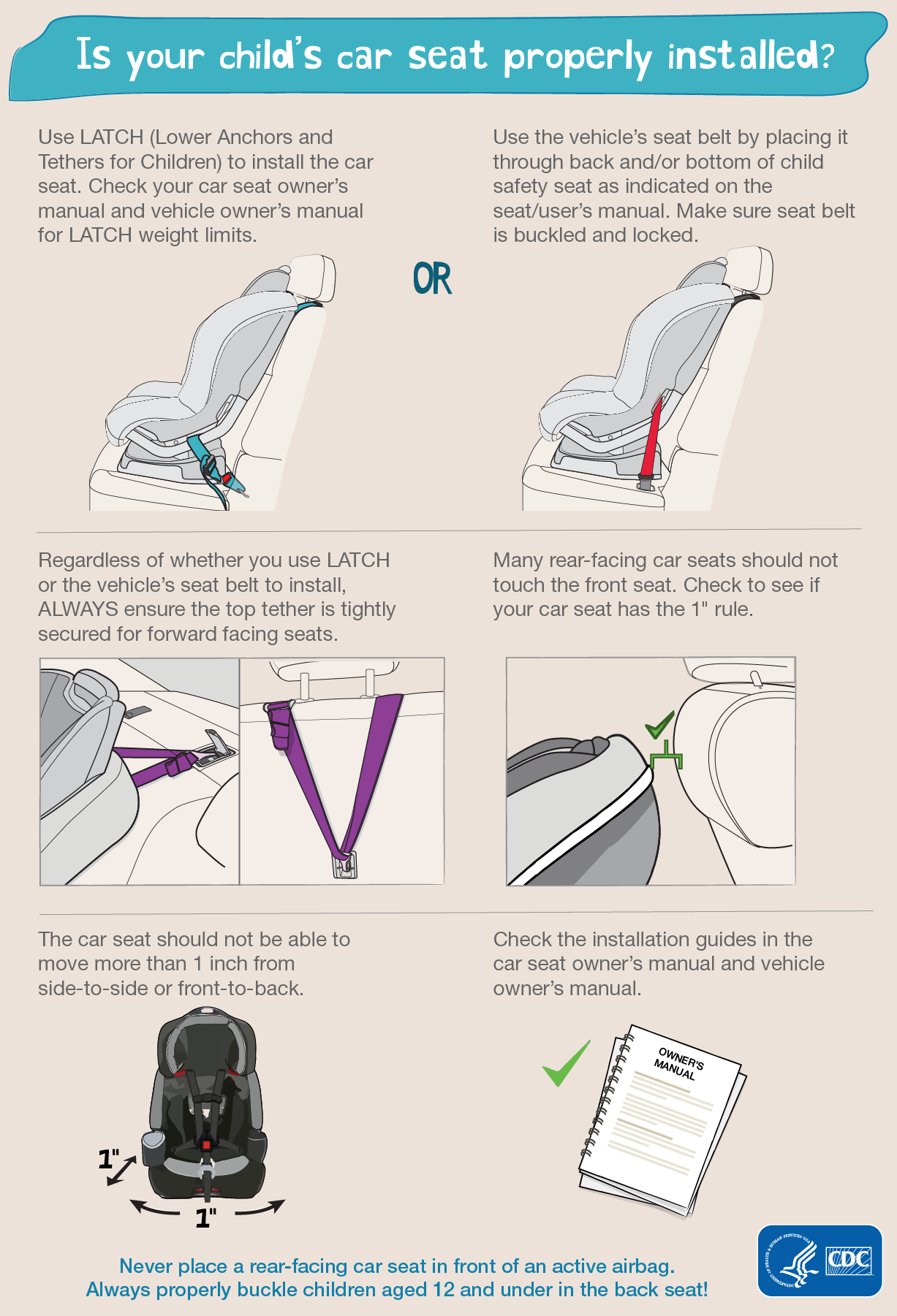
You must install the seat using either LATCH or seat belt—not both. Both methods are equally safe when used correctly.
Use LATCH for Easier Installation (But Mind the Weight Limit)
- Uses lower anchors and tether strap
- Easier for many caregivers
- Weight Limit: Combined child + seat weight must not exceed 65 lbs
- Formula: 65 lbs – seat weight = max child weight for LATCH
- Example: If seat weighs 20 lbs, max child weight = 45 lbs
Once child exceeds LATCH limit, switch to seat belt installation.
Use Seat Belt Installation for Heavier Children
- Use vehicle’s lap-shoulder belt to secure seat
- Must lock the belt per your vehicle’s manual (switchable or locking retractor)
- Works for heavier children and when LATCH isn’t available
Always Use the Top Tether for Forward-Facing Seats
For forward-facing seats, always use the top tether if your vehicle has an anchor. It reduces head movement in a crash by 6–8 inches, significantly lowering brain and spinal injury risk.
Myth: “Tether is optional.”
Fact: NHTSA mandates tether use whenever available.
Prioritize Safety Over Convenience Features
Fancy extras don’t make a seat safer. Focus on what matters.
Must-Have Safety Features
- Five-point harness
- Side-impact protection (energy-absorbing foam, deep shell)
- Stable base and anti-rebound bar (for rear-facing)
- Steel-reinforced frame
- Compliance with FMVSS 213 (federal safety standard)
Nice-to-Have Convenience Features
- Cup holders
- Adjustable headrests
- Machine-washable covers
- Reclining positions
- Travel-friendly design
Reality Check: A $100 seat can be just as safe as a $400 one—if it fits your child and car.
Install It Tight: Pass the One-Inch Rule
A loose seat won’t protect your child.
How to Test Installation Tightness
- Grab the seat at the belt path (where LATCH or seat belt runs)
- Shake side to side and front to back
- It should move no more than 1 inch in any direction
If it moves more, re-tighten the LATCH or seat belt and recheck.
Avoid These Common Installation Mistakes
• Not routing harness through correct slots
• Twisted harness or LATCH straps
• Incorrect recline angle (use level indicator)
• Forgetting to tighten after adjusting
Use Built-In Stability Features
Many seats have lock-offs, load legs, or anti-rebound bars. Use them per manufacturer instructions to improve stability.
Register Your Car Seat to Stay Recall-Safe
So you can be notified if it’s recalled.
Why Registration Matters
- Recalls happen. In 2023, over 1 million car seats were recalled
- You won’t hear about it unless you’re registered
- Recalls can involve harness defects, faulty buckles, or fire hazards
How to Register Your Seat
• Fill out and mail the paper card
• Or register online at the manufacturer’s website
• Also sign up for NHTSA recall alerts at www.nhtsa.gov/recalls
Note: Used seats may already be expired or unregistrable—avoid unless you know full history.
Avoid These 5 Critical Car Seat Mistakes
Even safety-conscious parents make these errors.
1. Turning Baby Forward-Facing Before Reaching Limits
Rear-facing is 5 times safer for children under 2. Wait until your child hits the seat’s rear-facing limit—not just age 1.
2. Using Both LATCH and Seat Belt Together
This can create dangerous stress points. Use one method only.
3. Loose Harness Straps
The harness should be snug—you shouldn’t be able to pinch any slack at the shoulder.
4. Ignoring Expiration Dates
Most car seats expire after 6–10 years due to material degradation. Check the label.
5. Skipping the Tether on Forward-Facing Seats
Forward-facing without a tether increases head excursion by up to 8 inches in a crash. Always use it.
Get a Free Car Seat Inspection From a Certified Technician
Even experts get second opinions.
Why Get Inspected?
• 46% of car seats have at least one critical error
• Certified technicians can spot issues you might miss
• Learn how to adjust the seat as your child grows
How to Find a Certified Technician
• Visit www.safekids.org
• Enter your ZIP code to find local inspection events
• Some offer virtual consultations
Bonus: Many stations also check strollers, boosters, and seat belts.
Know When to Replace a Car Seat
Don’t keep using a seat past its safe life.
After Any Moderate or Severe Crash
Replace the seat after a moderate or severe crash, even if it looks undamaged. The internal structure may be compromised.
Minor Crash Exception: No airbag deployment, vehicle drivable, no injuries, no visible damage. Check manufacturer guidelines.
When the Expiration Date Has Passed
All seats have an expiration date (usually molded into the plastic or on a label). Never use an expired seat.
If the Seat Is Recalled, Damaged, or Missing Parts
Cracks, frayed harnesses, missing parts, or failed recalls mean it’s unsafe.
When Your Child Outgrows It
Move to the next stage when height or weight limits are reached—not before.
Use Expert-Backed Tools to Find the Right Seat Fast
Save time and get reliable recommendations.
NHTSA Car Seat Finder
- Official tool from the National Highway Traffic Safety Administration
- Enter child’s age, height, weight
- Filters by seat type, brand, ease of use
- https://www.nhtsa.gov/equipment/car-seats-and-booster-seats
Safe in the Seat Quiz
- Created by Certified Child Passenger Safety Technicians (CPSTs)
- Asks about child size, vehicle, lifestyle (e.g., travel, washable covers)
- Recommends only seats tested in real cars with real kids
- Free, no paid placements
- https://www.safeintheseat.com
“It saved me hours of research and gave me perfect seat matches in minutes.” — Jessica, mom of toddler
Final Checklist Before Buying a Car Seat
Run through this list to ensure you’re making the right choice.
• Child’s height and weight within seat’s limits
• Fits securely in your vehicle (tested in person)
• Installs with LATCH or seat belt (not both)
• Forward-facing seats have tether and anchor access
• Harness adjusts easily as child grows
• Seat is not expired or recalled
• Registered with manufacturer and NHTSA
• You’ve watched installation videos or gotten a check
Frequently Asked Questions About Choosing a Baby Car Seat
When should I switch my baby from rear-facing to forward-facing?
Switch only when your child reaches the maximum height or weight limit of the rear-facing seat—not by age. Most experts recommend keeping children rear-facing until at least age 2 or beyond, depending on the seat’s limits.
Can I use a secondhand car seat safely?
Only if you know its full history: no recalls, no damage, not expired (6–10 years), and all parts are present. Avoid used seats from unknown sources.
Do all cars have LATCH and tether anchors?
Most vehicles have lower anchors in at least two seating positions and tether anchors in the back. Check your owner’s manual to confirm locations and weight limits.
How tight should the harness be on my baby?
The harness should be snug—you should not be able to pinch any slack at the shoulder. Loose straps increase injury risk in a crash.
What’s the safest place to install a car seat?
The center of the back seat is statistically the safest position, as it’s furthest from impact in side collisions. But only install there if the seat fits securely and allows proper tether use when needed.
Do I need to register a new car seat?
Yes. Registering ensures you’ll be notified of recalls. Register online with the manufacturer and sign up for NHTSA alerts at www.nhtsa.gov/recalls.
Key Takeaways for Choosing the Safest Baby Car Seat
The safest car seat is the one that fits your child, fits your car, and gets used correctly every time. Focus on extended rear-facing, proper installation, and consistent use—not price or flashy features. Always check height and weight limits, test the seat in your vehicle, and register it immediately.
When in doubt, get help. Free inspections from certified technicians and expert-backed tools like the Safe in the Seat quiz can save you time and give you peace of mind. Your child’s safety depends on getting it right—so take the time, do the research, and make the confident choice.





