A fever in a baby can be alarming, but knowing how to check your baby’s temperature correctly is the first step in understanding their health. For infants—especially those under 3 months old—a fever isn’t just a symptom; it’s a signal that requires immediate attention. The most accurate way to detect a true fever is by using the right method for your baby’s age. Whether you’re a new parent or caring for a sick child, this guide will walk you through every step of checking a baby’s temperature safely and accurately.
Rectal temperature measurement remains the gold standard for infants under 3 months, while other methods like underarm, ear, and forehead readings can be useful for screening or older babies. Each technique has its own accuracy level, limitations, and best practices. Using the wrong method or misreading results could lead to unnecessary worry—or worse, missed illness. By the end of this guide, you’ll know exactly how to take a reliable temperature reading, interpret the results, and decide when to call a doctor.
Choose the Right Method by Baby’s Age
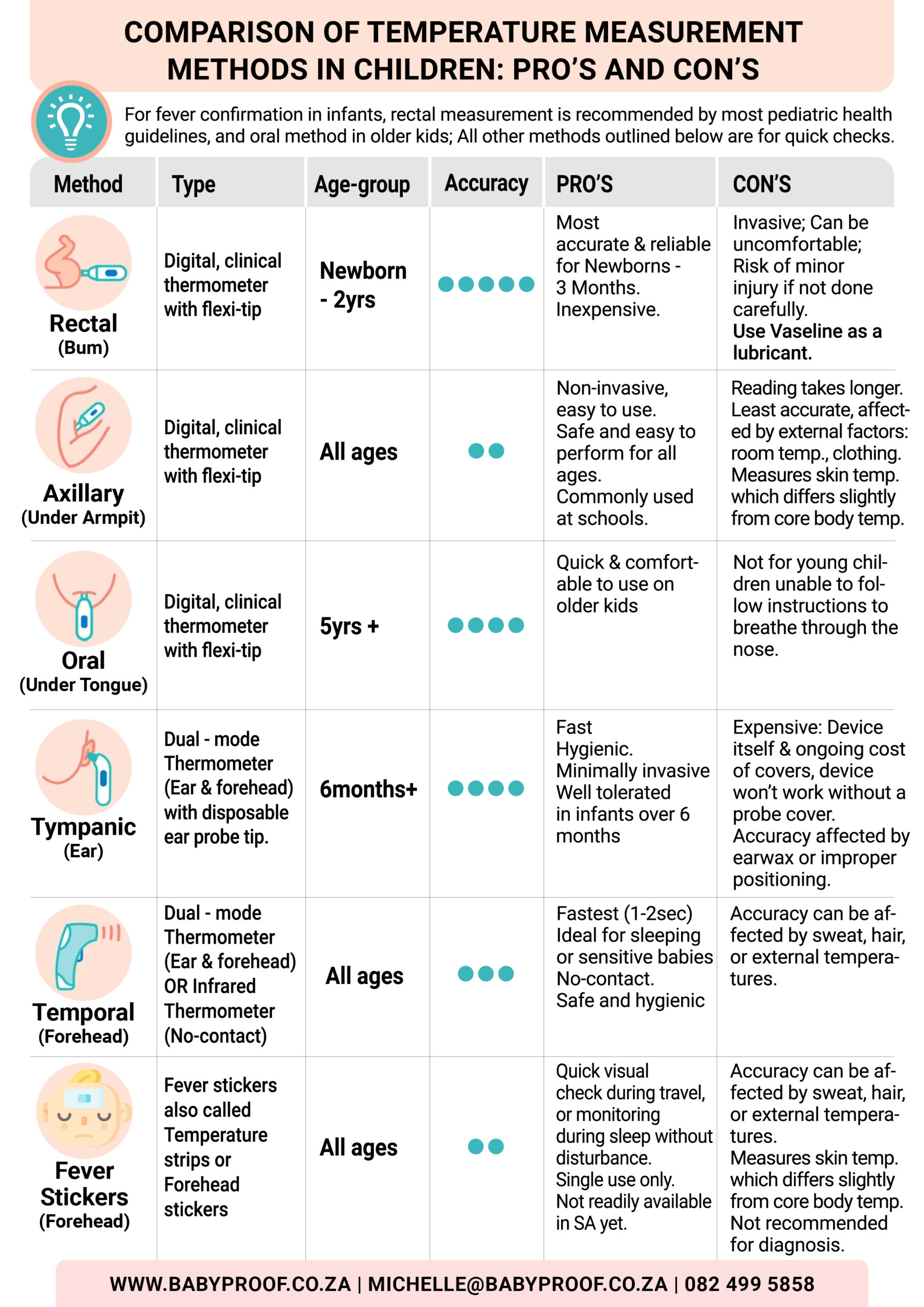
Match Temperature Method to Age Group
Your baby’s age determines the best way to check their temperature. For newborns 0 to 3 months, only rectal temperature should be used. This method gives the most accurate reading and is essential for detecting serious illness early. Less accurate methods like forehead or underarm thermometers can give false reassurance and should not be relied on for this age group.
For babies 3 to 36 months, rectal is still the most reliable method, but underarm or ear thermometers may be used for quick screening. If a fever is suspected, always confirm with a rectal reading. Ear thermometers are not suitable for babies under 3 months due to their narrow ear canals.
Children 4 years and older can use oral thermometers if they can hold it under the tongue and keep their mouth closed. Wait at least 15 minutes after eating or drinking before taking an oral temperature.
Why Rectal Readings Are Critical for Newborns
Rectal temperature closely reflects your baby’s core body temperature, making it the most accurate method available. Since newborns have immature immune systems, even a slight fever—100.4°F (38°C) or higher—can indicate a serious infection. Using less precise methods increases the risk of missing a dangerous condition. For babies under 3 months, any fever requires immediate medical evaluation.
Take a Rectal Temperature Safely and Correctly
Prepare Equipment and Lubricant
Use a digital thermometer labeled for rectal use—never a mercury thermometer. Apply a small amount of petroleum jelly or water-soluble lubricant to the tip to ease insertion. Clean the thermometer with cool, soapy water before and after use. Never use a rectal thermometer in the mouth, even after cleaning, to avoid spreading bacteria.
Position Your Baby for Comfort and Safety
You can use one of two safe positions:
- Face up: Lay your baby on their back, gently lift their legs as if changing a diaper, and support their thighs.
- Face down: Place your baby across your lap or on a padded surface, facing downward.
Choose the position that keeps your baby calm and secure. Both allow safe access to the rectum.
Insert Gently and Hold Until Reading Completes
With one hand, gently spread the buttocks. Insert the lubricated tip 0.5 to 1 inch (1.25 to 2.5 cm) into the rectum—no deeper. Never force the thermometer. If you feel resistance, stop and reposition. Hold it close to the rectum with two fingers (not at the end) to prevent slipping.
Wait for the digital beep—usually within 30 seconds to a minute. Remove carefully, read the temperature, then clean the thermometer with soapy water, rinse, and store in a clean case.
Use Underarm (Axillary) Method for Quick Screening
When to Use Armpit Temperature Readings
The underarm method is safe and non-invasive but least accurate. It’s best for quick checks, especially if your baby is sleeping or fussy. Axillary readings are typically 0.5°F to 1°F lower than oral, and even more so compared to rectal.
If the underarm reading is 99°F (37.2°C) or higher, follow up with a rectal measurement to confirm a fever.
Step-by-Step Guide to Underarm Temperature Check
Place the thermometer tip in the center of the armpit. Hold your baby’s arm tightly against their body to keep the thermometer in place. Leave it until it beeps (usually 1–2 minutes). Remove and read the result.
Always clean the thermometer with soapy water or an alcohol wipe after use. Never reuse a thermometer between sites without proper cleaning.
Try Ear Thermometer for Babies 3 Months and Older

Ear Temperature Readings After 3 Months
Ear (tympanic) thermometers are fast and convenient for babies 3 months and older, but they’re less accurate than rectal methods. They measure infrared heat from the eardrum. Because young infants have small, curved ear canals, improper placement can lead to inaccurate readings.
Do not use ear thermometers on babies under 3 months.
How to Get an Accurate Ear Reading
Use a disposable probe cover every time to maintain hygiene. Turn on the thermometer, gently pull the ear up and back to straighten the canal, then insert the probe just inside the opening. Press the button and wait for the beep.
Ensure the ear is free of wax, which can block the sensor and cause false low readings. After use, discard the probe cover and wipe the outside with a clean cloth. Never submerge the thermometer in water.
Use Forehead (Temporal Artery) Thermometer for Non-Invasive Checks
Quick and Hygienic Option for All Ages
Temporal artery thermometers scan heat from the blood flow in the forehead. They’re easy to use, hygienic, and ideal for sleeping babies. While convenient, accuracy depends on correct technique and device quality.
These thermometers are suitable for all ages but must be used according to the manufacturer’s instructions.
How to Take a Forehead Temperature
Place the sensor at the center of the forehead. Glide it straight across to the hairline, maintaining skin contact. Some models require a swipe; others need a stationary hold. Follow your device’s guide.
Avoid taking readings right after bathing, feeding, or if the baby has been bundled—sweating or cool skin can affect results. Clean the sensor with a soft, dry cloth after each use.
Know When to Call the Doctor Based on Temperature
Fever Thresholds That Require Medical Attention
Your baby’s age determines when a fever becomes urgent:
- Under 3 months: Rectal temperature of 100.4°F (38°C) or higher — contact your provider immediately.
- 3 to 6 months: Rectal temperature of 101°F (38.3°C) or higher — call your doctor.
Even a mild fever in a young infant can signal a serious infection, so don’t wait.
Watch for Emergency Warning Signs
Seek medical help if your baby has:
– Fever lasting more than 3 days
– Lethargy or unusual drowsiness
– Irritability that doesn’t improve
– Difficulty breathing
– Signs of dehydration: dry mouth, no tears when crying, fewer wet diapers
– Seizures or stiff body with jerking movements
These symptoms, with or without fever, require urgent evaluation.
Avoid Common Temperature-Taking Mistakes
Don’t Rely on Touch to Detect Fever
Feeling your baby’s forehead or neck is not reliable. Skin may feel warm due to activity, crying, or being overdressed. Always use a thermometer to confirm.
Never Use Mercury Thermometers
Mercury-containing thermometers are unsafe and no longer recommended. Use only digital thermometers, which are accurate, fast, and safe.
Don’t Mix Up Thermometer Uses
Never use a rectal thermometer in the mouth. Even thorough cleaning can’t eliminate bacteria risk. If possible, keep separate thermometers labeled “rectal” and “oral.”
Also, always use a new probe cover for each ear temperature reading. Reusing covers spreads germs and can damage the sensor.
Improve Accuracy and Maintain Hygiene
Time Your Measurement Right
Avoid taking a temperature:
– Right after a bath
– During or right after feeding
– After active play or bundling
Wait at least 15–30 minutes after these activities for a stable reading.
Track Temperature Trends Over Time
One reading doesn’t tell the whole story. Keep a log of:
– Time of measurement
– Temperature value
– Method used
– Any symptoms (rash, cough, fussiness)
This helps your doctor assess illness progression.
Clean and Store Thermometers Properly
After each use:
– Wash digital thermometers with cool, soapy water or wipe with alcohol
– Rinse and dry before storing
– For ear probes: wipe gently, never immerse in water
– Store in a clean case away from extreme heat or cold
Compare Baby Temperature Methods at a Glance
| Method | Accuracy | Best For | Notes |
|---|---|---|---|
| Rectal | ★★★★★ | 0–3 months | Most accurate; essential for newborns |
| Ear | ★★★☆☆ | 3 months+ | Fast but less reliable; avoid under 3 months |
| Forehead | ★★★★☆ | All ages | Non-invasive; follow device instructions |
| Underarm | ★★☆☆☆ | Screening | Least accurate; confirm fever rectally |
| Oral | ★★★★☆ | 4 years+ | Requires cooperation; wait after eating |
Rectal remains the benchmark. Other methods are useful but should be confirmed with rectal readings when fever is suspected in infants.
Key Takeaways for Checking Baby’s Temperature
Checking your baby’s temperature doesn’t have to be stressful. With the right tools and technique, you can get accurate results quickly. Always use a digital thermometer, follow age-appropriate methods, and prioritize rectal readings for babies under 3 months.
Remember: a fever is a sign, not a sickness itself. It shows the body is fighting an infection. What matters most is how your baby acts—whether they’re feeding well, responsive, and comfortable. A slightly elevated temperature in a happy, active baby may not be urgent. But any fever in a newborn demands prompt medical advice.
Keep your thermometer accessible, know your method, and trust the numbers—not just how your baby feels to the touch. When in doubt, take a rectal temperature and call your pediatrician. Early action can make all the difference.
Frequently Asked Questions About Checking Baby’s Temperature
How do I know if my baby has a fever?
A rectal temperature of 100.4°F (38°C) or higher means your baby has a fever. For babies under 3 months, this requires immediate medical attention. Other signs include irritability, poor feeding, or lethargy. Always use a thermometer—do not rely on touch alone.
What is the most accurate way to check a baby’s temperature?
The rectal method is the most accurate, especially for infants under 3 months. It provides a reading closest to the baby’s core body temperature and is the only recommended method for newborns.
Can I use a forehead thermometer on a newborn?
Yes, you can use a forehead (temporal artery) thermometer on a newborn, but it’s less accurate than rectal. If the reading suggests a fever, confirm with a rectal measurement. Always follow the device’s instructions for best results.
How do I clean a digital thermometer after use?
Clean a digital thermometer with cool, soapy water or an alcohol wipe after each use. Rinse and dry before storing. For ear thermometers, wipe the probe gently—never submerge in water. Use separate thermometers for rectal and oral use.
Should I wake my baby to check their temperature?
Only wake your baby if they show signs of illness—such as difficulty breathing, dehydration, or extreme fussiness. If your baby is sleeping peacefully and appears well, there’s no need to wake them for a temperature check.
What should I do if my baby’s temperature is high?
For babies under 3 months with a rectal temperature of 100.4°F (38°C) or higher, contact your doctor immediately. For older babies, monitor symptoms, keep them hydrated, and call your provider if the fever persists beyond 3 days or is accompanied by warning signs.