
After sterilising baby bottles, proper storage is essential to keep them germ-free until the next feed. Storing sterilised bottles incorrectly can undo all your hard work and expose your baby to harmful bacteria. Whether you’re using steam, boiling, or cold-water sterilisation, knowing the right way to store bottles ensures your baby stays healthy. In this guide, you’ll learn best practices for storing sterilised baby bottles, common mistakes to avoid, and how long bottles can stay sterile. You’ll also discover which storage methods are safest and when to re-sterilise.
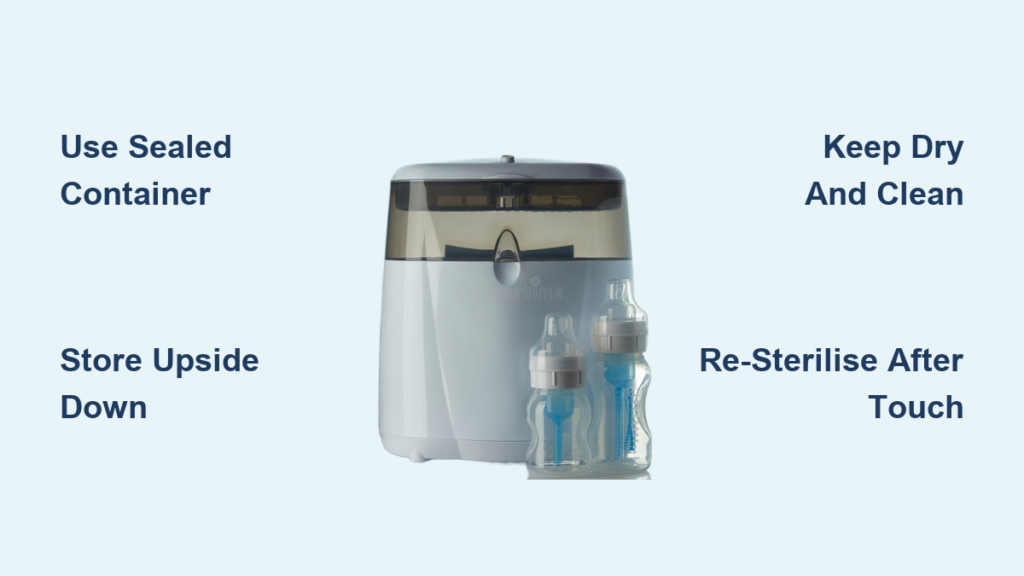
Use a Clean, Sealed Container

Storing sterilised bottles in an open environment increases contamination risk. Always use a clean, airtight container designed for sterilised baby equipment.
Choose the Right Storage Box
• Opt for a steriliser with a lid or a dedicated sterile storage box
• These containers trap clean air inside and block dust, germs, and kitchen splashes
• If your steriliser doubles as a storage unit (like electric steam models), keep bottles inside with the lid closed
• Ensure the container is BPA-free and easy to clean
Avoid Towel Drying Before Storage
• Never dry bottles with a towel—even a clean one can carry bacteria
• After sterilising, let bottles air-dry fully inside the steriliser or on a clean drying rack
• Moisture encourages bacterial growth, so ensure all parts are completely dry before storage
• Wipe the outside of bottles only if needed, using a clean paper towel
Store Bottles Upside Down

Placing bottles upside down in the container prevents airborne particles from settling inside.
Why Upside Down Works
• Gravity pulls contaminants downward
• Storing bottles and teats upside down minimises the chance of dust or microbes landing in the feeding area
• This keeps the part that touches your baby’s mouth the cleanest
• It also allows any residual moisture to drain out
Use Organised Racks
• Many sterilisers come with racks that hold bottles and parts securely upside down
• If yours doesn’t, use a clean silicone or plastic rack to maintain airflow and proper positioning
• Arrange teats, caps, and screw rings separately to avoid contact with inner surfaces
• Avoid overcrowding to ensure proper drying and easy access
Keep the Storage Area Clean
Where you place the sterilised bottles matters as much as how you store them.
Avoid the Countertop Near Sinks
• Countertops near sinks or stoves are high-splash zones
• Water, food particles, and bacteria from washing dishes or cooking can contaminate your sterile bottles
• Store the container on a clean, dry shelf away from these areas
• Choose a low-traffic spot, out of reach of pets and young children
Don’t Store in the Fridge
• Sterilised bottles should not be kept in the refrigerator
• Cold, damp environments promote condensation inside bottles, which can lead to mould or bacterial growth
• The fridge is for storing prepared formula or breast milk—not sterilised equipment
• If bottles feel damp after refrigeration, they are no longer sterile
How Long Can Bottles Stay Sterile?
Knowing the safe storage window helps you plan feeds without over-sterilising.
Up to 24 Hours in a Closed Unit
• If the steriliser or storage container remains sealed and undisturbed, bottles can stay sterile for up to 24 hours
• After that, re-sterilise before use—even if they haven’t been touched
• Do not assume bottles are sterile just because they look clean
Open the Container Only When Needed
• Every time you open the lid, outside air enters and introduces germs
• Open the container only when preparing a feed, and close it immediately after removing what you need
• Limit access to one person if multiple caregivers are involved
• Wash hands thoroughly before handling any part
Re-Sterilise After Handling
Any contact with hands or non-sterile surfaces requires re-sterilisation.
When to Start Over
• If you touch the inside of the bottle, teat, or screw ring with your fingers, wash and re-sterilise the part
• Even clean hands carry bacteria that could harm your baby’s developing immune system
• Use sterilised tongs or wear clean gloves when assembling bottles
• Treat any dropped part as contaminated—always re-sterilise
Quick Tip for Night Feeds
• Prepare one bottle at a time
• Don’t pre-assemble multiple bottles and leave them out
• If you need a late-night feed, sterilise in the evening and store properly—then assemble just before warming
• Pre-sterilise extra bottles if you expect a busy morning
Electric vs. Microwave vs. Cold Water Sterilisation

Different methods affect how you store bottles.
Electric Steam Sterilisers
• These units often double as storage containers
• Keep bottles inside with the lid closed until use
• Most models maintain sterility for 24 hours if unopened
• Some have automatic cooling and drying cycles—use them fully before storage
Microwave Sterilisers
• Once the cycle ends, leave bottles inside until cool
• Transfer to a sealed sterile container if you won’t use them within a few hours
• Don’t leave bottles in the microwave after sterilising—this invites condensation and contamination
• Never use metal parts in microwave sterilisers
Cold Water Chemical Sterilisation
• After removing bottles from the solution, do not rinse
• Shake off excess fluid and let air-dry inside a sealed container
• Replace the sterilising solution every 24 hours if storing long-term
• Store the entire container in a clean, shaded area—UV light degrades the solution
Common Storage Mistakes to Avoid
Even small errors can compromise sterility.
• Using a dishcloth to dry – Towels and cloths are breeding grounds for bacteria. Always air-dry.
• Leaving bottles open to the air – Uncovered bottles collect dust and microbes. Always store in a closed container.
• Stacking bottles together – Nesting bottles traps moisture and blocks airflow. Store them separately.
• Touching the inside of the bottle – Even a quick wipe with a finger introduces germs. Use tongs or wash hands thoroughly.
• Using a dirty storage box – Wash and sterilise the container weekly to prevent biofilm buildup.
When to Replace Bottles and Teats
Sterility isn’t the only concern—wear and tear matter too.
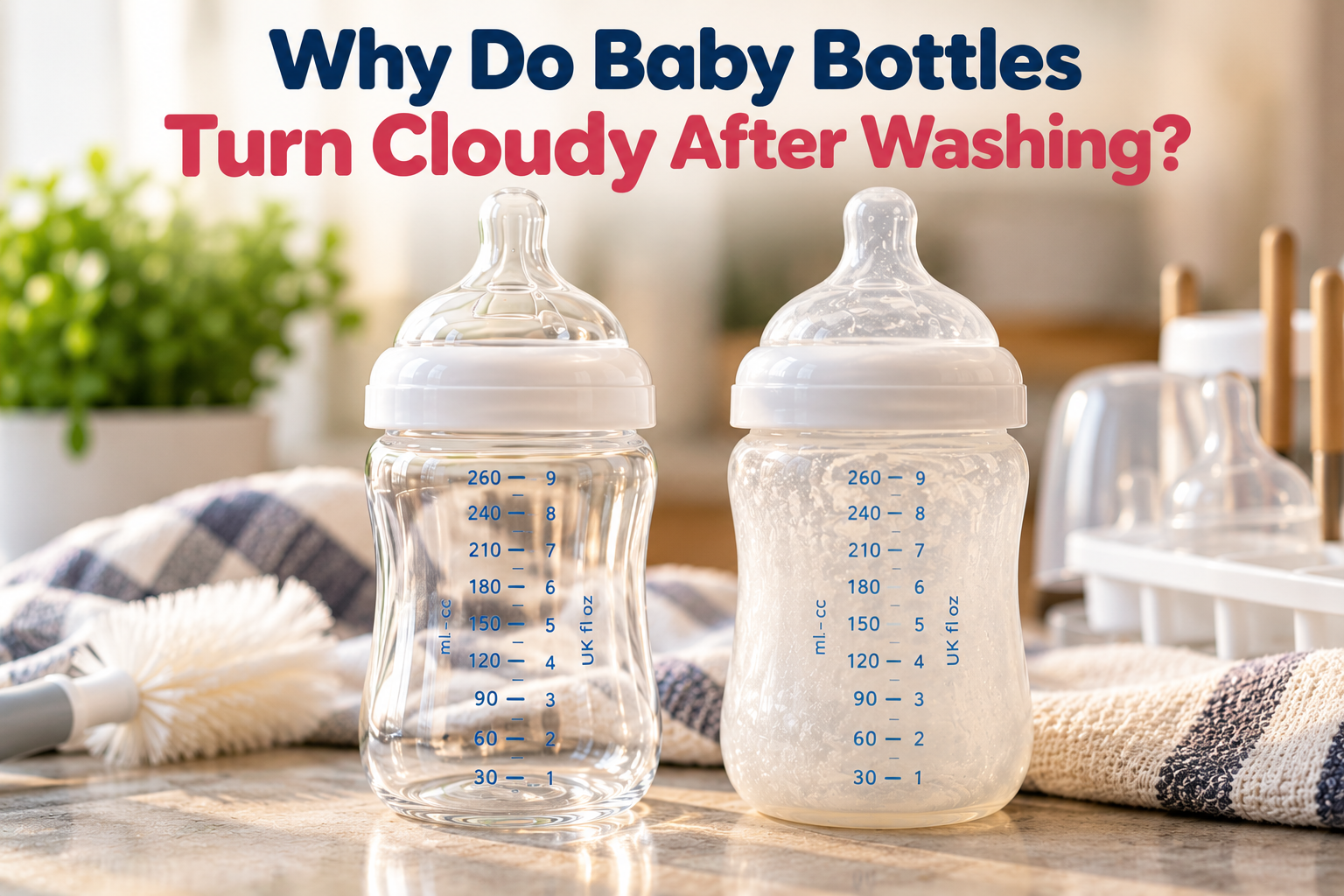
Check for Cloudiness or Cracks
• If bottles become cloudy, scratched, or cracked, replace them
• Damaged surfaces harbour bacteria and are harder to clean
• Scratches can also weaken the bottle, increasing the risk of breakage
• Glass bottles should be discarded at the first sign of chips
Replace Teats Every 2–3 Months
• Teats degrade faster due to sucking and heat exposure
• Look for thinning, holes, or stickiness
• Replace sooner if your baby bites through them
• Test flow regularly—slow or uneven flow means it’s time for a new teat
Key Takeaways for Storing Sterilised Baby Bottles
• Always store sterilised bottles in a clean, sealed container to maintain sterility
• Keep bottles upside down to protect the feeding area from airborne particles
• Bottles stay sterile for up to 24 hours in a closed unit—after that, re-sterilise
• Any contact with hands or non-sterile surfaces means starting over
• Avoid common mistakes like towel drying, open storage, and fridge placement
Take action now: Review your current storage method and make sure it follows these safety steps. If you use a shared space or multiple caregivers, label your container and create a simple routine to avoid cross-contamination.
Frequently Asked Questions About Storing Sterilised Baby Bottles
Can I store sterilised bottles in a regular plastic container?
No. Only use containers designed for sterile storage or that have been sterilised themselves. Regular plastic containers may look clean but can harbour bacteria. Always ensure the container is airtight and food-safe.
Do I need to re-sterilise bottles every day?
Not if they remain in a sealed unit and are unused. Bottles can stay sterile for up to 24 hours. After that, re-sterilise even if untouched. Daily sterilisation is only needed if you use bottles frequently or store them longer.
Can I pre-assemble bottles after sterilising?
It’s not recommended. Assembling bottles increases the risk of touching inner parts. Store components separately and assemble just before feeding to maintain sterility.
Is it safe to store sterilised bottles in a cupboard?
Yes, but only if the cupboard is clean, dry, and away from cooking or washing areas. Place the sealed storage container on a shelf, not directly on the floor or near pet zones.
What should I do if my baby doesn’t finish a bottle?
Discard any leftover milk after a feed. Bacteria from your baby’s mouth can contaminate the milk. Wash and sterilise the bottle before reusing—even if it was only used once.
Can I reuse sterilising solution for cold-water methods?
Yes, but only for up to 24 hours. After that, the solution loses effectiveness. Always cover the container and store it in a cool place. Replace it immediately if it becomes cloudy or dirty.





